





















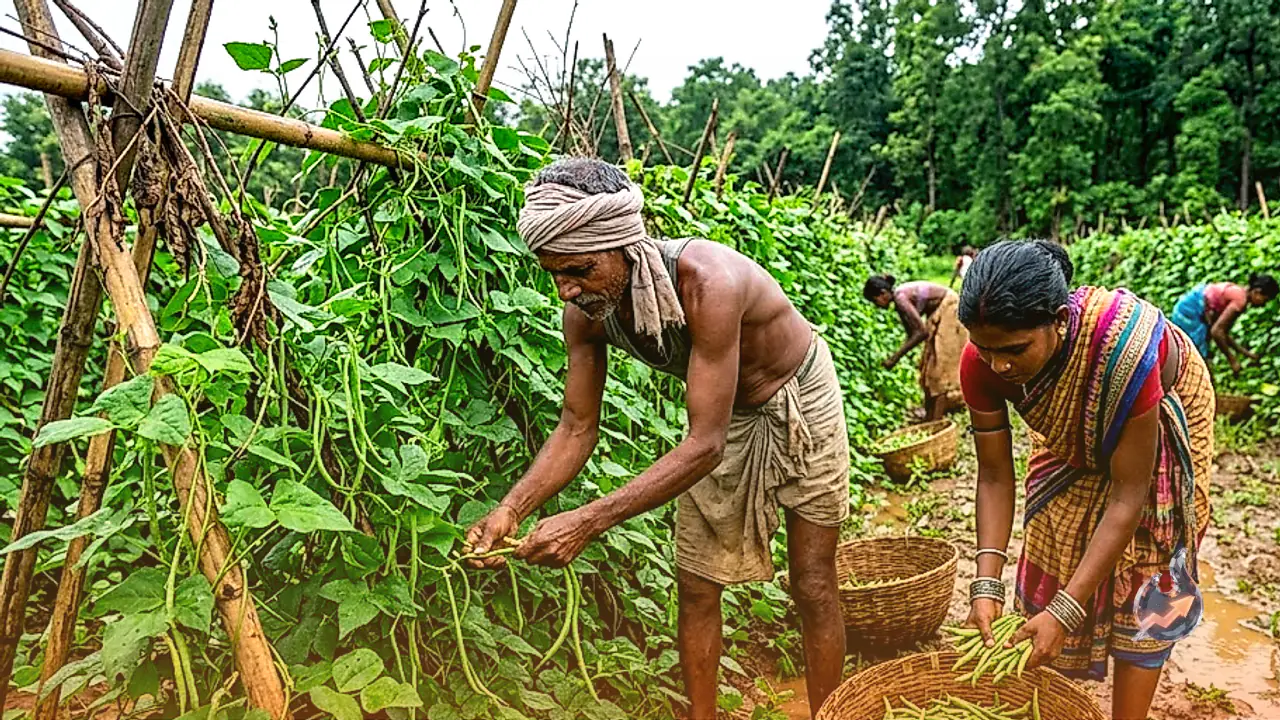

Farmers in the Bastar region of Chhattisgarh are moving beyond conventional crop patterns to generate higher returns through commercial vegetable farming. Beans, traditionally seen as a winter-season crop, are now being cultivated during the rainy season with encouraging results. This agricultural shift offers growers a substantial income stream within a short span of three to four months. The crop involves fewer operational hassles and faces a comparatively lower incidence of plant diseases, making it a viable alternative during the wet season.
Market Rates and Revenue Potential per Acre
Beans are currently fetching prices between 60 and 70 rupees per kilogram in the market. Thanks to stable consumer demand and favourable pricing, cultivating beans across a single acre enables farmers to generate an income exceeding one lakh rupees. The short crop cycle requires manageable capital investment while offering rapid financial turnover during the rainy months. Overall, growers anticipate a net profit ranging between one lakh and 1.5 lakh rupees from one acre of cultivation within just three to four months.
Land Preparation, Sowing Structure, and Fertilizer Use
Achieving a healthy yield depends heavily on meticulous soil preparation prior to sowing. The field is thoroughly ploughed two to three times, followed by the operation of a rotavator to achieve a fine, loose soil tilth suitable for seed placement.
- Spacing Standards: Raised beds are prepared with a distance of three feet from bed to bed, while individual plants are spaced one foot apart within each row.
- Seed Variety: The Stu Best variety is utilized to ensure optimal productivity and quality.
- Nutrient Application: Soil fertility is enhanced through a blend of organic farmyard manure along with chemical fertilizers, specifically DAP and potash.
- Cultivation Cost: The total expenditure incurred on field preparation, quality seeds, fertilizers, and routine care stands at approximately 60 to 70 thousand rupees per acre.
Disease Management and Rainy Season Care
While beans are generally resilient and do not suffer from severe pest infestations, certain seasonal issues can arise if preventive steps are neglected. In the monsoon period, excess moisture and water stagnation can lead to yellowing of the leaves in the crop stand.
To safeguard the plants, regular preventive spraying of pesticides and protective treatments is essential. Farmers apply formulations including atta boron along with other protective remedies at regular intervals to counter potential fungal and pest attacks. For cultivators venturing into vegetable production for the first time, monsoon bean cultivation provides a low-maintenance, high-yield opportunity with swift financial returns.