




















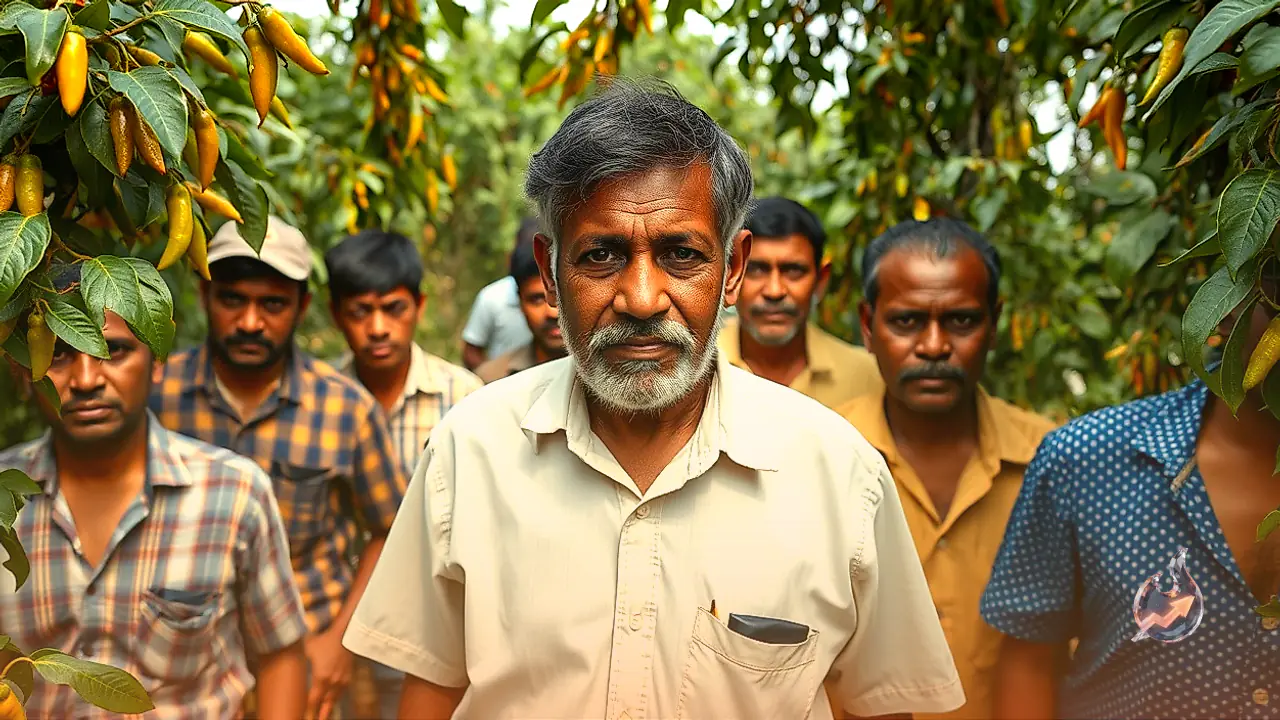

In Chhattisgarh's Bastar region, local farmer Samlu Kashyap is drawing attention by stepping into commercial cultivation of large pickle chillies for the very first time. Considerably larger than ordinary varieties, these chillies are sought after primarily for making stuffed fritters and traditional pickles. With substantial consumer interest outside the state, Kashyap plans to supply his fresh harvest directly to buyers across Andhra Pradesh and Telangana, banking on robust wholesale margins.
Selecting Disease-Resilient Hybrid Seedlings
According to Kashyap, the crop belongs to a selected hybrid strain developed to withstand common agricultural hazards. Plants grown from these seeds show lower vulnerability to seasonal diseases while retaining the firmness and appearance that fetch superior market rates. Driven by steady pricing expectations, he estimates that the chilli venture will generate a profit margin of up to 3 lakh rupees.
Field Preparation and Plantation Layout
Explaining his planting methodology, Kashyap shared that the process began with ploughing the soil thoroughly two to three times. A rotavator was then deployed to break the clods into a fine texture before shaping the field into structured raised beds. The setup maintains a uniform five-foot clearance between adjacent beds, alongside a one-foot gap between individual plants. Seedlings are initially nurtured in a dedicated nursery before transplanting, with the foliage beginning fruit production within roughly two and a half months.
Input Costs and Drip Fertigation Regimen
Developing one acre of chilli fields involved an upfront operational cost ranging between 70 and 80 thousand rupees. Kashyap procured roughly 10,000 seedlings at an individual purchase price of around 1.40 rupees per unit. To sustain vigorous plant development, he integrated organic farmyard manure with DAP and superphosphate, utilizing drip irrigation systems to deliver supplementary fertilizers straight to the root zone.
Crop Protection and Sustained Harvesting Cycles
Pest management remains an essential aspect of Kashyap's daily schedule. Whenever signs of common pests like thrips and mites appear across the foliage, targeted chemical sprays are applied to check infestations before damage spreads. Fruiting typically begins roughly 60 days following field establishment, providing picking cycles that span five to six months. While he notes that an exact harvest yield is hard to calculate during an initial trial run, current calculations point toward total earnings between 3 and 4 lakh rupees.