















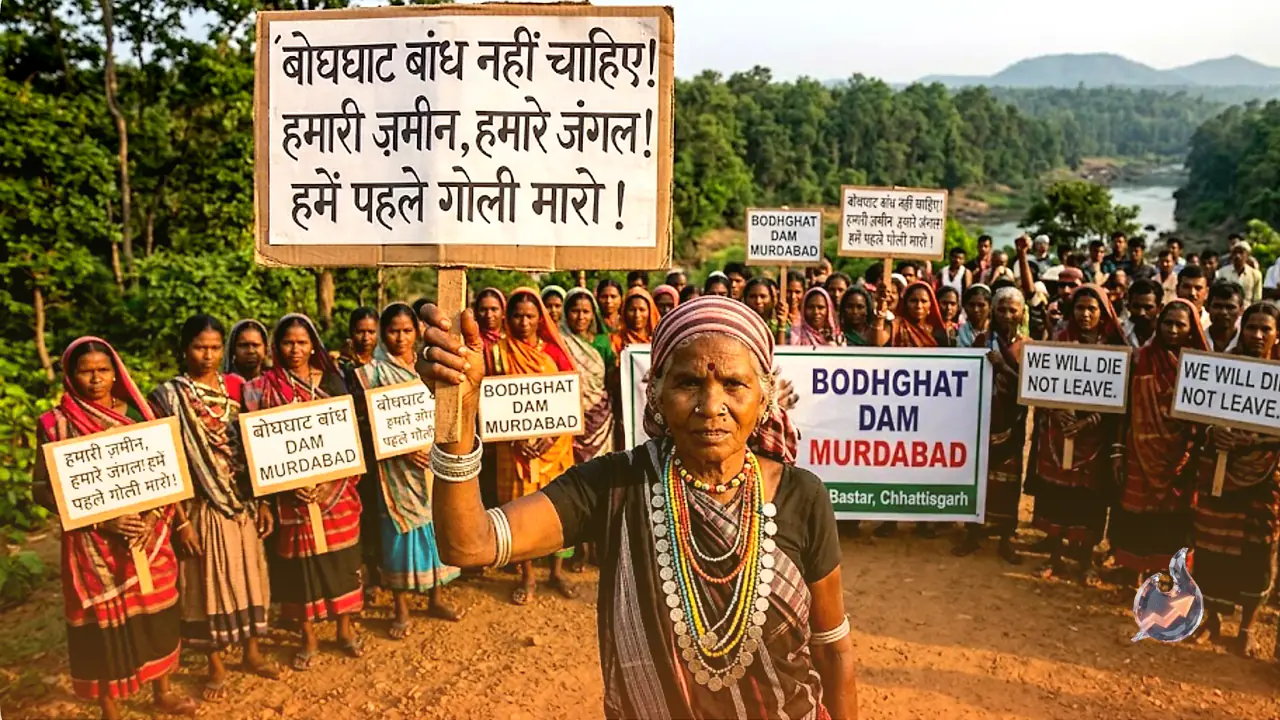

In Chhattisgarh's Bastar region, the government's renewed push to revive the long-disputed Bodhghat Hydroelectric Project has collided head-on with the determined resistance of tribal communities. Villagers from affected areas have come out in force, drawing a line that they say will not be crossed: their land, forests, and homes are not negotiable.
A Slogan That Lays Down the Gauntlet
At protest gatherings across the region, the mood has been one of defiance. The chant 'shoot us first, then build the dam' rang out from the crowds, capturing the unflinching resolve of Bastar's tribal communities. Protesters made plain that no amount of argument about development could justify demolishing their villages, destroying their forests, and uprooting thousands of families from the only lives they have known.
Thousands of Families Stare Down Displacement
The Bodhghat project was first put forward several years ago but failed to advance due to sustained opposition at the time. Efforts to restart it are now underway. If the project proceeds, a large number of villages could fall within the submersion zone, forcing thousands of families to abandon their homes. The consequences would extend beyond shelter: agricultural land, forests, and traditional livelihoods would all face severe and lasting disruption.
Land and Forest as Identity, Not Just Asset
For the tribal communities of Bastar, forests and land carry a significance that goes far beyond property or income. These are, as the communities themselves articulate, the living foundation of their culture and identity. Villagers allege that the government has not held any meaningful consultation with them about the project and is attempting to push it forward without their consent, which they describe as a direct violation of their rights. They are clear: development cannot be used as a pretext to erase the rights of those it displaces.
What the Protesters Are Demanding
Those who took to the streets have placed two specific demands before the government. First, that a complete and honest disclosure of all the project's potential impacts be made available to the public. Second, that the decisions of gram sabhas be treated as the highest authority before any further steps are taken. Tribal organizations have stated in no uncertain terms that development carried out without the free and informed consent of the affected people is no development at all.
Government's Case Meets an Unconvinced Community
The government holds that the Bodhghat project will substantially boost electricity generation in Bastar and give a fillip to the region's overall development. But those most directly in its path are unmoved by this argument. Their question is direct: how can a project claim to serve a community when that very community was never asked? Tribal organizations and village communities have made their intentions unmistakably clear, vowing to sustain their fight to protect their land and forests at every platform and at every level available to them.