






















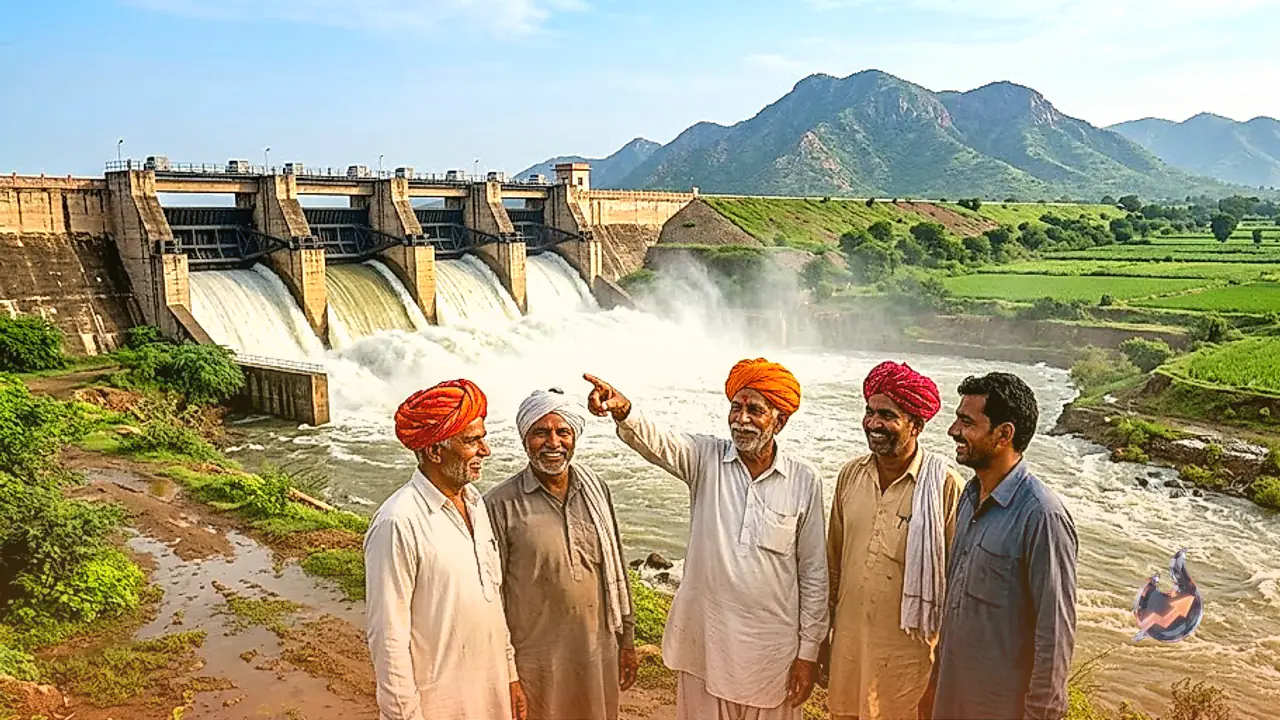

Torrential monsoon rainfall across the catchments of Ajmer district and the surrounding Aravali hills has pushed the historic Govindgarh Dam to its maximum capacity, causing water to cascade over its spillway. This overflow has revived the flow of the Luni River with newfound momentum after a long gap of several years. The moving water column is now traveling through Alniyawas, Riyan Badi, and Jasnagar before terminating at the Pichiyak pond. Beyond replenishing local riverbeds, this massive influx of freshwater is actively restoring regional hydrological balances, altering agricultural prospects, and renewing depleted groundwater reserves across dozens of farming settlements.
Govindgarh Dam Capacity and 3 Decade Groundwater Revival
Constructed in 1995 over the Sagarmati River in Ajmer district, the Govindgarh Dam features a total storage capacity of 155 MCFT. Consistent and generous monsoon rain recorded over the past three consecutive years has ensured steady inflow into the reservoir, ultimately leading to the present overflow. The primary outcome of this continuous recharge is visible beneath the surface, where agricultural wells that remained completely dry for nearly three decades are experiencing a substantial rise in water levels. In villages where agriculturalists faced severe water scarcity, tube wells and open wells are now refilling, offering dual relief by easing rural drinking water shortages alongside farm irrigation.
8 Km Canal Reconstruction Underway at ₹283 Lakh Budget
The overflow of the Govindgarh Dam brings direct relief to approximately 1000 farming households operating across Nagaur district. Agricultural authorities project that the reservoir water will provide dependable irrigation for nearly 780 hectares of arable land. To convey this sweet water efficiently to farm plots near the Alniyawas region, workers are executing the rapid reconstruction of an 8 kilometer long canal channel. Being built at an estimated project expenditure of 283 lakh rupees, the completed canal network will supply reservoir water directly to Nagaur fields, fortifying local agricultural infrastructure against dry spells.
Boost for Rabi Crops and Reduction in Cultivation Expenses
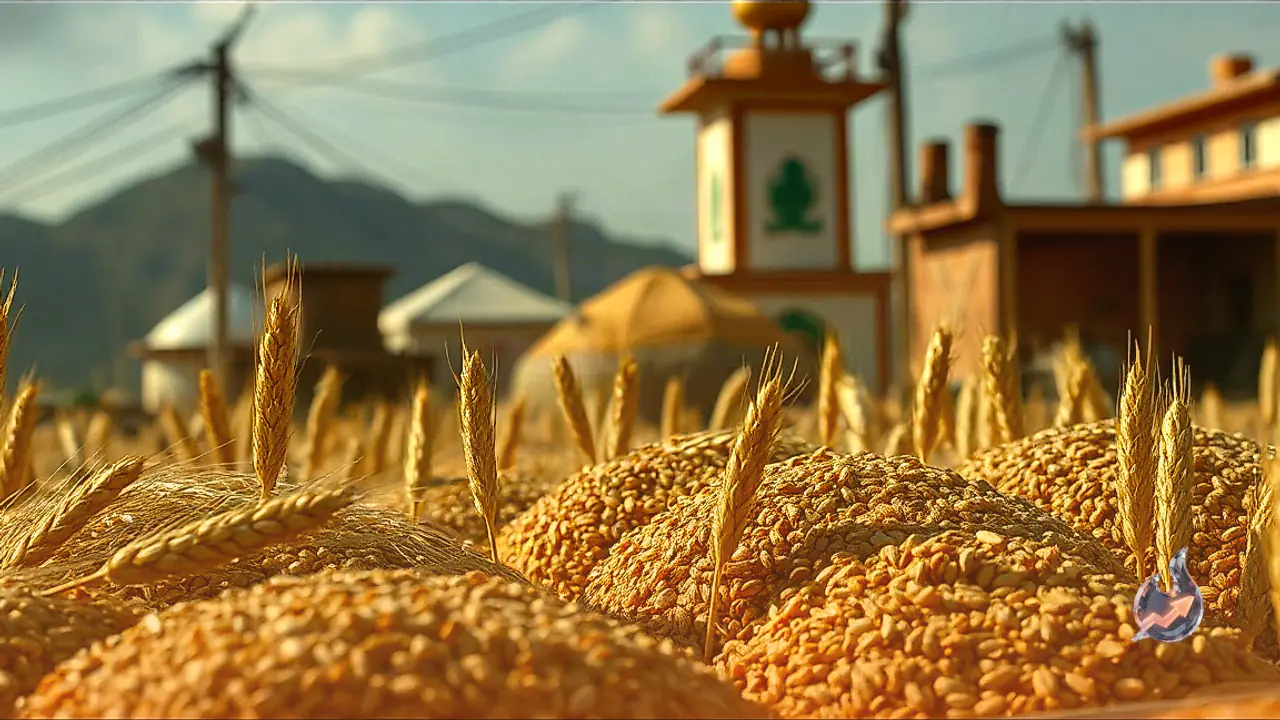
Through this revamped canal, around 600 farmers in the Alniyawas region alone will receive sufficient water supplies for the upcoming Rabi cropping season. This guaranteed water availability will simplify the sowing of essential crops such as wheat, mustard, and gram. Furthermore, local agricultural producers note that continuous aquifer recharge coupled with proper canal maintenance will fundamentally reshape farming economics in Nagaur. Higher crop quality combined with an anticipated doubling of harvest yields will significantly reduce input expenditures previously spent on tube well electricity and diesel pumping systems.


