






















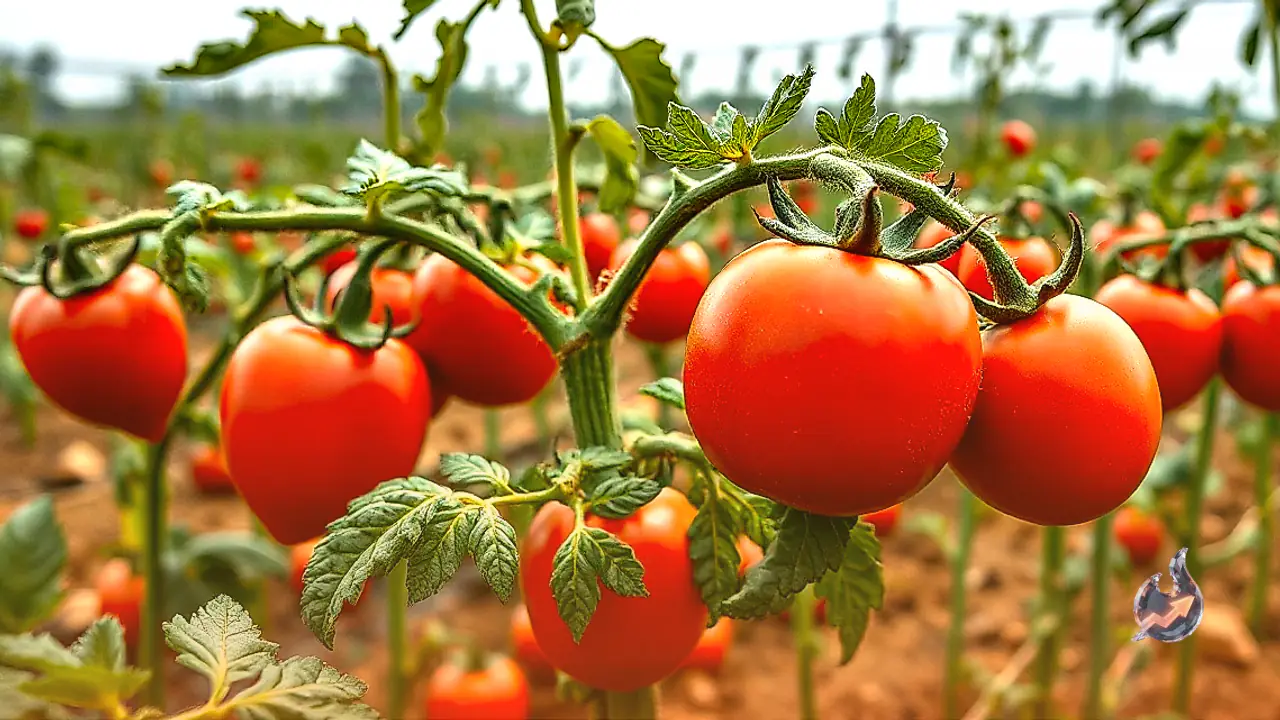

Cultivating tomatoes during the monsoon season opens up lucrative opportunities for farmers, as market demand often drives prices higher during this period. However, heavy rains, excessive soil moisture, and high humidity also heighten the risk of pest infestations and fungal infections. Without meticulous care during the initial growth stages, crop damage can lead to severe financial losses. Agricultural experts emphasize that combining scientific management, resilient high-yielding seeds, and structured field practices allows growers to overcome seasonal challenges and harvest an abundant crop.
Selecting Climate-Resilient Hybrid Tomato Varieties
Choosing the right seed variety adapted to local agro-climatic conditions is the foundational step in successful tomato farming. Dr. Baldev Agrawal, Subject Matter Specialist at Krishi Vigyan Kendra Balod, highlights that the Saho variety is particularly well suited for the climate and soil conditions of Chhattisgarh. Saho has gained widespread popularity among regional farmers because it delivers high yields while demonstrating strong natural resistance to common pests and diseases. Farmers can also opt for other proven high-performing varieties such as Lakshmi 5005 and Avinash-2. Several other high-quality commercial hybrid seeds are readily available in the market to suit specific regional soil profiles.
Nursery Site Selection and Drainage Management
Proper nursery site setup plays a decisive role in producing vigorous seedlings. Dr. Baldev Agrawal stresses that the nursery bed should be established on an elevated plot within the field where rain runoff drains away naturally without creating waterlogging. The chosen location must receive clear sunlight and remain free from continuous shade cast by surrounding trees or buildings. Excellent drainage protects delicate root systems from early stage fungal decay. Nursery beds should ideally be prepared with a standard width of approximately one meter, while the length can be adjusted based on land availability and seed requirements.
Precision Sowing and Seedling Protection Techniques
High quality hybrid seeds involve significant investment, making waste reduction essential during planting. After preparing the raised nursery bed, parallel lines should be marked across the surface to sow individual seeds at uniform spacing. Sown seeds must be covered with a light top layer of dry sand, followed by controlled moisture application through drenching. The bed should then be mulched with a protective layer of straw. As soon as young seedlings germinate and break through the soil, the straw mulch must be removed promptly. To shield seedlings against early infections, drenching with Biostin followed by scheduled foliar sprays is highly recommended.
Controlling Damping Off Disease and Nursery Care
Damping off poses one of the most destructive threats to young tomato nurseries. Plants affected by this fungal complex may appear healthy in the evening but collapse at the soil line and rot completely by the next morning. Rather than waiting for visible symptoms to emerge, farmers should integrate preventative disease control measures right from bed preparation. With consistent oversight, seedlings reach ideal strength and become ready for field transplantation in about 20 to 22 days. Once transplanted into the main field, adequate organic manure, balanced plant nutrition, and scheduled irrigation support robust vegetative growth.
Field Staking Methods and Expected Crop Yields
Tomato plants typically begin bearing fruit approximately three months after main field transplantation. As fruit clusters develop and grow heavy, unsupported branches tend to bend downward and come into contact with wet soil. Implementing the staking method is critical to prevent crop loss. Using sturdy bamboo poles, wooden stakes, durable wires, and synthetic ropes, plants are tied upright to provide vertical structural support. Keeping plants elevated prevents fruit rot caused by ground contact, enhances air circulation, and simplifies ongoing crop maintenance and harvesting. Under scientific farming practices, yields can range between 25 quintals and 25 tonnes per acre, depending on soil quality, weather patterns, irrigation frequency, nutrient management, and overall field care.