























In a major victory for environmental conservation and wildlife protection, the forest department in Chhattisgarh's Korba district has dismantled an illegal wildlife trafficking ring. Forest officers successfully rescued several rare Indian flapshell turtles from the clutches of smugglers. Initial investigations have revealed a shocking trade where these protected creatures were slated to be sold in the local markets for meat at a price of approximately 700 rupees per kilogram. Actively intervening in the matter, the authorities apprehended a key suspect and initiated strict legal proceedings.
Busted at a Local Weekly Market
The forest department had been receiving continuous intelligence reports indicating that rare and protected species of turtles were being illegally trafficked and sold in the Pendra-Pasan area. Taking serious note of these reports, senior officials established a specialized surveillance team to monitor suspicious movements and protect the local biodiversity. The team kept a close watch on potential trade hubs and local gatherings.
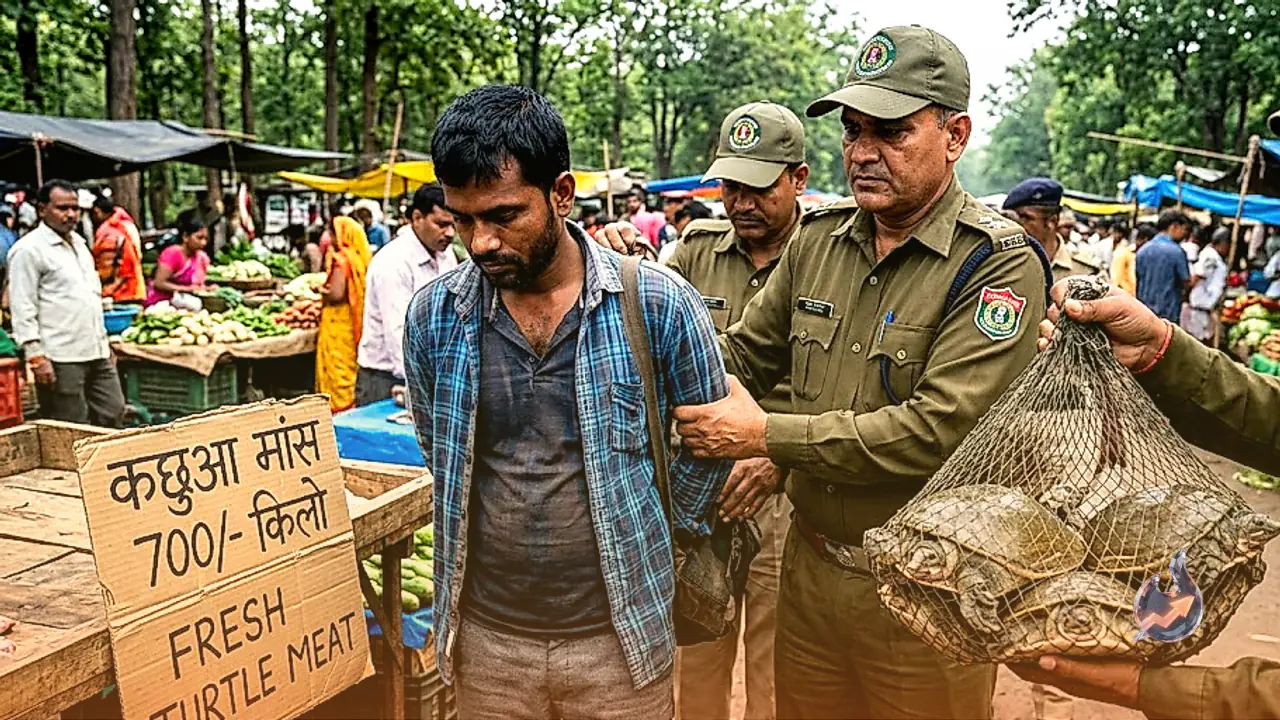
On July 23, the surveillance team received a precise tip-off regarding the sale of protected wildlife at the weekly market in Gram PV 124. Acting swiftly, officers conducted a surprise raid at the marketplace. During the operation, they cornered and detained a suspicious individual. Upon questioning, the man identified himself as Dipankar Roy. A search of his possessions led to the recovery of 11 live Indian flapshell turtles, which he had brought to the market to sell for commercial consumption.
Lucrative Trade and High Meat Demand
Interrogations revealed that the smugglers were targeting these innocent creatures to generate massive profits. Driven by high profit margins, traffickers have been supplying turtle meat to weekly village markets and even expanding their operations to the district headquarters. The suspect was charging buyers 700 rupees per kilogram for the meat.
This decisive action by the forest department has sent shockwaves through the local network of poachers and traffickers. Forest officials believe that this arrest will put a major dent in the illegal trade of aquatic wildlife in the region and deter others from engaging in such illicit activities.
Severe Charges Under Schedule-1 of the Wildlife Protection Act
The Indian flapshell turtle is highly protected under Schedule-1 of the Wildlife Protection Act, 1972. Species listed under this category are afforded the highest level of protection under Indian law, similar to tigers and elephants. Any act of hunting, capturing, possessing, transporting, or trading these animals is strictly prohibited and constitutes a non-bailable offense.
Following the seizure, the forest department officially registered a case against Dipankar Roy under Sections 49, 49B, 50, and 51 of the Wildlife Protection Act. Legal experts point out that if convicted under these stringent provisions, the offender faces rigorous imprisonment along with substantial financial penalties.