
















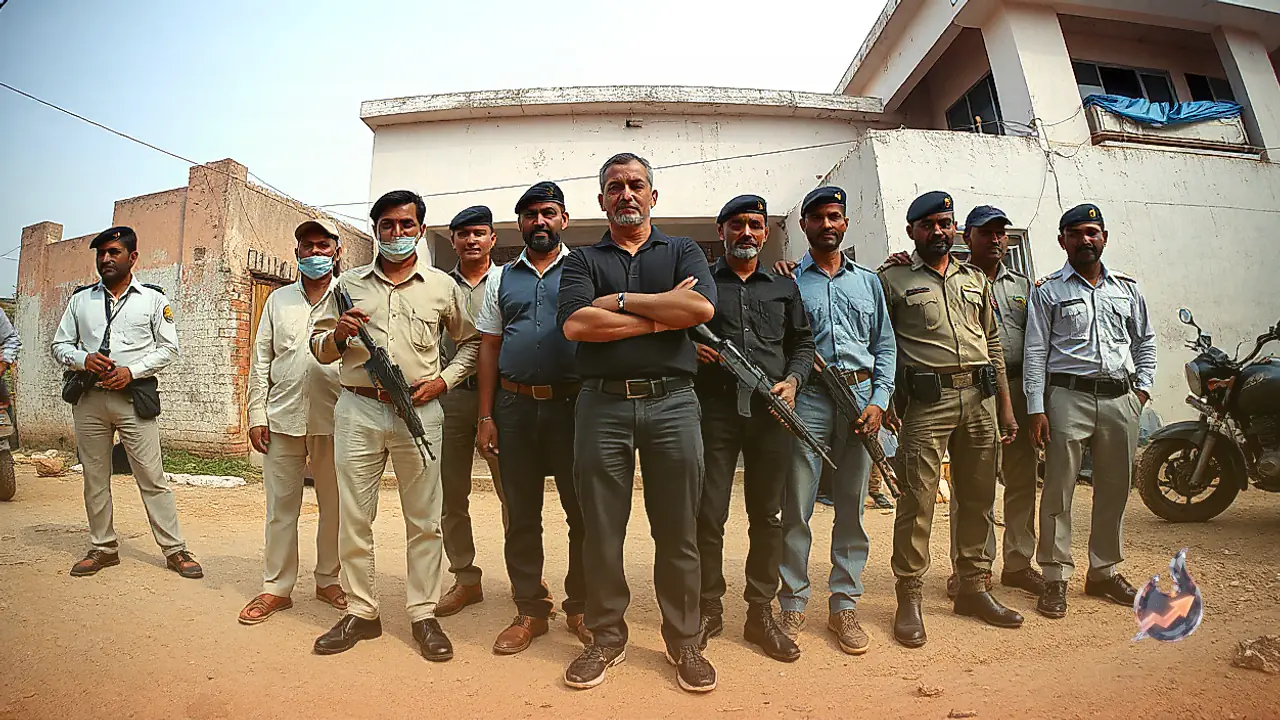

The clandestine trade of restricted narcotic injections and pharmaceutical drugs has emerged as a severe challenge for law enforcement and excise authorities in the Surguja division. Despite continuous raids and numerous arrests, the underground supply network remains resilient and active. According to police records, roughly 78 cases related to illegal narcotic injections have been registered since the beginning of 2025. Out of these, 15 cases have led investigators to suspects connected with other states, resulting in interstate arrests. Concurrently, separate operations conducted by the excise department have sent approximately 75 to 80 individuals to jail. Despite these enforcement actions, market prices for these prohibited substances have surged dramatically, with injections that once sold for around 200 rupees now commanding between 800 and 1,000 rupees.
Interstate Connections Fueling the Illegal Trade
Authorities have maintained continuous operations against dry narcotics, cracking down on individuals involved in the trafficking of banned injections, capsules, and restricted pharmaceutical tablets. However, the illicit business refuses to subside. Police data reveals that 15 of the 78 cases registered since 2025 have traced supply lines extending into Jharkhand, Uttar Pradesh, Madhya Pradesh, and Hyderabad. Law enforcement personnel have successfully apprehended suspects operating from these external territories. Emphasizing the need for a broader strategy, Deepak Jha stated that instead of merely targeting low-level local vendors, the department is actively focusing on dismantling the entire supplier network from its roots.
Addicts Turned into Peddlers to Finance Habits
The divisional excise flying squad has been executing targeted operations under the banner of Operation Clean since April 2025. Departmental figures indicate that nearly 75 to 80 people have been incarcerated so far, alongside the seizure of substantial quantities of banned injections, capsules, and tablets. However, excise investigations have uncovered an alarming trend where individuals struggling with addiction are increasingly transitioning into active peddlers of these substances. Departmental officials note that a narcotic injection formerly priced around 200 rupees now retails for 800 to 1,000 rupees. The desperate financial requirement to sustain personal addiction frequently drives these individuals into the illegal distribution business to fund their next dose.
Bordering Regions Serving as Primary Supply Hubs
Investigations have further established that the distribution channels feeding the division originate in neighboring states. According to excise department findings, Garhwa district in Jharkhand serves as one of the primary sources for narcotic injections. Concurrently, intelligence points to Myorpur and Ashram Morh areas in Uttar Pradesh as transit or sourcing points for illegal cough syrups. Nevertheless, limited departmental resources make venturing into other states to apprehend primary suppliers a formidable hurdle. Excise officials point out that while a joint operation with local police previously yielded arrests in Garhwa, local-level arrests will likely fail to halt the overarching trade unless authorities dismantle the master syndicates operating behind the scenes.
Directives Issued to Target Main Supply Networks
To counter this escalating crisis, police leadership has intensified operational directives across all districts. Law enforcement chiefs have instructed district superintendents to trace the original supplier in every single NDPS case registered. Retail medical establishments are also being engaged through periodic awareness campaigns regarding the illegal distribution of restricted pharmaceuticals. Furthermore, enhanced intelligence sharing and joint operations between the police and excise departments are being coordinated to tackle the crisis holistically. Consequently, the primary obstacle facing authorities is no longer just apprehending street-level peddlers, but entirely severing the interstate supply chains that sustain the entire operation.