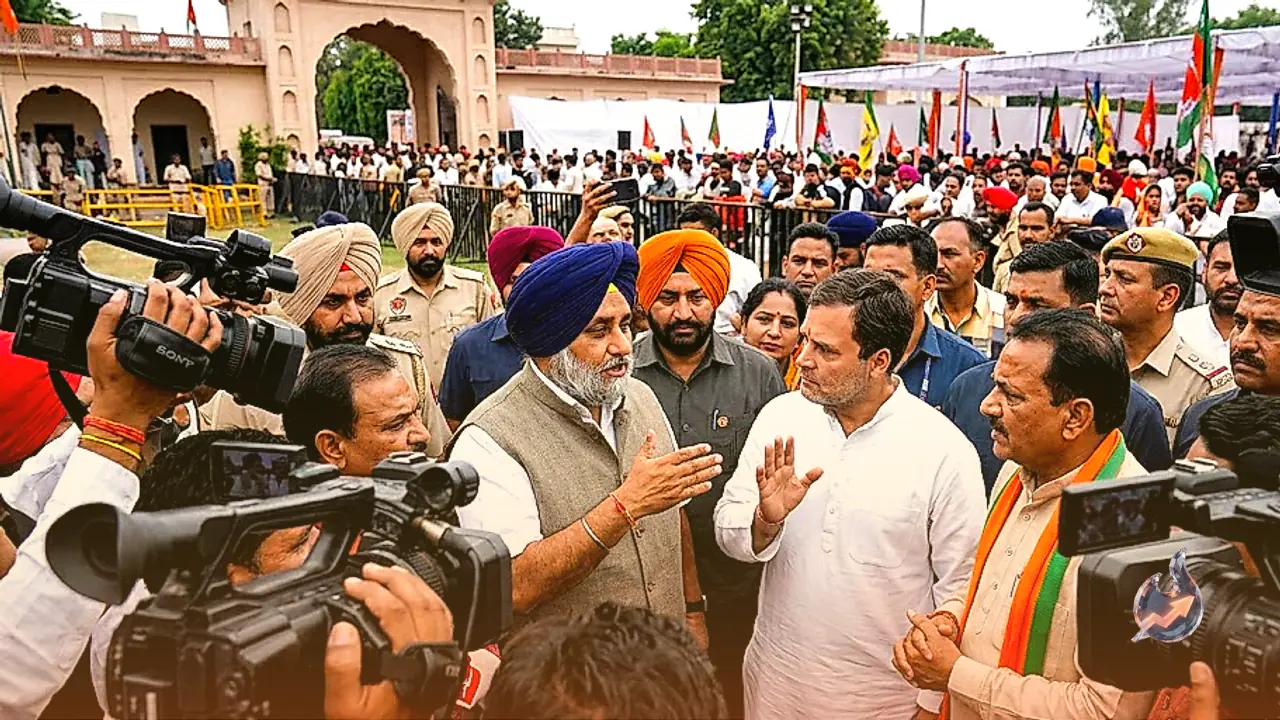















A fresh controversy has erupted in the Bastar region of Chhattisgarh surrounding the official invitation cards printed for the traditional Muria Darbar. Lakheshwar Baghel, the Bastar MLA and Deputy Leader of the Opposition in the legislative assembly, has openly questioned the administrative arrangements and management. He stated that the Muria Darbar is not merely a routine gathering but a vital platform deeply connected to the indigenous traditions, culture, and rights of the tribal population. However, he pointed out that several legislators from both the ruling party and the opposition have been completely left out of the current invitation cards. Terming this omission an insult to elected representatives, he questioned who would voice the concerns of the tribals if tribal legislators themselves are absent from the proceedings.
Expressing immense pride over the visit of the President of India to Bastar, Baghel remarked that the locals take great pride in hosting the nation's highest constitutional authority. He emphasized that the Muria Darbar represents an essential historical and cultural cornerstone of Bastar where tribal communities traditionally present their grievances and demands directly. Under such circumstances, maintaining the dignity and honoring the established traditions of the event remains the prime responsibility of the local administration. He added that inviting tribal legislators to the Muria Darbar has been a longstanding practice every single year, enabling public representatives to bring forward community issues and advocate for tribal interests effectively.
Raising strong objections to the exclusion of lawmakers from the invitation list, the opposition MLA alleged that the administration has arbitrarily altered age-old customs this time. According to him, while a select few ministers and specific MLAs managed to secure a mention, numerous legislators representing both ruling and opposition benches were neither included in the printed invitation nor invited to attend the Muria Darbar. Objecting to this flawed arrangement, he argued that the physical presence of community representatives at a tribal gathering of this scale is crucial. He questioned how tribal issues could find a proper and effective forum if the elected representatives themselves are barred from participating in the event.
Connecting the unfolding situation directly to the dignity of public office, Baghel asserted that the current approach adopted by the administration is completely unjustified. He posed a direct query regarding who would shoulder the responsibility of raising tribal voices on such a significant platform if representatives are sidelined. Presently, amidst the rising storm of questions surrounding the distribution of invitation cards, a detailed response from the administrative machinery is still awaited. Observers are now watching closely to see what clarification the administration issues regarding the controversy and how the participation of public representatives is ultimately handled during the Muria Darbar proceedings.