



















Following the harvest of paddy crops, leftover dry straw frequently turns into an unwanted burden for cultivators. A substantial number of farmers consider this residual straw completely useless and either set it on fire in open fields or leave it lying unattended. Sachin Kumar Verma, a scientist at Krishi Vigyan Kendra Balod, highlighted that agricultural producers can utilize this post-harvest paddy residue to significantly bring down their input expenses. Farmers do not require any costly implements or extra resources to adopt this method, as standard field management produces tangible financial savings.
Preserving Soil Moisture and Suppressing Weeds in Row Crops
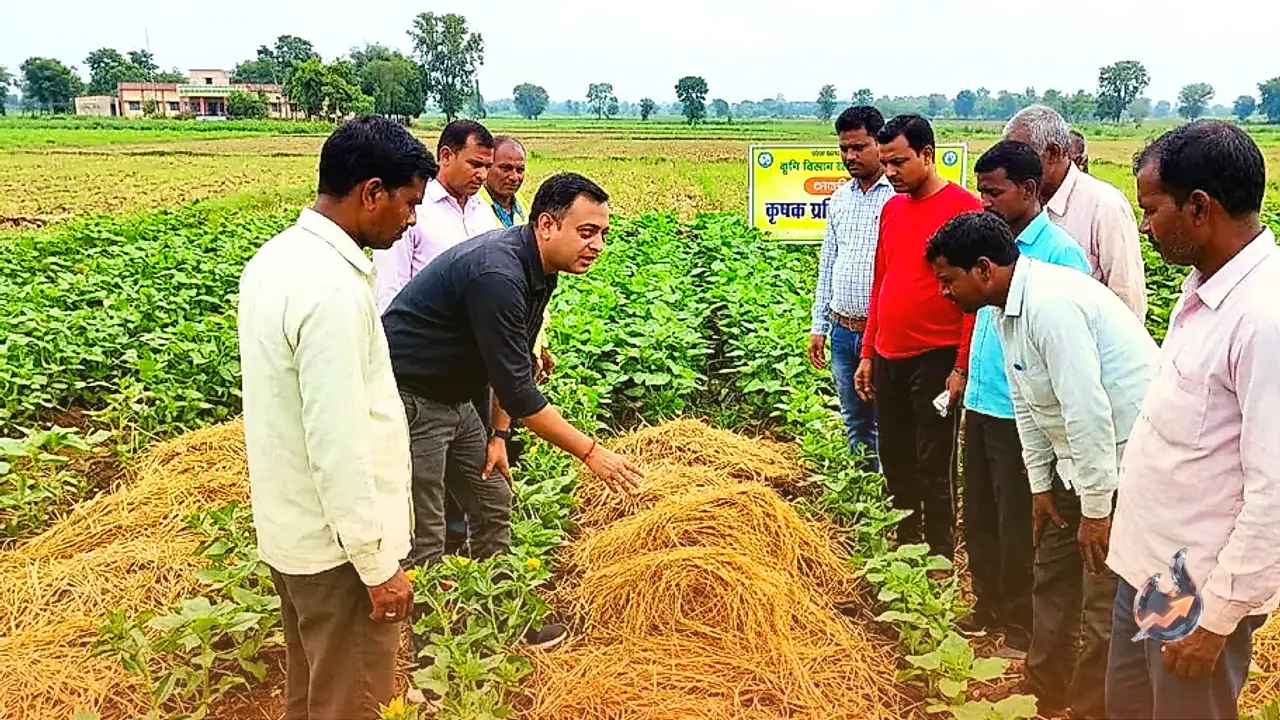
Agricultural scientist Sachin Kumar Verma explained that paddy straw can be layered effectively across open ground between crop rows during the Rabi season. This practice is particularly suitable for row-sown crops such as safflower and sunflower. Spreading a protective covering of straw cushions the soil surface from harsh sunlight and rapid evaporation, ensuring that essential moisture remains locked within the ground for an extended duration. Because the ground retains water longer, fields do not demand frequent irrigation cycles.
An equally important advantage of this straw blanket is its natural suppression of weeds. The dense layer prevents sunlight from reaching underlying seeds, keeping undesirable vegetation from sprouting or establishing itself. Consequently, farmers are freed from repeated manual weeding operations and the need to purchase costly chemical weedicides. This direct reduction in labour requirements and chemical application substantially cuts the recurring operational overheads of the crop cycle.
Natural Decomposition Enriches Long-Term Soil Fertility
Another major agronomic benefit of this technique lies in the slow, natural breakdown of the biomass. Over time, the layered paddy straw decomposes directly inside the field and converts into rich organic manure. This continuous breakdown injects essential organic matter back into the soil structure, rejuvenating exhausted farmland and enhancing overall fertility. Thus, a single application of paddy straw simultaneously performs three distinct duties: moisture conservation, weed suppression, and continuous soil nourishment. Scientist Sachin Kumar Verma also pointed out that paddy straw remains equally practical for mushroom cultivation.
Proper Harvest Collection and Field Application Strategy
To implement this practical approach smoothly, farmers should systematically gather and store paddy straw right at the time of harvesting the Kharif crop. Keeping the straw dry and secured prevents weathering before the Rabi cycle begins. Once row-seeded crops like sunflower and safflower are planted in the field, growers can evenly spread the stored straw between the crop rows. This straightforward, low-cost technique offers an economical alternative to crop residue burning while noticeably decreasing overall production expenditures across the winter farming season.