


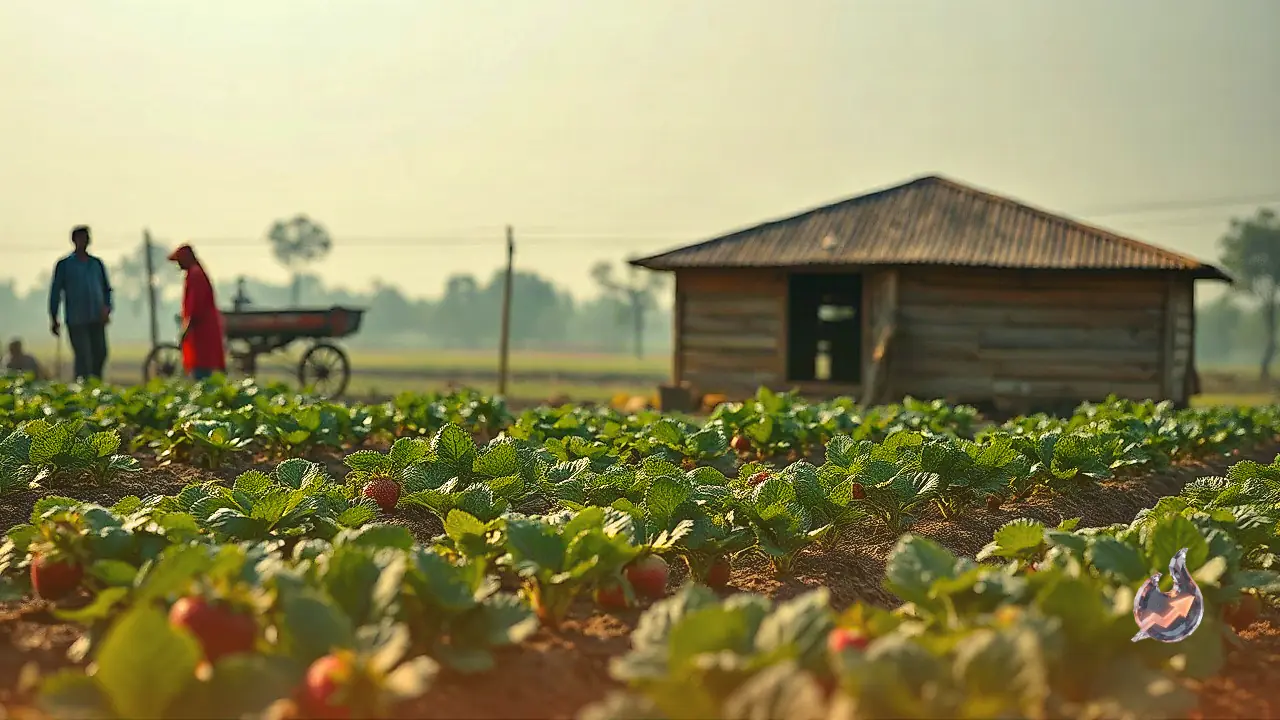




















Agricultural practices in the Surguja district of Chhattisgarh are undergoing a noticeable transformation as growers move away from traditional crops. Farmers are increasingly adopting high-value fruit farming to secure better financial returns from their land. The regional climate and soil conditions have proven favorable for delicate commercial fruits, making strawberry cultivation a promising option. With structured field preparation, nutrient application, and timely sowing, farmers can unlock substantial economic gains from relatively small parcels of land.
Early October Plantation Yields the Fastest Harvest
The transition window between late September and early October is regarded as the ideal period to begin strawberry farming. According to agricultural expert Rakesh Rajwade, the window between October 1 and October 5 is particularly critical for transplanting young saplings into the field. Planting during these five days allows the root systems to establish efficiently, leading to the first batch of harvestable fruits within approximately 45 days. Timely transplantation ensures that the crop fully utilizes the winter season, enhancing both yield volume and fruit texture.
Plant Density and Total Harvest Estimates
Under recommended spacing norms, an acre of agricultural land can accommodate approximately 5,000 strawberry plants. In typical growing conditions, each mature plant yields an average of 500 grams of fruit. When weather and soil factors remain exceptionally favorable, the output per plant can range from 500 grams to 750 grams. Consequently, a farmer managing 5,000 healthy plants can expect a cumulative yield of around 2,500 kilograms of strawberries, establishing a solid baseline for commercial volume from a single acre.
Input Costs Versus 5 Lakh Rupee Gross Revenue
Strawberries usually command high rates upon entering the market early in the season. Assuming a conservative average selling price of 200 rupees per kilogram, a 2,500 kilogram harvest can generate gross market receipts of approximately 5 lakh rupees. The ultimate profit margin, however, depends on market fluctuations, produce grade, and operational costs. Total seasonal investments, including saplings, plastic mulch, fertilization, drip irrigation, and field labor, generally range between 1 lakh and 1.5 lakh rupees per acre, leaving substantial room for net earnings.
Bed Preparation, Spacing, and Plastic Mulching
While the soil working process resembles potato cultivation, strawberry farming requires precise bed shaping and moisture insulation. The application of plastic mulching is indispensable to suppress weed growth, regulate soil temperature, and prevent direct fruit contact with moist ground. Farmers are advised to maintain a distance of 90 to 120 centimeters between raised beds. Within each bed, the spacing between consecutive plants should be kept between 30 and 45 centimeters to ensure adequate sunlight penetration and airflow.
Nutrient Regimen Using Vermicompost and Manure
Maintaining continuous flowering and fruiting cycles demands rigorous nutritional inputs. Soil enrichment typically starts with decomposed farmyard manure and vermicompost applied according to land requirements. In addition, growers utilize bone meal and a planned distribution of NPK fertilizers to fulfill macro and micronutrient demands. Balanced nutrition fortifies the crop against common stresses while directly improving berry sweetness, size, and shelf life.
Suitability of Winter Dawn Variety in the Silphili Belt
Choosing the correct cultivar remains a decisive factor in determining overall productivity. For the specific agro-climatic zone of Surguja, the Winter Dawn variety has shown consistent performance. Its plants adapt well to regional temperature patterns and deliver reliable quality. In the Silphili area of Surguja, farmers have already deployed this variety on an expansive scale, making the region a prominent focal point for commercial strawberry production.
Harvest Schedule Extending Through April
Plants transplanted in early October initiate their fruiting phase between late November and the first week of December. Production continues steadily through March and April, depending on rising spring temperatures. Strawberry harvesting generally takes place at alternate-day intervals to pick berries at optimal ripeness. Because the fruit is highly perishable, farmers must arrange secure packaging and dependable transit to local and regional wholesale mandis well before peak harvest begins.