




















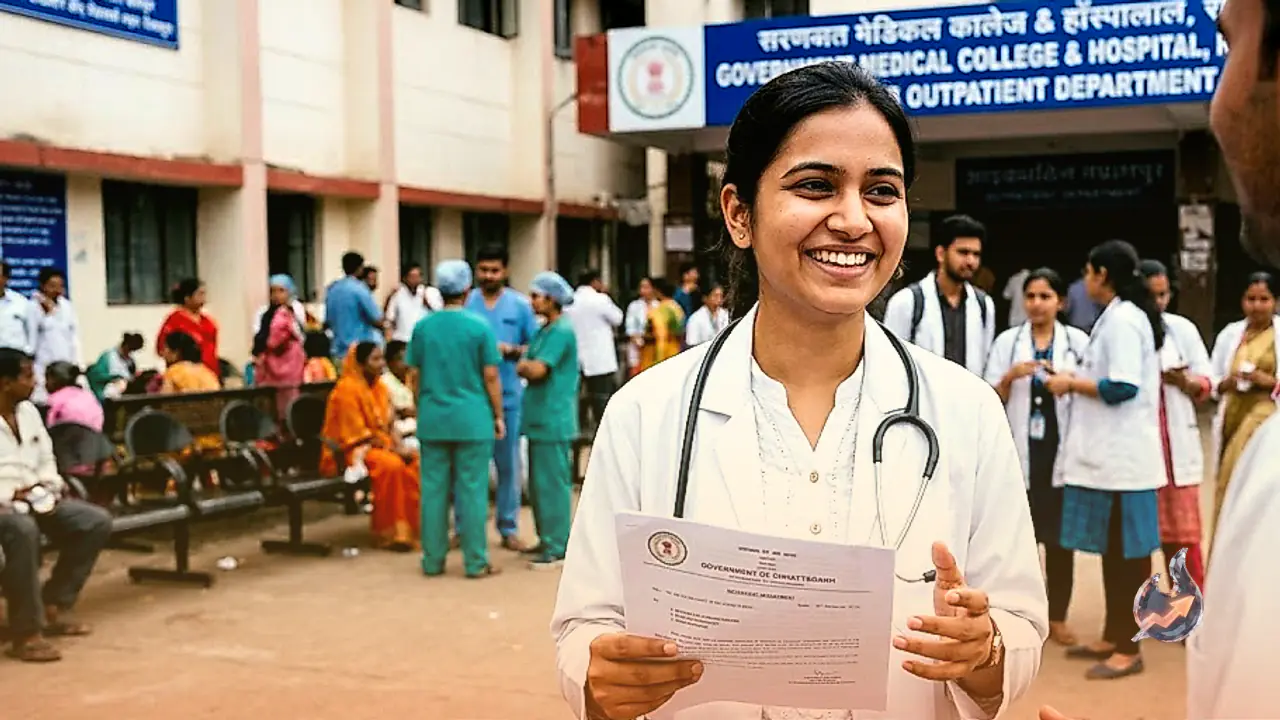

MBBS intern doctors working round the clock across government medical colleges in Chhattisgarh have received substantial financial relief from the state administration. The government has formally sanctioned a revised monthly stipend of Rs 25000 for these medical trainees. The official order fulfills a persistent demand from junior doctors who had been advocating for higher compensation while managing essential hospital operations.
Finance Department Clears Order for October Implementation
The revised compensation structure has received formal clearance from the state finance department. According to the administrative notification, the hike will take effect on October 1, 2026, ensuring that trainee doctors receive their increased payments starting the very next month. Because government healthcare facilities depend heavily on interns to manage daily patient footfall, this financial adjustment provides direct support to early-career medical staff.
Discussions with Health Minister and Postponement of Agitation
The decision follows sustained negotiations between medical representatives and state authorities. In August, a delegation of intern doctors met Chhattisgarh Health Minister Shyam Bihari Jaiswal to present their grievances. During that meeting, the minister acknowledged the validity of their demands and assured them that the government would revise their compensation. Following that commitment, the IMA-MSN alongside the intern doctors' association resolved to suspend their proposed demonstrations and strikes until August 30 as a gesture of goodwill.
Sustaining Hospital Operations and Resolving the Strike Threat
Government hospitals and medical institutions rely extensively on the daily contributions of junior doctors across outpatient, inpatient, and emergency units. Prior to this settlement, unrest and public protests by the trainee doctors had raised serious concerns about potential disruptions to medical care statewide. By formally approving the stipend enhancement, the state government has satisfied the interns' demands and averted the risk of impending hospital strikes, stabilizing the public healthcare delivery network.