























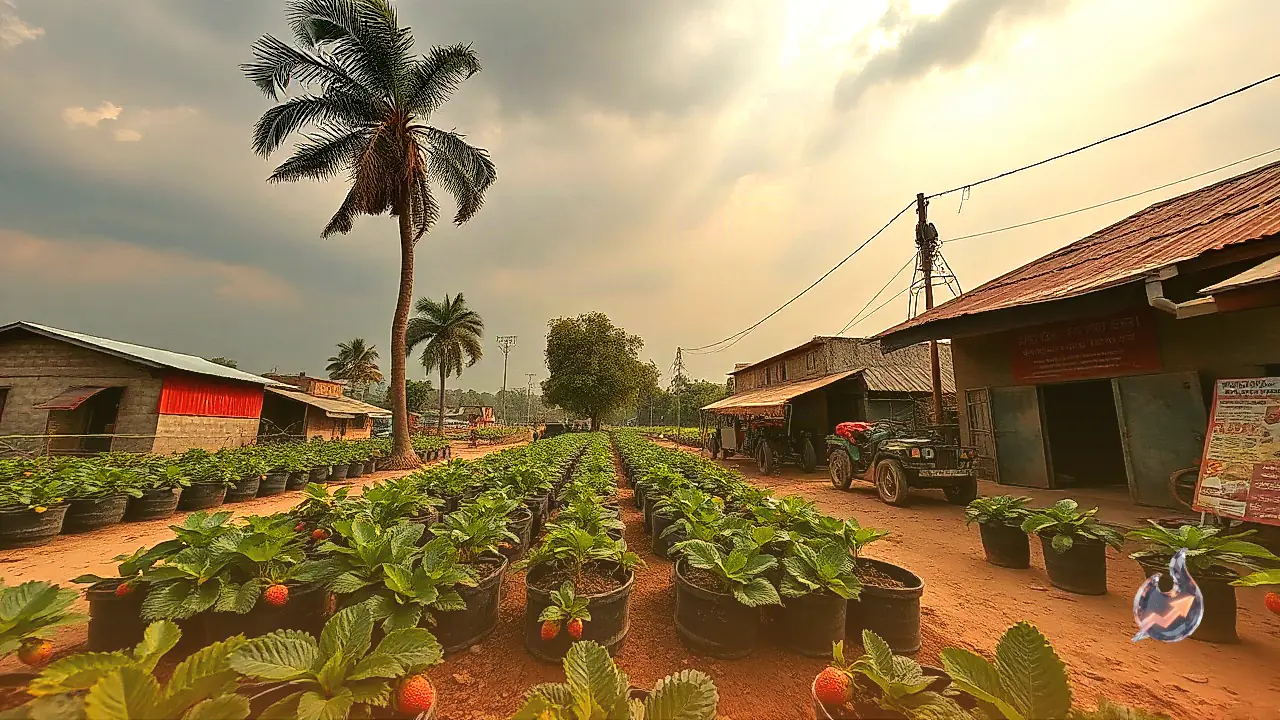

In drought prone tracts like the Palamu district of Jharkhand, where growers routinely confront the uncertainties of irregular rainfall and dry spells, diversifying into high value horticulture is opening up dependable economic opportunities. Strawberry farming is emerging as an attractive commercial alternative, particularly for landholders with sandy loam to loamy soil profiles. Driven by strong consumer demand and premium price realization compared to standard field crops, cultivating this berry allows local agrarian households to generate substantial supplementary income.
Nutritional Value and Steady Commercial Appetite
According to Pramod Kumar, an agricultural scientist stationed at the Regional Research Centre in Chiyanki, the distinctive sweet and tangy profile of strawberries comes packaged with significant nutritional value. The fruit contains high concentrations of vitamin C alongside other essential vitamins and minerals, while also being rich in antioxidant compounds. These health attributes sustain continuous consumer appetite in retail centers. Beyond fresh table consumption, the produce enjoys wide commercial application as an essential ingredient in shakes, juices, fruit jams, and a diverse range of processed food products.
Planting Calendar and Winter Crop Cycle
Factoring in the local climatic dynamics of the Palamu region, the period spanning September to October serves as the primary window for establishing the crop. Cultivators generally schedule plant transplantation between September 15 and October 15 to capitalize on the onset of cooler weather, which provides optimal conditions for plant development and fruiting. Because the crop completes its production cycle in roughly five months, prompt field preparation, timely soil enrichment, and organized plant care are necessary to secure maximum yields.
Tissue Culture Planting Material and Bed Preparation
A productive harvest depends fundamentally on securing superior planting stock. Agricultural scientist Pramod Kumar advises growers to procure their seedlings from certified tissue culture laboratories or verified nursery sources. Field layout requires transplanting onto prepared ridge beds rather than flat ground, ensuring that excess moisture drains away efficiently. Stagnant moisture poses a severe threat to the root architecture, and inadequate drainage can lead to significant plant mortality and fungal decay.
Input Requirements and Net Profit Margins
Establishing a commercial strawberry plot requires expenditure across multiple operational components, including seedling acquisition, ridge bed formation, plastic mulching, irrigation infrastructure, fertilizers, and routine crop protection. Total expenditure naturally fluctuates depending on prevailing input prices, crop productivity, and management efficiency. However, with sound agronomic oversight and favorable market rates, farmers can realize a net profit ranging between three and four lakh rupees per acre, supported by expanding market channels for specialty horticulture.
Advance Market Planning for Perishable Harvests
Because strawberries are highly perishable with a very limited post-harvest shelf life, farmers must formulate clear marketing and logistics channels prior to launching cultivation. Relying solely on unplanned local sales can lead to distress disposal. Growers are advised to actively explore supply linkages with fruit merchants in larger urban centers, high-end hotels, restaurants, and agro-processing facilities to ensure that freshly harvested berries reach lucrative points of sale without delay.