























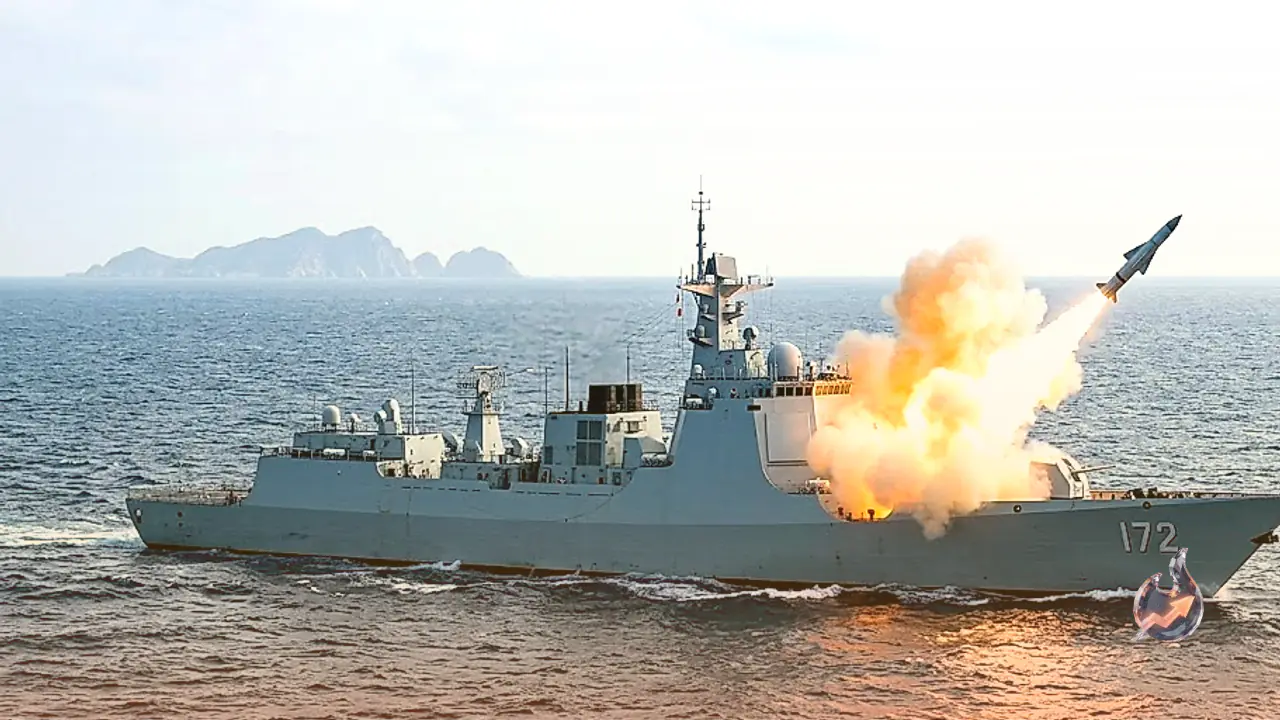

Taking another significant step toward modernizing its naval forces, the Chinese Navy has released operational footage showing the vertical launch of its YJ-20 hypersonic anti-ship missile. Fired via the Vertical Launch System (VLS) of a Type 052D guided-missile destroyer, the demonstration highlights Beijing's focus on expanding its high-tech combat capabilities. Although the exact date of the test remains undisclosed, defense analysts view the release as a deliberate signal of China's growing maritime prowess. Beijing continues its push to build a formidable blue-water navy capable of global reach, directly competing with the long-standing quick-response advantages of the US Navy.
Capabilities and Performance Specs of the YJ-20 Missile
First showcased publicly during the September military parade in Beijing last year, the YJ-20 has been dubbed a 'carrier killer.' Recognized as China's first sea-based hypersonic anti-ship missile to enter mass production, it possesses flight profiles designed to evade conventional air defense systems.
Measuring approximately 9 meters in length with a diameter under 850 millimeters, the missile exhibits key operational characteristics
- Strike Range: Estimated operational reach between 1,000 and 1,500 kilometers.
- Mid-Course Flight: Maintains speeds above Mach 6, reaching maximum distance within 13 to 14 minutes.
- Terminal Phase: Accelerates beyond Mach 10 (over 12,348 km/h) while performing unpredictable evasive maneuvers.
- Glide Altitude: Operates between 40 and 60 kilometers high, gliding above the effective monitoring threshold of early warning radars.
This combination of speed, trajectory changes, and altitude leaves target vessels with extremely narrow reaction windows. Compared to supersonic cruise missiles like India's BrahMos, the YJ-20 offers substantially greater range and velocity, posing severe structural threats to aircraft carriers and major surface combatants.
Deployment Integration Across Type 052D and Type 055 Fleet
Naval expert Song Zhongping observed that the Type 052D destroyer effectively served as the development testbed for the larger Type 055 destroyer. Following an earlier launch demonstration from a Type 055 vessel in December 2025, demonstrating compatibility with the Type 052D confirms that the YJ-20 is being standardized across China's surface fleet.
China's operational fleet configuration currently includes
- Type 052D Destroyers: 35 vessels in active service, each equipped with 64 VLS cells.
- Type 055 Destroyers: 10 vessels in active service, featuring 112 VLS cells per ship.
Because both vessel classes share standardized launch infrastructure, widespread arming of these destroyers with hypersonic anti-ship weapons significantly alters defensive requirements for opposing navies operating in the Western Pacific.
Strategic Implications for the US Navy and Regional Allies
Lyle Goldstein, Director of the Asia Program at the Washington-based think tank Defense Priorities, noted that the footage represents more than a routine test. According to Goldstein, it underscores the rapid operational integration of advanced strike weapons into active service. This acceleration heightens operational risks for the US Navy, particularly around Taiwan and throughout the South China Sea.
Goldstein added that while US submarines remain effective tactical assets, their constrained missile payloads mean they may not provide a decisive edge against saturation attacks. Consequently, defense planners in Washington and allied capitals face increasing pressure to update regional defensive posture and naval strategy in the Asia-Pacific region.