





















China continues to conduct secretive industrial experiments inside closed facilities that often evade international scrutiny. While some details occasionally surface, many remain permanently obscured, and the global community frequently looks past these developments. However, a massive economic powerhouse has emerged from China that is far too significant to ignore. While major world leaders remain occupied with military conflicts, political debates, and domestic elections, a single Chinese city is systematically positioning itself to dominate the entire global economy.
What is Happening Inside Dongguan?
Dongguan has quietly transformed into the industrial engine room that manufactures the components fueling global industrial might. Beijing's ultimate intention has become crystal clear, as the Chinese leadership seeks to position this single metropolis as an unmatched industrial superpower capable of supplying every essential and non-essential product worldwide. Chinese President Xi Jinping’s overarching vision aims to reshape global commerce without firing a single shot or launching a single missile, effectively making the rest of the world dependent entirely on Chinese manufacturing.
From Toy Hub to the Factory of Factories
Understanding this massive economic campaign requires examining the internal evolution of Dongguan. Situated directly north of Hong Kong, Dongguan was once an ordinary, unassuming town. Just two decades ago, its economy relied entirely on producing inexpensive shoes, apparel, kitchenware, and children's toys. When these low-cost goods began flooding international markets, Western policymakers failed to take the threat seriously, assuming that basic manufacturing was beneath developed economies and allowing their domestic light industries to wither away.
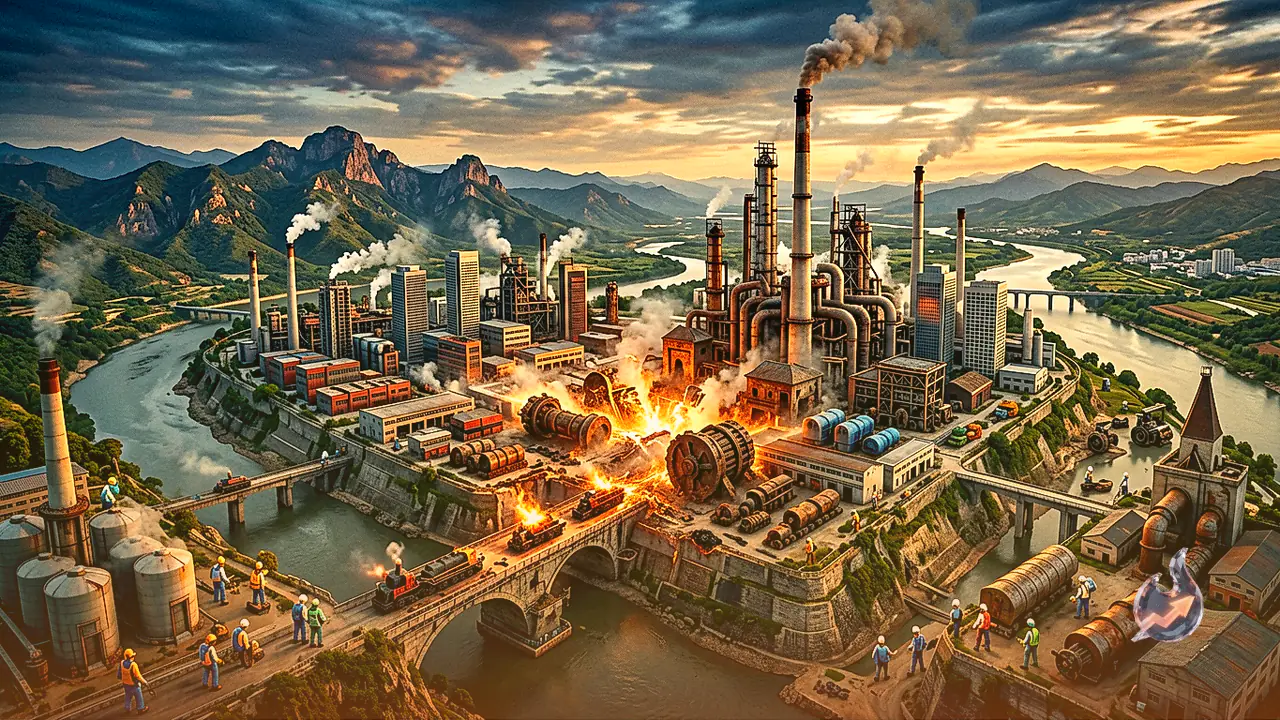
According to reports from the Daily Mail, modern Dongguan bears no resemblance to its past. It no longer manufactures simple toys; instead, it has evolved into the factory of factories for the entire planet. Any major manufacturing facility anywhere in the world now relies on the advanced high-tech hardware produced exclusively within this single city. Inside Dongguan's dark, sprawling industrial complexes, sophisticated technologies are being developed around the clock, causing sleepless nights for leaders in major Western nations.
The Arsenal of Advanced Manufacturing
The scope of advanced engineering and manufacturing concentrated in Dongguan is immense. The city produces high-tech industrial robotic arms designed to replace human labor across global factories. It manufactures the most advanced components and battery systems utilized by electric vehicles traversing roads worldwide. Furthermore, it builds the microchips and sophisticated machinery capable of controlling digital infrastructure across nations, alongside green energy equipment and solar panels that regulate electrical grids globally. The advanced engineering supremacy once held exclusively by Germany and Japan is being steadily absorbed by Dongguan's relentless industrial network.
The Decline of Dresden and Germany’s Industrial Woes
The devastating impact of Dongguan’s rise on established economies is perhaps most visible in Germany. The German city of Dresden was globally renowned for its automotive prowess, housing Volkswagen’s famous Transparent Factory, where gleaming robotic systems assembled luxury vehicles behind pristine glass walls. However, German industries have faltered before the relentless influx of cheaper, advanced goods originating from Dongguan. Production lines at that historic plant have ground to a halt. Volkswagen has been forced to eliminate thousands of jobs and shutter facilities on its home soil, reluctantly shifting its new operational setups directly into China. Regions of Germany that once stood as proud symbols of the Industrial Revolution are now facing severe economic stagnation.
The Irony of Net-Zero Policies
One of the most astonishing aspects of this unfolding dynamic is how willingly Western nations walked into this economic architecture. Driven by aggressive net-zero emissions targets and environmental reform initiatives, Britain and several European nations slashed import duties on Chinese electric vehicles and green technology. Policymakers believed they were safeguarding the environment, but the practical outcome was the gradual dismantling of their own domestic manufacturing sectors in favor of inexpensive Chinese solar panels and batteries. Today, the European Union runs a daily trade deficit exceeding one billion euros with China. Beijing deliberately maintains an undervalued currency, the yuan, ensuring that products manufactured in Dongguan remain remarkably cheap globally, while imposing stringent barriers on foreign goods attempting to enter China.
The Next Wave of Digital Dominance
The threats emanating from Dongguan extend far beyond physical hardware. The impending crisis on the horizon involves the software, operating systems, artificial intelligence models, and digital networks exported from this industrial hub. In the near future, factories worldwide will operate on software designed within China. Major vehicles, power grids, and smart devices will integrate Chinese-made microchips and artificial intelligence frameworks. This integration means the ultimate control switches for global supply chains will rest firmly in Beijing's hands. Without engaging in traditional warfare, this single Chinese city holds the potential to dictate the economic and security terms of the entire world if major nations fail to counter this industrial surge.