























A newly developed marine processing architecture has unlocked a simultaneous approach to clean fuel generation and resource harvesting, demonstrating that raw ocean water can yield green hydrogen, potable fresh water, and valuable minerals within a unified process. Alongside hydrogen generation, the mechanism successfully isolates critical marine-dissolved elements, including uranium, bromine, and salt. Operational assessments show that this integrated method enhances electrical energy efficiency by roughly 14.4 percent when measured against traditional production pathways.
The Engineering Barriers of Raw Ocean Water
Green hydrogen remains a central pillar in global strategies for carbon-free energy, relying on renewable electricity to split water molecules. However, employing untreated ocean water directly in electrolysis has historically presented severe structural hurdles. Seawater contains high concentrations of chloride ions, which aggressively corrode catalytic electrodes during high-voltage operations. Concurrently, abundant dissolved minerals such as calcium and magnesium precipitate onto the electrode surfaces, creating mineral crusts that steadily degrade system efficiency.
The standard industrial workaround involved pre-treating ocean water through conventional desalination facilities before feeding the purified water into electrolyzers. That multi-stage process, however, demands enormous electrical inputs and capital-intensive infrastructure, keeping the overall price of hydrogen output uneconomically high.
Harnessing Waste Thermal Energy for Vacuum Separation
To overcome this dual hurdle of cost and equipment wear, researchers devised a thermodynamic loop that repurposes the heat inherently generated by the electrolysis process. In typical setups running between 80 and 90 degrees Celsius, roughly 30 percent of the consumed electrical input degrades into low-grade thermal waste and escapes into the surrounding environment. The new architecture intercepts this discarded thermal output and routes it directly into an auxiliary vacuum distillation chamber.
Under reduced pressure inside the vacuum unit, the seawater evaporates at mild operating temperatures between 40 and 50 degrees Celsius. The resulting steam is condensed into fresh water, leaving behind a mineral-rich brine from which uranium, bromine, and salts can be methodically recovered. Economic modeling indicates that in scenarios with accessible low-cost power, this thermal recycling mechanism substantially undercuts the operating expenses of existing hydrogen generation platforms.
Scale-Up Metrics and Next-Phase Engineering
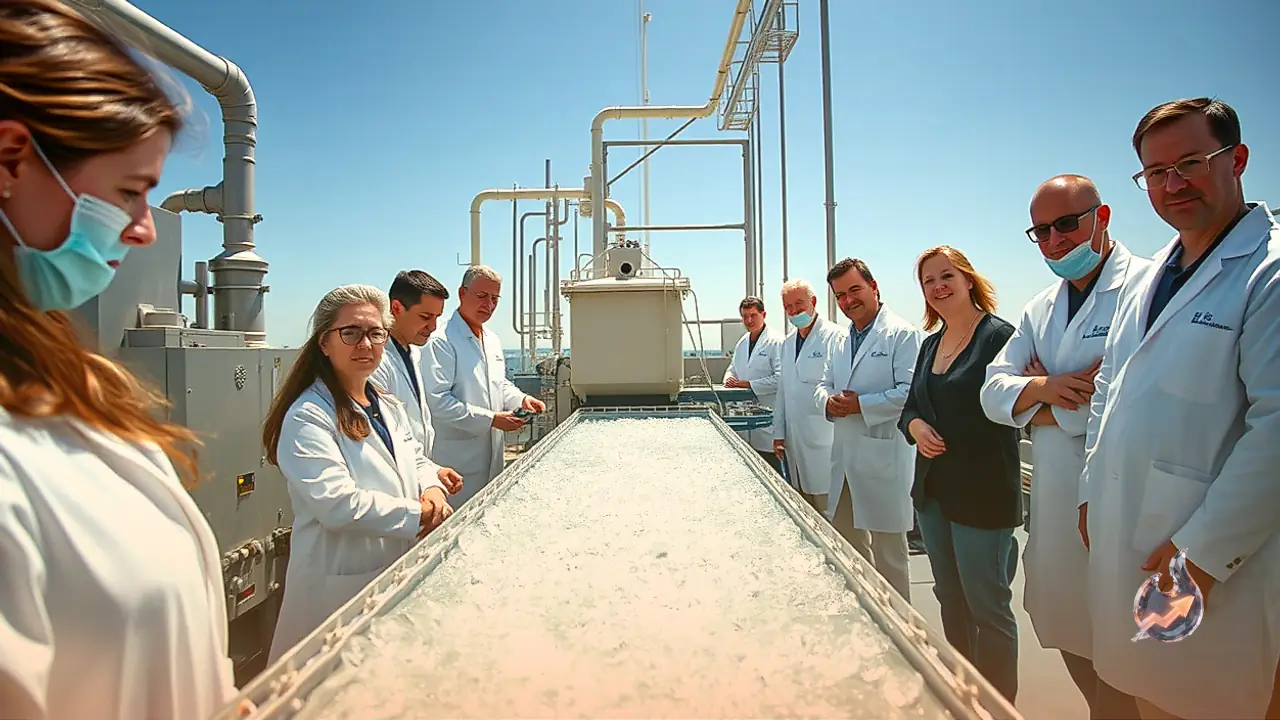
The development trajectory began in 2023 with a bench-scale 25-kilowatt prototype before advancing to a scaled 250-kilowatt demonstration installation. Long-term performance data indicates that this scaled facility can produce approximately 3.8 lakh cubic meters of hydrogen annually, sustaining a chemical purity benchmark of 99.9999 percent. Concurrently, the installation yields around 256 tons of purified fresh water each year.
Throughout stress evaluations, the operational unit was started and shut down every day across a continuous 40-day testing window without revealing any degradation in conversion efficiency or hardware reliability. Engineering efforts are now shifting toward designing advanced catalysts, extracting residual heat with greater precision, and deploying AI algorithms to optimize multi-variable process controls across the entire production cycle.