























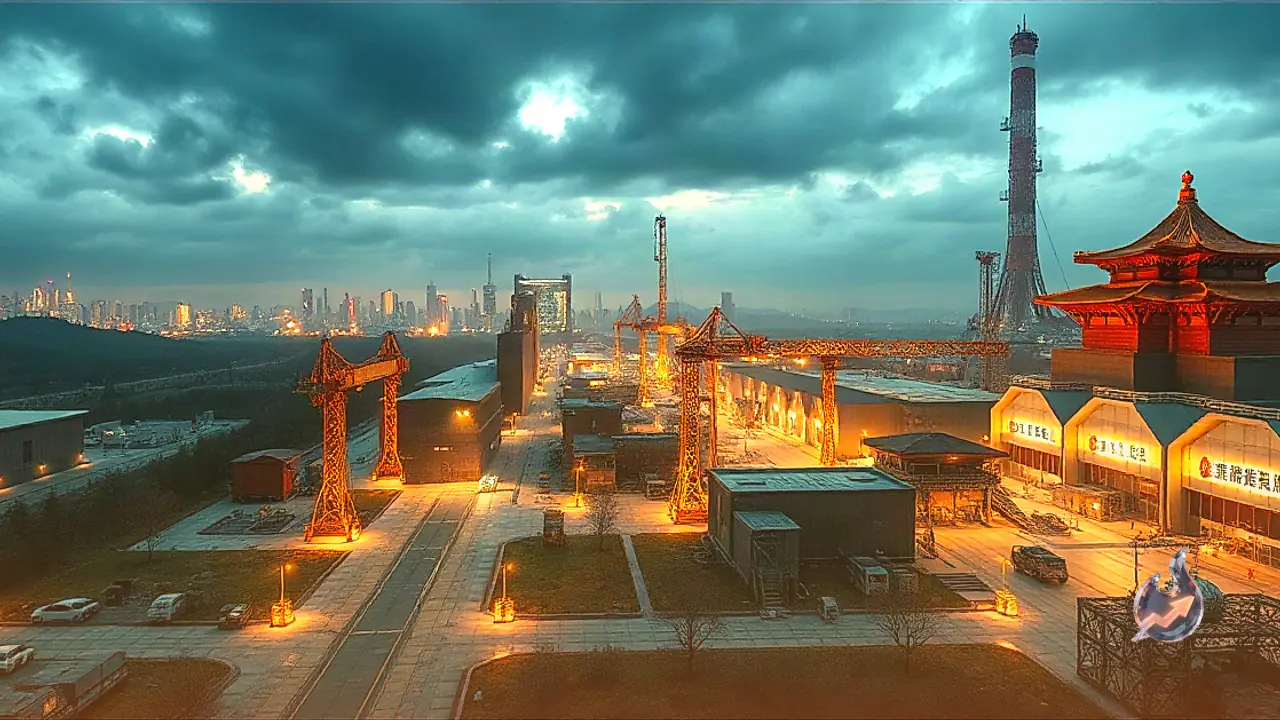

China has achieved a monumental milestone in the field of science and technology. Chinese researchers have successfully generated an electron beam for the very first time using an advanced electron gun, a feat previously unaccomplished by any other nation. This achievement is regarded as a massive leap toward the development of exceptionally powerful super microscopes in the future. Armed with this technology, scientists will be able to examine material structures at the atomic level with unprecedented precision. This remarkable feat was accomplished at the Hefei Advanced Light Facility situated in China's Anhui province.
Technical Journey and Testing Process
The Hefei Advanced Light Facility successfully generated its initial electron beam on September 20. Following this achievement, the project has reached a critical scientific milestone. The electron beam was propelled through a 192-meter-long linear accelerator. Through this procedure, the energy of the electrons surged significantly, reaching up to 2.2 billion electron volts. He Zhigang, a scientist associated with the project, noted that the successful production of the electron beam serves as a vital step toward the ultimate goal. According to him, the quality, stability, and reliability of the beam will be extremely crucial for upcoming scientific experiments.
Fourth-Generation Advanced Light Source
The Hefei Advanced Light Facility is a cutting-edge fourth-generation light source project. Within this facility, electrons traveling at extreme speeds are guided through a magnetic field. During this process, powerful X-rays are generated. Utilizing these X-rays, scientists will be able to observe and study materials right down to the atomic level. The X-rays produced by the Hefei facility are expected to be more than 100 times brighter and significantly more coherent than third-generation light sources. This implies that researchers will be able to conduct far more accurate and complex experiments than ever before.
Applications Across Multiple Sectors
This technology holds immense potential for application across numerous scientific domains. It is expected to provide substantial assistance in research related to next-generation batteries, advanced materials, high-temperature superconductivity, and life sciences. Furthermore, this technology could prove exceptionally useful in studying complex medical conditions such as Alzheimer's disease. The facility plans to construct a total of up to 35 experimental stations. The initial 10 stations will also incorporate a platform dedicated to extreme ultraviolet lithography, commonly known as EUV. EUV is a critical technology utilized in the manufacturing of modern and advanced semiconductor chips.
Construction Timeline and Historical Context
Construction on the Hefei Advanced Light Facility commenced in 2023, and the project is anticipated to reach completion by 2028. Once finished, it will be integrated with other major scientific facilities located in Beijing and Shanghai to form a core part of China's advanced light source network. The development of this scientific sector in China has been ongoing for several decades. Back in 1989, the country established its very first dedicated Hefei light source. Utilizing subsequent generations of these facilities, scientists have previously conducted critical research on subjects such as cancer treatments, the structure of the SARS virus, and ancient fossils preserved in amber.