



















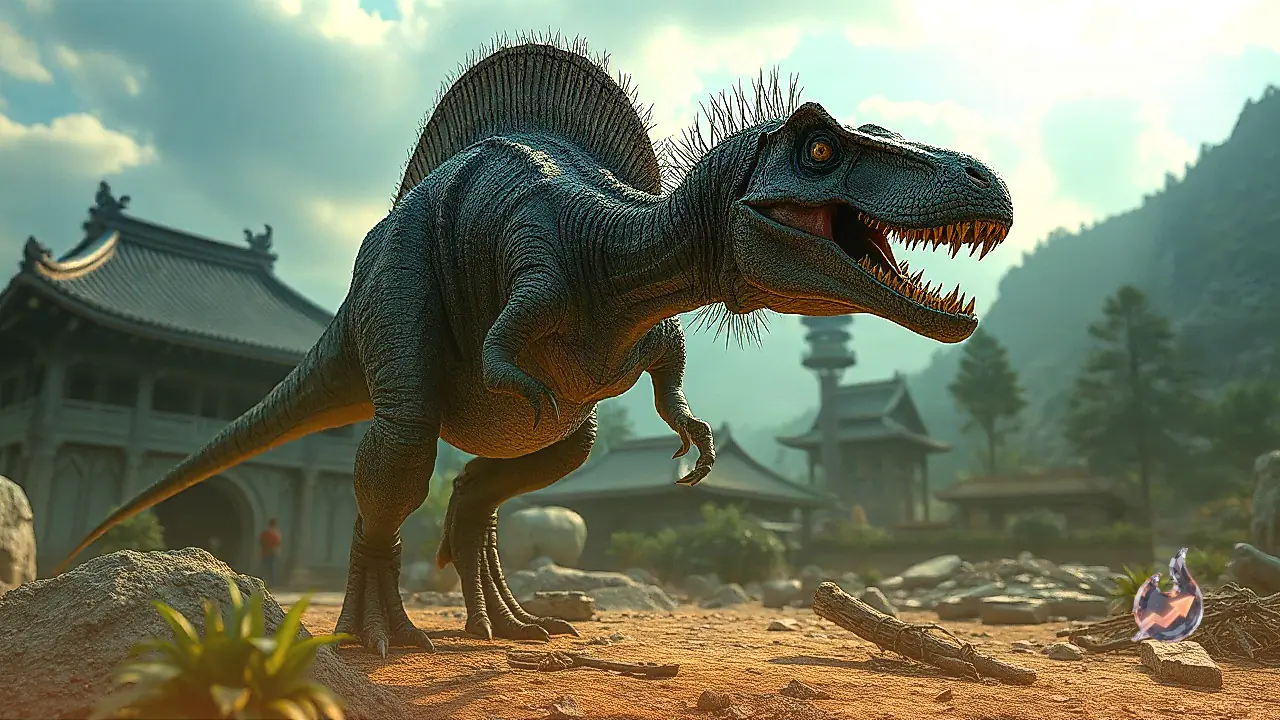

A remarkable paleontological revelation from East Asia has fundamentally reshaped scientific understanding regarding the anatomical diversity of ancient herbivorous reptiles. Excavations conducted within the fossil-rich strata of the Yixian Formation in western Liaoning, China, have yielded an exceptionally intact skeleton belonging to a previously unrecognized therizinosaur dating back to the Early Cretaceous epoch. Designated by researchers as Kayrasaurus changliensis, this newly identified animal achieved a total body length of roughly 3.6 meters, or approximately 11.8 feet. That measurement firmly establishes the specimen as the largest known member of its lineage within its ancient ecosystem. Intriguingly, while its imposing posture and menacing arm extensions closely mimicked the anatomy of a terrifying apex carnivore, the animal was an exclusive vegetarian.
A Feathered Bear-Like Frame With a Distinct Pot Belly
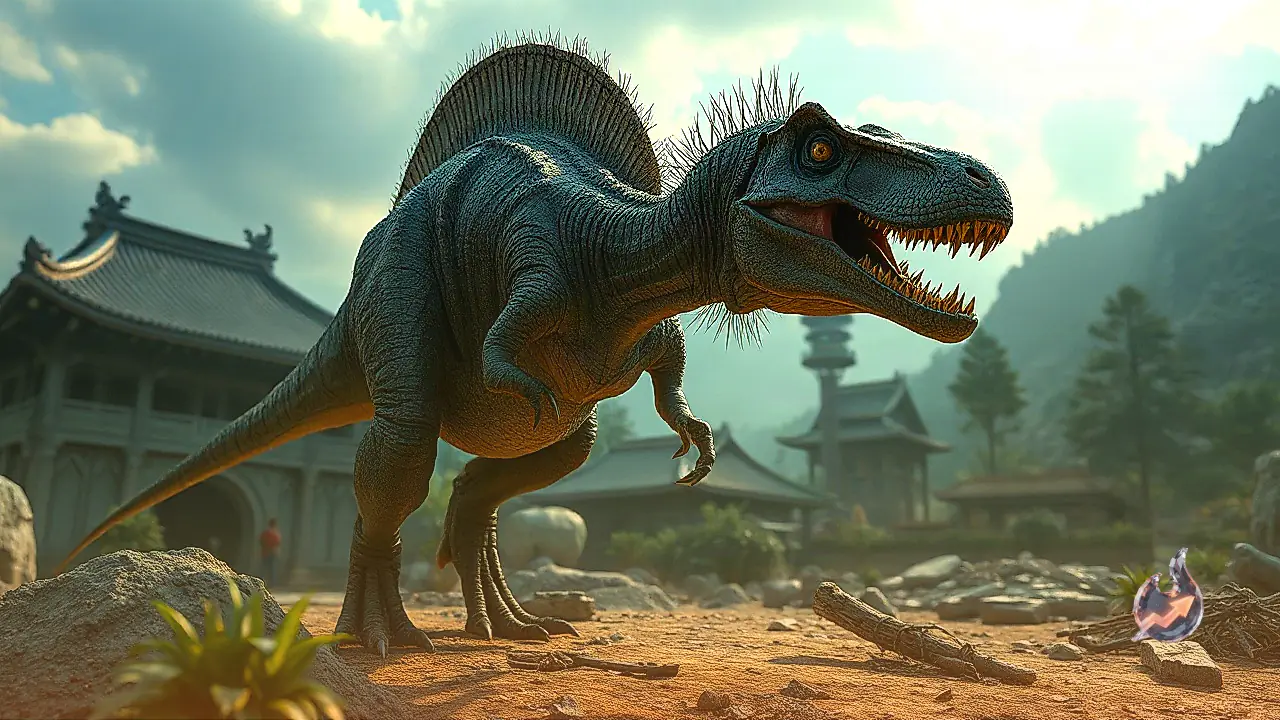
The creature's overall exterior appearance has generated immense fascination across the paleontology community. Anatomical reconstructions indicate that this beast walked upright on its two hind limbs in a bipedal stance. Structural evidence preserved within the sedimentary matrix reveals indications of extensive plumage, giving the creature a physical profile reminiscent of an enormous feathered bear. Its midsection was distinctly rounded and protruded outwards like a pot, an evolutionary trait typically associated with housing extensive, specialized digestive chambers for fermenting raw plant matter. Coupled with an elongated neck and immense, curved claws adorning its hands, the dinosaur possessed an extraordinary silhouette. Paleontologists deduce that these dramatic forelimb talons served strictly functional foraging purposes, enabling the heavy animal to pull down towering tree branches and harvest dense foliage.
A Crowded Dental Battery of Over 77 Teeth
Among the skeleton's most startling characteristics is the sheer density and configuration of its facial and dental architecture. Examination shows that the creature boasted a highly specialized mouth containing an astonishing array of small teeth. Over 32 individual teeth were situated across the upper jaw regions, whereas the lower jaw housed upwards of 45 teeth, combining for a total count exceeding 77. In contrast to most theropods, these dental elements were exceptionally diminutive, yet they sat crowded tightly together in a continuous processing surface. Near the anterior snout of the upper jaw, an unusual, enlarged aperture was discovered. Furthermore, the nasal bone elongated all the way back toward the eye sockets before dividing into two distinct branches, an anatomical feature never previously recorded in any known therizinosaurian fossil.
Surpassing Beipiaosaurus to Become the Jehol Biota's Largest Therizinosaur
The formal discovery of Kayrasaurus changliensis establishes a fresh benchmark for physical dimensions within the prehistoric Jehol Biota ecosystem. Based on skeletal scaling models, researchers estimate the creature's body mass to have fallen somewhere between 117 kilograms and 274 kilograms. Given that osteological markers indicate the recovered individual had not yet completed its full growth cycle, mature adults likely attained even greater bulk. This dimensions record eclipses the prior standard held by its close relative Beipiaosaurus. Morphological comparisons indicate that Kayrasaurus was at least 1.6 times larger in overall scale than its older phylogenetic cousin, claiming undisputed title as the largest therizinosaur documented across the entire Jehol landscape.
Sacrificing Running Speed for Unrivaled Chewing Power
Research indicates that therizinosaurs coexisting within the Jehol environment diverged along two distinct ecological trajectories. Slender-bodied species such as Jianchangosaurus retained lightweight skeletal builds optimized for cursorial locomotion, allowing them to sprint across open terrain to evade predators. Conversely, heavyweights like Kayrasaurus and Beipiaosaurus traded agility and swiftness for substantial mass and jaw power. Their robust craniofacial structure allowed these massive herbivores to generate immense biting and crushing force. This muscular jaw mechanics enabled them to masticate and grind down the toughest, highly fibrous vegetation that other contemporary plant-eating creatures were unable to consume.
An Unprecedented Claw Ridge and Lingering Questions
Skeletal analyses also highlighted that the cervical vertebrae of Kayrasaurus were noticeably longer than the dorsal vertebrae along its spine, giving the dinosaur an extended vertical reach for elevated canopy feeding. Additionally, an anomalous raised crest or ridge was detected upon the upper surface of its manual claws. Paleontologists note that such an elevated structure has never before been observed on the unguals of any known therizinosaur, suggesting unique biomechanical stress adaptations during branch grasping. Despite the wealth of data, several questions remain open: the fossil specimen lacked the hind foot bones, placing temporary limits on precise speed and kinematic modeling, and the skull suffered considerable geological compression. Scientists anticipate that future field excavations in Liaoning will provide the missing skeletal elements required to resolve the full evolutionary portrait of this extraordinary creature.