






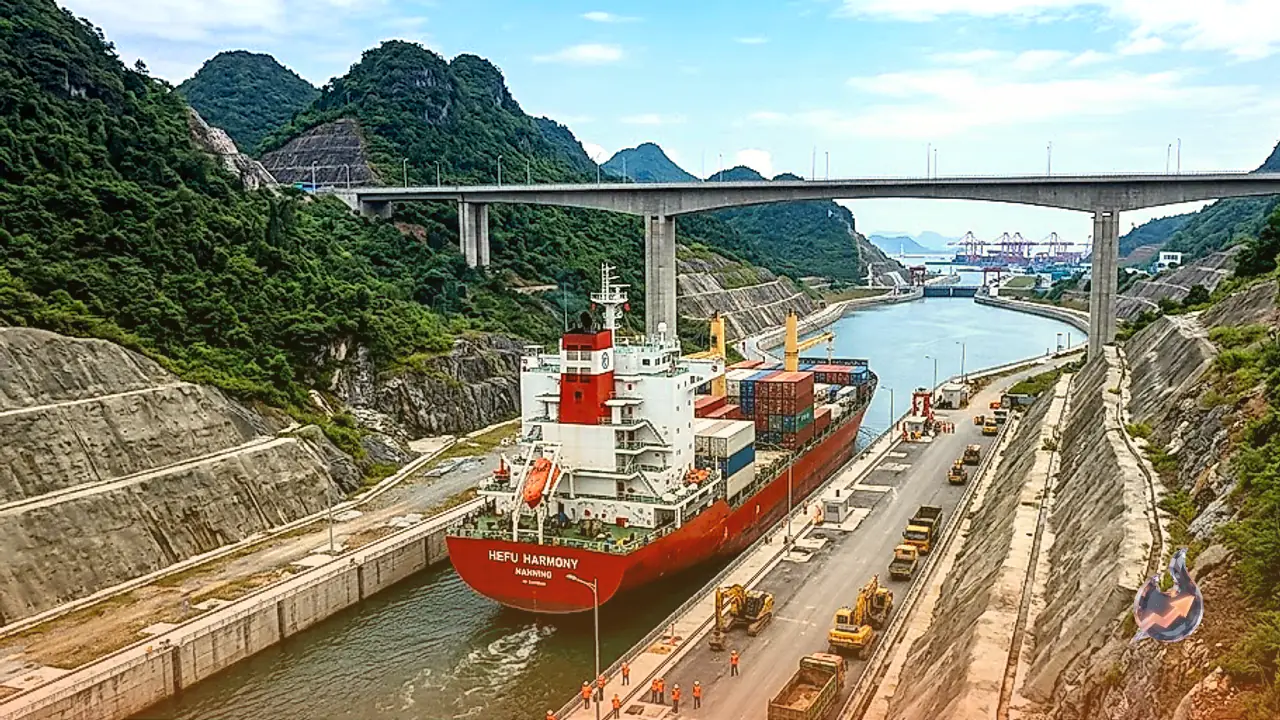
















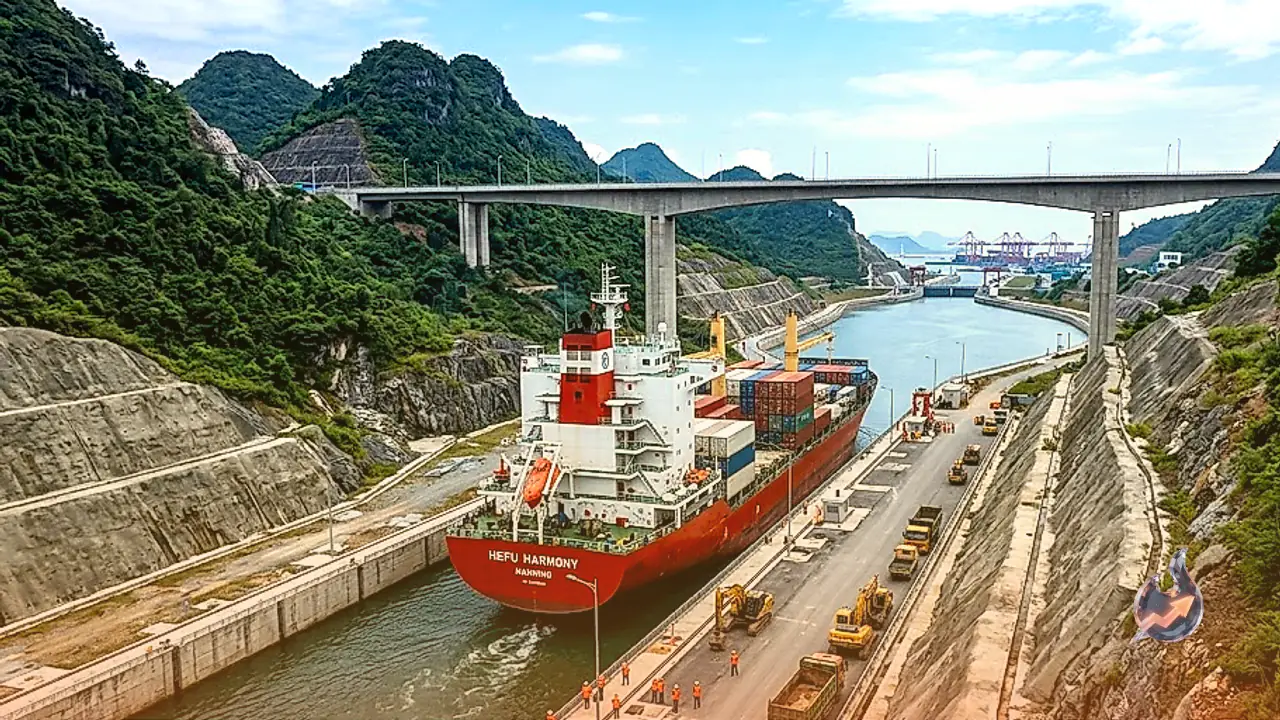

A massive engineering project in southern China has captured global attention as the newly constructed Pinglu Canal officially opens for vessel traffic. Stretching approximately 134.2 kilometers, this artificial waterway provides southwestern China with a direct and efficient route to the sea and the markets of Southeast Asia. Often compared by observers to Egypt's famous Suez Canal due to its role in shortening trade routes, this inland water transport project represents a major milestone in regional infrastructure. The development aims to streamline logistics and open up landlocked regions to international shipping lanes.
Project Background and Geography
Construction on the Pinglu Canal began in August 2022 within China's Guangxi Zhuang Autonomous Region, culminating in its opening for ship navigation on September 16, 2026. This marks the country's first major nationally planned river-to-sea canal project since 1949. The waterway connects the Xijiang River system in the north to the Beibu Gulf in the south. Designed to accommodate vessels of up to 5,000 tons, the canal allows cargo originating in southwestern China to reach the ocean while bypassing roughly 560 kilometers of traditional detour routes.
Engineering Through Mountainous Terrain
Building the canal was an immense engineering challenge due to a roughly 65-meter difference in water levels between its northern and southern sections. To safely guide ships across this steep elevation change, developers constructed three major navigation hubs known as Madao, Qishi, and Qingnian. These sites feature advanced ship locks that function much like giant water elevators, raising or lowering water levels to transfer vessels safely from one tier to the next. The entire project required an investment of approximately 72.7 billion yuan, equivalent to about 10.8 billion dollars.
Economic Benefits and Cost Reductions
The new maritime corridor is expected to deliver substantial economic advantages by easing trade from southwestern China toward Southeast Asia. By shortening the water transport distance by more than 560 kilometers compared to older routes, experts estimate that logistics costs will drop by 18 to 30 percent. Furthermore, the project is projected to save over 5 billion yuan annually in transport expenses. The canal forms a vital segment of China's New International Land-Sea Trade Corridor, which seeks to integrate interior provinces more closely with ASEAN and global trade networks.
Distinctions Between Pinglu and Suez
While comparisons to the Suez Canal highlight similar commercial objectives, the two waterways differ significantly in geography and function. The Suez Canal is a 193-kilometer sea-level passage in Egypt connecting the Mediterranean Sea and the Red Sea, allowing ships to bypass the southern tip of Africa around the Cape of Good Hope. In contrast, the Pinglu Canal links China's inland river systems directly to the sea rather than connecting two separate oceans. Passing through Guangxi and emptying into the Beibu Gulf, its primary function is to grant landlocked economic hubs direct coastal access.
A Human Made Trade Shortcut
The core similarity between Pinglu and Suez lies in human ingenuity overcoming natural geography to forge shorter commercial paths. While the Suez Canal united two oceans, the Pinglu Canal bridges inland river networks with the ocean, establishing an essential river-to-sea trade corridor for China. Describing it as China's Suez Canal serves as a functional comparison rather than a technical equivalence, as their engineering designs and operating systems differ entirely. Nevertheless, both projects share the fundamental concept of creating artificial water routes to optimize global and regional commerce.