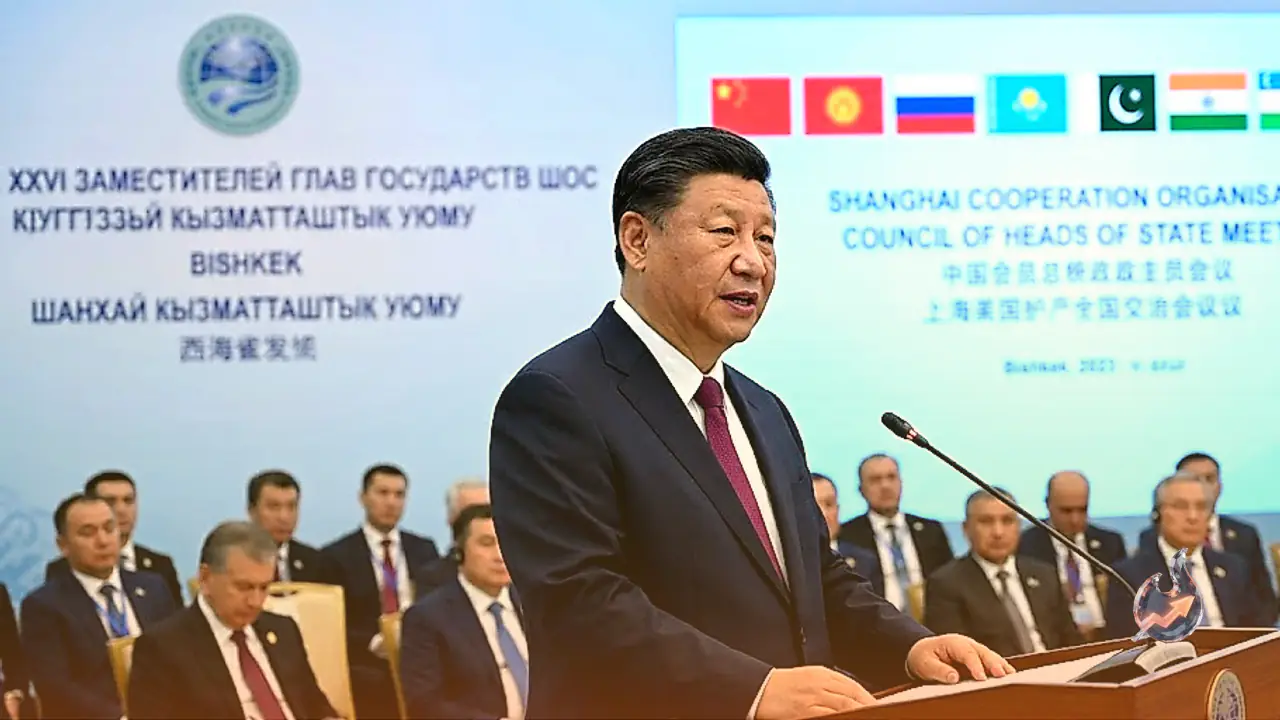





















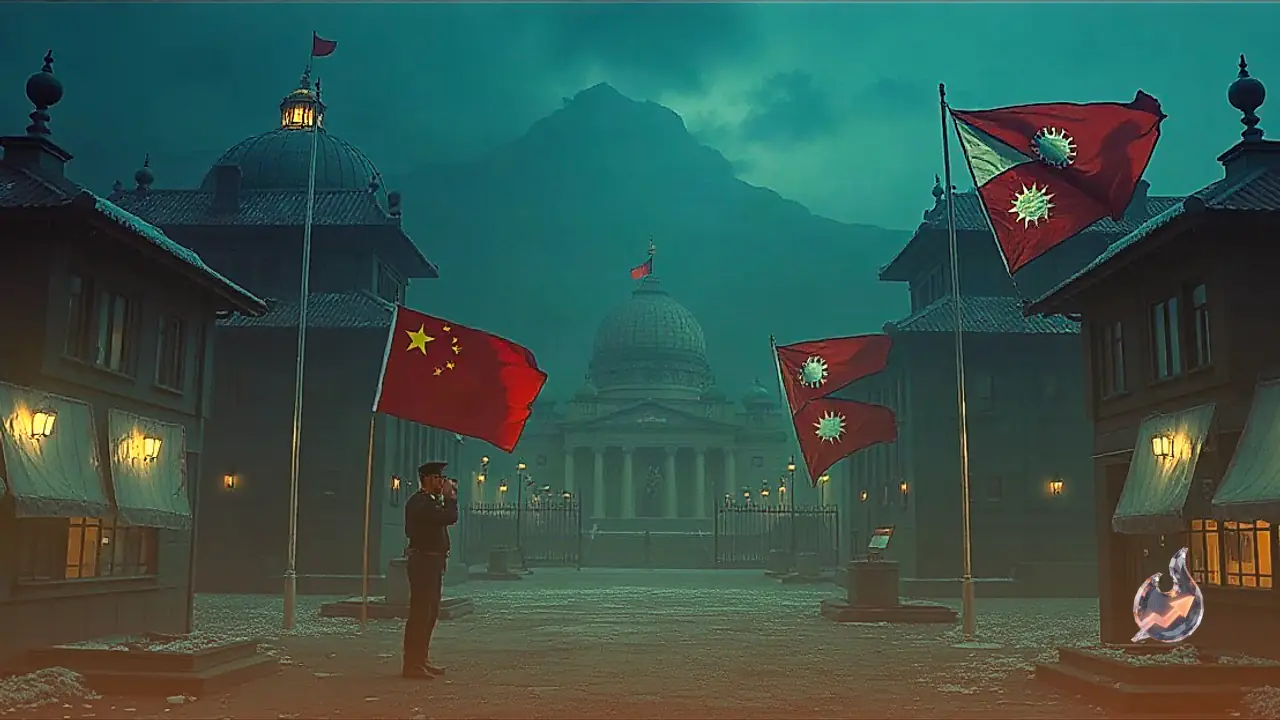

The border dispute between India and China is not merely a matter of demarcating lines between two sovereign nations, but rather a symbol of the long-standing strategic competition between two major Asian powerhouses. Lt Col Jasinder Singh Sodhi, author of 'China's War Clouds: The Great Chinese Checkmate', noted in an exclusive conversation that understanding this friction requires looking back at history spanning more than a century rather than just current events. Furthermore, in the coming years, not just the Line of Actual Control, but the entire Himalayan and South Asian geopolitical landscape, including Nepal, Bhutan, Bangladesh, and Pakistan, could heavily influence India's security calculations.
The Historical Background of the Border Dispute
According to Lt Col Sodhi, a conference held in Simla in 1914 saw participation from representatives of British Tibet, Tibet, and China. Back in 1913, Tibet was operating as an independent entity. During that period, discussions regarding border delineation took place among British India, Tibetan representatives, and Chinese delegates.
The McMahon Line serves as the effective boundary between India and China in the eastern sector, established during the 1914 Simla Conference. The boundaries of the North East Frontire Agency, now known as Arunachal Pradesh, were discussed, and the frontier between Tibetan and British officials was clearly defined.
However, China never fully accepted this arrangement. In subsequent years, this exact dispute manifested as the McMahon Line, remaining one of the primary pillars of the India-China border conflict today. India gained independence in 1947, and a communist government came to power in China in 1949. Relations between the two countries were cordial at first. The era of Hindi-Chini Bhai-Bhai was witnessed during this period. However, the strategic balance of the entire region began to shift after China established control over Tibet in 1950.
From the Panchsheel Agreement to the 1962 War
Under the Panchsheel Agreement signed on April 29, 1954, India recognized Tibet as a part of China, and China assured that existing trade arrangements between India and Tibet would continue. Relations remained normal for a few years, but the situation shifted rapidly in 1959 and 1960 when Chinese Premier Zhou Enlai wrote a letter to Prime Minister Jawaharlal Nehru rejecting the McMahon Line. The Dalai Lama arrived in India that same year, which further escalated tensions between the two nations.
In 1961, India adopted the Forward Policy and began establishing frontline outposts in border regions. China opposed this move, and its military activities along the border began to escalate. Lt Col Sodhi points out that significant international events were unfolding concurrently during this timeframe. The Cuban Missile Crisis, spanning from October 16 to October 28, 1962, brought the world to the brink of nuclear war. It was precisely during this era that the military conflict between India and China erupted.
China launched military operations along the approximately 3,488-kilometer-long border from both the western sector in Ladakh and the eastern sector in Arunachal. According to Lt Col Sodhi, within a few days, the Chinese military advanced significantly into several areas. Subsequent correspondence ensued between Mao Zedong and Prime Minister Nehru. Mao proposed a ceasefire on the condition that Aksai Chin be recognized as Chinese territory, while Nehru insisted on restoring the status quo ante.
Ultimately, in November 1962, China declared a unilateral ceasefire. China's control over Aksai Chin remained intact, while its troops retreated from the eastern sector.
Why Aksai Chin Matters to China
Lt Col Sodhi maintains that Aksai Chin is not merely a territorial issue but a component of China's long-term strategic and economic strategy. Through Aksai Chin, the Xinjiang region connects to projects that China counts among its core strategic priorities. The China-Pakistan Economic Corridor and the region of Pakistan-Occupied Jammu and Kashmir also form part of this calculation.
Lt Col Sodhi's firm view is that China will not voluntarily relinquish its control over Aksai Chin.
Nepal: The New Significance of the Himalayan Front
Throughout the extensive conversation with Lt Col Sodhi, China's long-term strategy, growing influence in neighboring regions, and regional security equations repeatedly emerge. In this context, it is essential to understand the significance of Nepal.
Nepal is a vital Himalayan nation situated between India and China. Open borders, cultural proximity, religious ties, and economic contacts have long existed between India and Nepal. On the other hand, China has also attempted in recent years to strengthen infrastructure, investments, connectivity projects, and political access within Nepal.
This is why, should major strategic tensions arise between India and China in the future, Nepal's position could acquire special significance.
According to Lt Col Sodhi, under even slight pressure, Nepal would align with China. According to him, Nepal will not permit its soil to be used for military attacks. The majority of Nepali citizens still stand with India. Despite some friction developing over the intervening years, relations with India remain deep-rooted among the people.