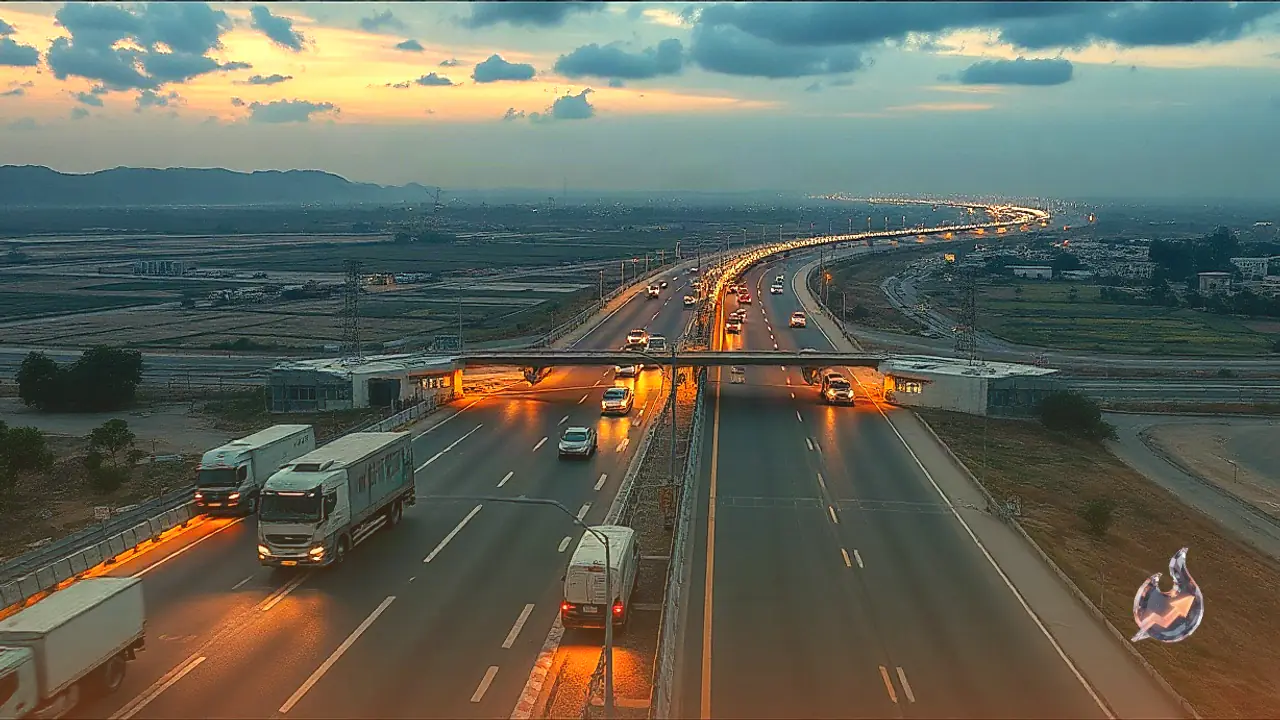


















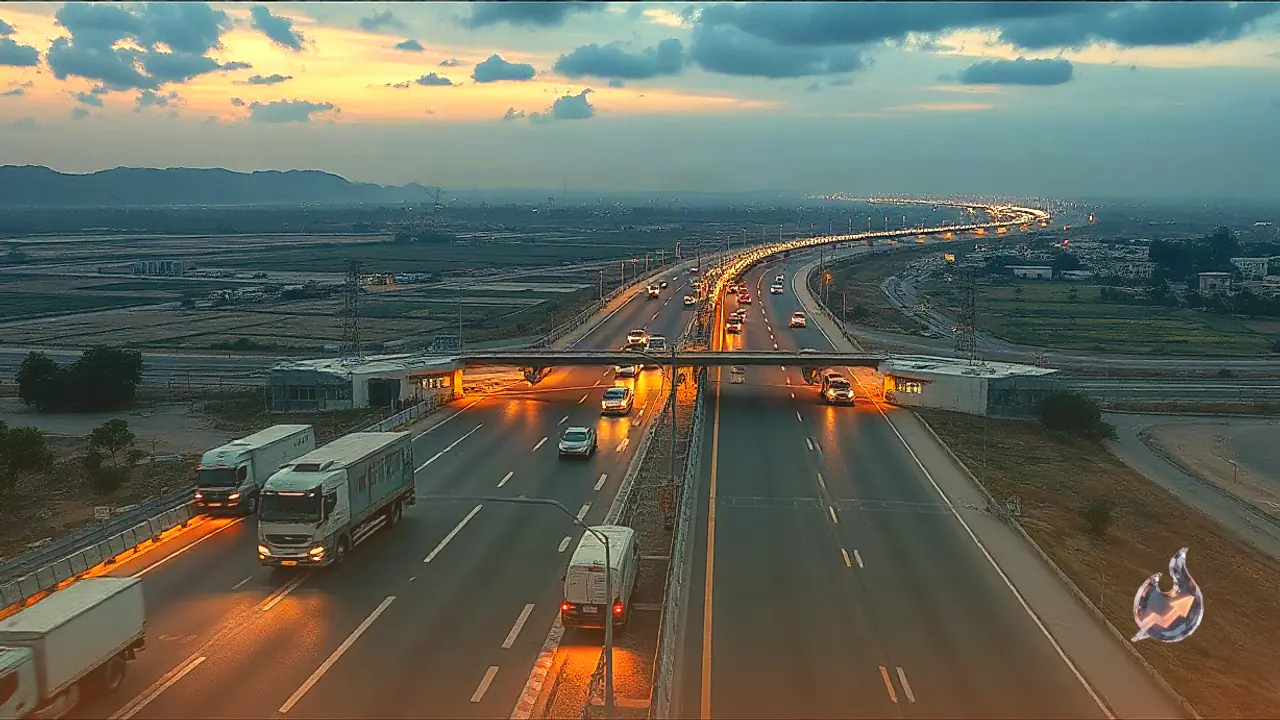

India is undergoing a massive transformation in its infrastructure landscape, with modern roads and state-of-the-art highways reaching every corner of the country. These developments are not only making daily travel significantly smoother for citizens but are also providing a major boost to commercial activities. Among the most ambitious projects currently underway is the Amritsar-Jamnagar Expressway. Spanning a massive length of approximately 1,316 kilometers, this grand corridor is designed to dramatically reduce the travel time and distance between northern and western India. Currently, a road journey from Amritsar to Jamnagar takes about 26 hours. However, once this brand-new expressway is fully operational, this travel time is expected to be cut in half, reducing the long commute between Punjab and Gujarat to just around 13 hours. This greenfield economic corridor will establish a direct high-speed connection across four major states, promising to bring about a monumental shift in regional economics and connectivity.
A Dramatic Cut in Travel Distance and Time
In comparison to the traditional routes, the current road distance between Amritsar and Jamnagar is estimated to be around 1,430 kilometers. Travelers on the existing route face severe traffic congestion, and several bottleneck sections with only two-lane roads heavily slow down the movement of heavy commercial vehicles. This congested infrastructure often stretches the travel time to 26 hours or more. On the other hand, the upcoming Amritsar-Jamnagar Expressway offers a much more streamlined and direct path, shortening the overall distance to 1,316 kilometers. This modern six-lane greenfield economic corridor is being built using advanced engineering standards to ensure high-speed, uninterrupted vehicular movement. The seamless flow of traffic on this new route is expected to compress the total travel time to roughly 13 hours, completely redefining the long-distance travel experience. The corridor begins near Tibba village in the Kapurthala district of Punjab and extends all the way to the refinery complex in Jamnagar, Gujarat.
Connecting Key Cities Across Four States
The 1,316-kilometer corridor is set to directly link key agricultural, industrial, and commercial hubs across Punjab, Haryana, Rajasthan, and Gujarat. In Punjab, the expressway will pass through and connect major centers including Amritsar, Kapurthala, Moga, Faridkot, and Bathinda, opening up new opportunities for local farmers and traders. In Haryana, the road will benefit the regions of Mandi Dabwali and Chautala, linking these agrarian zones with larger markets. Rajasthan's vast landscape will see the expressway traversing through Hanumangarh, Suratgarh, Bikaner, Nagaur, Jodhpur, Barmer, and Jalore, thereby establishing high-speed transit channels through otherwise remote areas. Upon entering Gujarat, the corridor will connect Santalpur, Radhanpur, Samakhiyali, Maliya, and finally culminate in Jamnagar. This extensive network creates a highly efficient logistical corridor that bridges major farming belts with western ports and industrial zones.
Rajasthan Hosts the Longest Stretch of the Expressway
One of the most notable features of this massive infrastructure project is that its longest continuous stretch lies within the state of Rajasthan. Approximately 637 kilometers of the total 1,316-kilometer expressway passes through Rajasthan, making up nearly half of the entire corridor. Construction work in the state has progressed rapidly, and the section from Hanumangarh to Jalore is already fully open and operational for public traffic. This has already started delivering significant travel benefits for intrastate commuters within Rajasthan. Meanwhile, construction remains ongoing on some of the remaining segments in Punjab and Gujarat. According to available project updates, nearly 85% to 90% of the overall expressway construction has already been completed, with teams working swiftly to wrap up the remaining portions.
Targeting Full Operational Status by December 2026
Finishing and final alignment works are currently being executed at a rapid pace on the incomplete stretches of the project. Contractors and engineering teams are focusing heavily on the pending sections in Punjab and Gujarat to complete the expressway. The official target for opening the entire Amritsar-Jamnagar Expressway to the public has been set for December 2026. However, the final launch date will ultimately depend on the pace of construction, weather conditions, and various administrative clearances. Once fully commissioned, the corridor will offer a revolutionary new road transport alternative, bridging northern agricultural powerhouses and western industrial centers with high-efficiency infrastructure.
A Catalyst for Regional Trade and Logistics
The primary benefit of this mega expressway extends far beyond general passenger convenience, as it is poised to revitalize India's domestic trade and logistics sectors. Built under the central government's ambitious Bharatmala Project at an estimated cost of around ₹80,000 crore, this six-lane corridor is set to transform commercial transport. Punjab's highly productive agricultural sector will gain direct, high-speed access to the major ports and industrial hubs of Gujarat. This means that perishable goods, crops, and other products can reach the western coast in half the time, boosting exports and farmer incomes. Furthermore, the industrial and farming clusters of Haryana and Rajasthan will benefit from significantly reduced transit times and lower fuel consumption, providing a powerful push to the regional economy and making supply chains much more competitive.