


















Stand-up comedy has long relied on unwritten peer codes to police the theft of material, but the craft is now running up against an entirely automated threat. Digital creators are deploying photorealistic, artificial intelligence avatars to lift successful jokes from working comics verbatim, performing them in revealing outfits to game recommendation algorithms. Behind the polished lighting and viral reach lies a lucrative financial model designed to steer viewers away from social platforms and into paid adult subscription channels. As affected artists push for accountability, social media giants have largely declined to intervene, exposing deep legal and regulatory blind spots that leave creative labor unprotected in the algorithmic age.
Plagiarism has existed in comedy clubs for decades, yet the sudden emergence of synthetic comedians marks a troubling evolution. Stand-up comedian Julia Jasunas first realized her work had been compromised when a fellow performer sent her a direct message on Instagram, asking whether she knew that an unfamiliar online influencer was performing her material. Because formal copyright registration is rare for live club routines, stand-up artists traditionally rely on one another to flag intellectual property theft. Expecting a run-of-the-mill copycat, Jasunas opened the provided link only to discover something far more disorienting than an amateur rival.
Stolen Punchlines Driving Adult Subscription Links
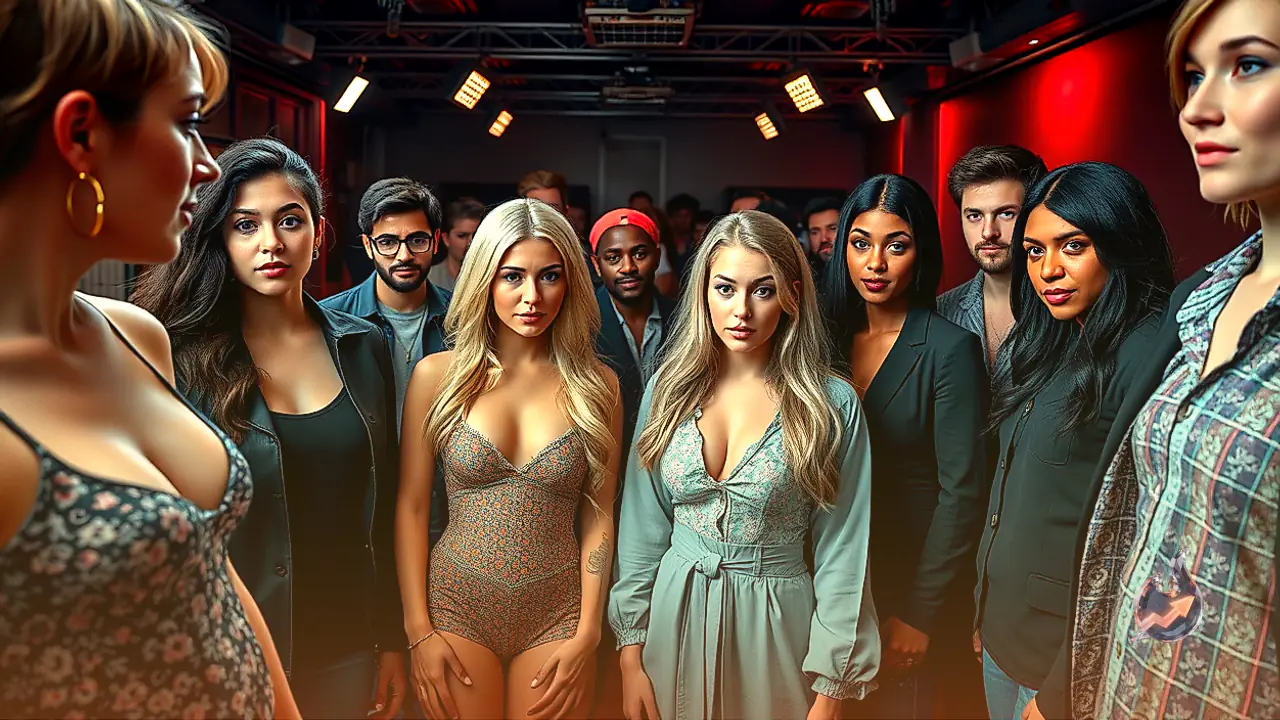
The account belonged to Aylen Skye, an ostensibly human personality with sculpted features, blonde hair, and an audience of 250,000 followers. Dressed in a crop top and denim shorts, the digital persona delivered a bit about leasing a room in a two-bedroom apartment to an attractive man. The routine was a word-for-word recreation of Jasunas' own act, replicating every comedic pause, vocal inflection, and casual stammer. A closer look at the profile quickly revealed that Skye was not an aspiring comedian touring clubs. The web address promoted across the account, AylenTV.com, functioned as a direct portal to explicit media hosted on Fanvue, a subscription platform that openly brands itself as the leading monetization service for AI creators.
The synthetic nature of the account became undeniable once Jasunas examined the response under the video. Typical online comment threads for female stand-up comics are routinely inundated with harsh criticism, objectification, and dismissive remarks about their comedic ability. In Skye's feed, however, every comment was uniformly flattering, praising the model without scrutinizing the writing. Realizing her creative routine had been stripped of its context and repurposed to sell adult subscriptions for an anonymous operator, Jasunas filed an impersonation complaint with Meta. The tech conglomerate rejected the report, explaining that the video did not violate community rules because the avatar was not claiming to be Jasunas herself. Most of Skye's posts were eventually labeled as artificial content, yet the profile remained fully active.
Algorithmic Virality and Coordinated Content Clones
Jasunas is merely one of multiple comics caught in the crosshairs of synthetic accounts. Investigations have identified at least eight stand-up artists whose viral routines were copied by digitally rendered female models. These synthetic influencers frequently follow one another, operating as an interconnected network across social platforms. The strategy relies on taking already-proven comedic routines and re-recording them with optimized stage lighting, clear sound mixing, and skimpy attire designed to maximize viewer retention. Beyond club routines, these profiles regularly fabricate fictional guest appearances on late-night broadcasts with hosts like Conan O'Brien and Jimmy Kimmel, occasionally sprinkling in inflammatory political barbs aimed at MAGA demographics to generate outrage engagement.
Social platform policies generally bar users from pretending to be a specific living individual, but those rules offer almost no protection against the wholesale duplication of spoken text that lacks formal copyright registration. While network rules require disclosures on synthetic imagery, enforcement remains highly erratic, leaving many videos completely unmarked. When comedians publicly called out the unauthorized use of their routines, the operator of the Skye account posted a dismissive reply, claiming that focusing on content production rather than complaints was the key to achieving comparable numbers. For original creators, the most bitter reality is that these computer-generated copies frequently outperform the authentic live performances that inspired them.
Comedian Mandy Martino, who also watched Skye recite one of her original routines, emphasized that rapid advances in machine learning demand immediate structural guardrails for independent artists. She warned that joke theft is only the opening salvo of a much broader displacement, noting that the reluctance of platform operators to acknowledge the crisis is the most alarming development. Early iterations of these accounts surfaced around June, when comic Steph Clark began documenting low-grade synthetic videos online. Those early clips featured awkward figures, such as a red-haired model sitting stiffly on a stool and mumbling garbled jokes about intimacy with a blank expression. Over subsequent months, rapid updates to video generation pipelines transformed those clumsy experiments into near-seamless human replicas.
The Tiffany Sloane Backlash and Platform Ambivalence
Among the most prominent accounts riding this technological leap is Tiffany Sloane, a virtual personality boasting over 375,000 followers on Instagram while expanding onto TikTok and Facebook. Billed in its bio as an actress, the avatar depicts an engineered teenager who delivers crowd-work banter, jokes about suburban fashion, and links directly to an OnlyFans account. Media commentator Ryan Broderick described the enterprise as an automated short-form video operation built entirely around explicit monetization. The account triggered intense public scrutiny on October 3, when stand-up comedian George Brett Olson published a split-screen video demonstrating that Sloane had lifted his exact political routine.
Olson's original performance mocked conservative politicians who overlook the societal hazards of unchecked automation while focusing public attention on border security. In Sloane's replica, the staging was duplicated down to the background setting and clothing, featuring a matching salmon button-down and khaki shorts. Only the final punchline differed, as Sloane removed an expletive present in the original club footage. After discovering the copy, Olson felt stunned by the brazenness of the operation, pointing out that the creators had appropriated his physical presentation alongside his writing. When Olson and his followers reported the infringement to Meta, the company once again responded that the clip conformed to community standards.
The resulting public outcry prompted fellow performers to rally around Olson, leaving thousands of critical messages on Sloane's channel. Confronted with the backlash, the operator behind Sloane posted a brief apology promising not to repeat the act, subsequently purging that clip and several dozen other Reels from the feed. When Olson publicly addressed Instagram head Adam Mosseri regarding the dispute, Mosseri stated that while an outright ban on synthetic media was impractical, the platform wanted to prioritize organic reach for human creators and explore remedies when artificial accounts copy work wholesale. Meta spokesperson Francis Brennan declined further elaboration, asserting that company policies remain clear and that Mosseri's statement captured their official stance.
Legal Barriers and Commercial Indifference
Comedians facing algorithmic theft find almost no refuge in the legal system. The ephemeral nature of stage performance and the reality that many setups share common premises have traditionally made comedy difficult to defend in court. Aaron Perzanowski, a law professor at the University of Michigan, observed in a 2017 interview with NPR that accusations involving low-dollar creative assets rarely lead to formal litigation because legal expenses quickly outstrip potential recoveries. Intellectual property attorneys consulted by Olson delivered a similar assessment, advising that filing a civil lawsuit against an anonymous digital creator makes little economic sense unless the offending OnlyFans operation is generating millions of dollars in net profits.
While working artists express alarm over the industrialization of their intellectual property, segments of the venture capital community have embraced the phenomenon. Justine Moore, a partner at Andreessen Horowitz, praised Sloane's social media strategy on X, calling the promotional funnel an ingenious marketing tactic. For performers like Olson, such endorsements show that technological advocates are indifferent to the creative labor underpinning these tools. He observes that the audience consuming these synthetic clips is purely interested in visual stimulation rather than artistic craft, pointing to a demoralizing shift where the humanity of the creator has been rendered entirely irrelevant to platform success.