


















During family celebrations, community gatherings, and on modern digital video feeds, an upbeat traditional melody frequently captures attention, prompting listeners to smile. Whenever vocalist Malini Awasthi takes the stage with rhythmic percussion to deliver this Awadhi regional piece, auditoriums regularly erupt in cheerful applause. Audiences naturally sway to its catchy cadence. Beneath that lighthearted exterior and festive humor, however, sits an unsettling record of historical suffering. The very lines that elicit spontaneous amusement were forged out of a child bride's helplessness, frustration, and the harrowing burden of premature matrimony.
A Historical Record of Rural Realities
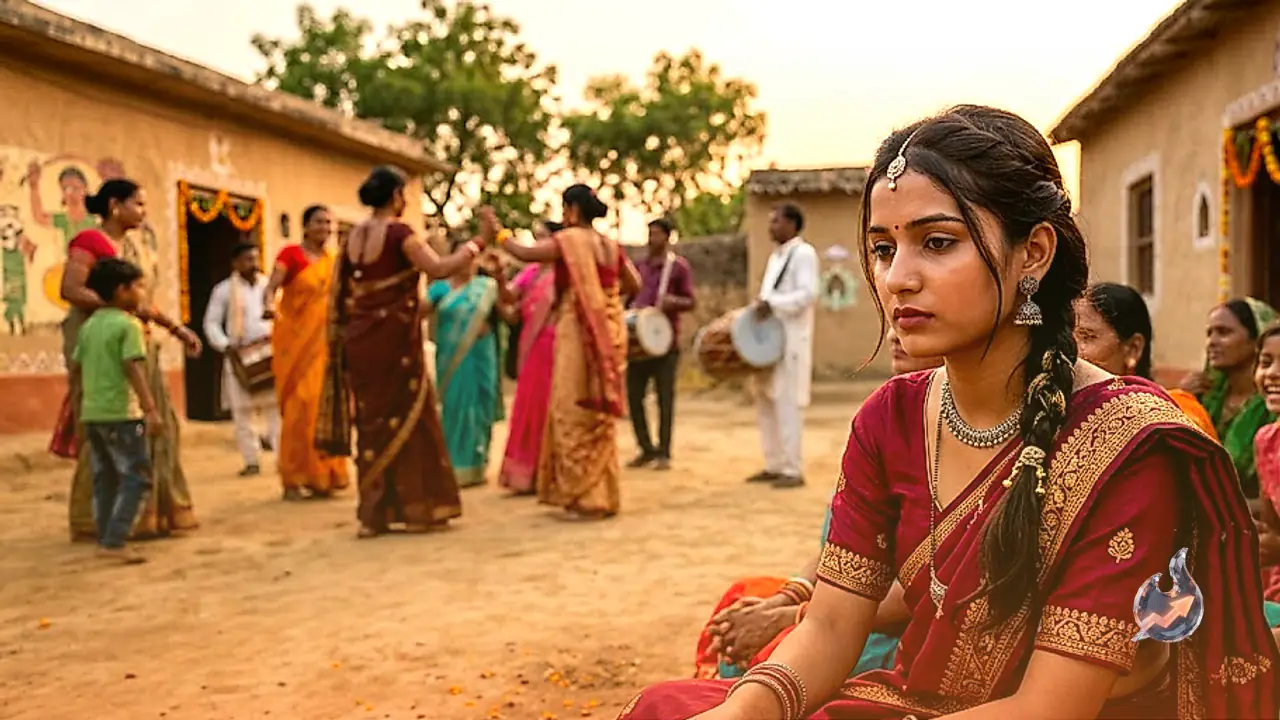
Far from serving as mere transient amusement, this traditional composition operates as a living historical record chronicling the entrenched custom of child marriage across rural North India. The piece does not belong to a single contemporary composer; rather, it arose directly from grassroots oral traditions. For generations, women living throughout northern agrarian belts kept these verses alive by singing them within domestic spaces.
In earlier periods, rigid social boundaries prevented women from speaking candidly about their emotional desolation or marital struggles. Within that restrictive framework, folk culture furnished them with an ingenious outlet. By wrapping their deepest anguish inside satire and situational wit, women found a way to lay uncomfortable truths before their communities. Grievances that could never be voiced directly were instead cloaked in musical jest. This composition follows precisely that subversive path, focusing on a bride who vents her exasperation regarding an immature, tender-aged partner. The narrative stretches far beyond an individual marital squabble; it interrogates an entire social structure that routinely pushed young girls into wedlock before they even understood the world.
A Chronology of Childhood Lost
The progression of the verses maps out the passing years alongside the boy's complete unreadiness for married life. In the opening segment, the bride recalls arriving as a twelve-year-old wife, only to discover that her husband was so thoroughly a child that he spent his hours flying paper kites rather than acknowledging her presence in the household.
By the time she reached fifteen and her Gauna ceremony was observed, marking her formal entry into her in-laws' home, she anticipated companionship and tenderness. Instead of affection, she encountered utter childish ignorance; rather than holding her hand, the young boy merely wrenched his arm away in rejection. Even when she blossomed into full youth at sixteen, the husband's temperament remained unaltered. Confronted with the expectations of adulthood, he shrank back in sheer terror and cried out for his mother. Surrounded by such bewildering absurdity, the young bride turns toward her companion to question how she is supposed to navigate an entire lifetime beside a companion who remains a frightened child.
Preserving Folk Heritage on National Platforms
Once confined to the hinterlands of Awadh and Purvanchal, this musical gem gained wide recognition across modern generations and prestigious cultural stages through the dedication of folk artist Malini Awasthi. She featured this Awadhi piece across prominent venues, including Idea Jalsa, Coke Studio, and several live nationwide concerts. Her spirited performances bring out both the regional authenticity and the biting social critique embedded in the lyrics. As she observes regarding the genre, folk songs cannot be reduced to simple entertainment; they reflect historical customs, structural hardships, and the silent inner worlds of women across the ages.