




















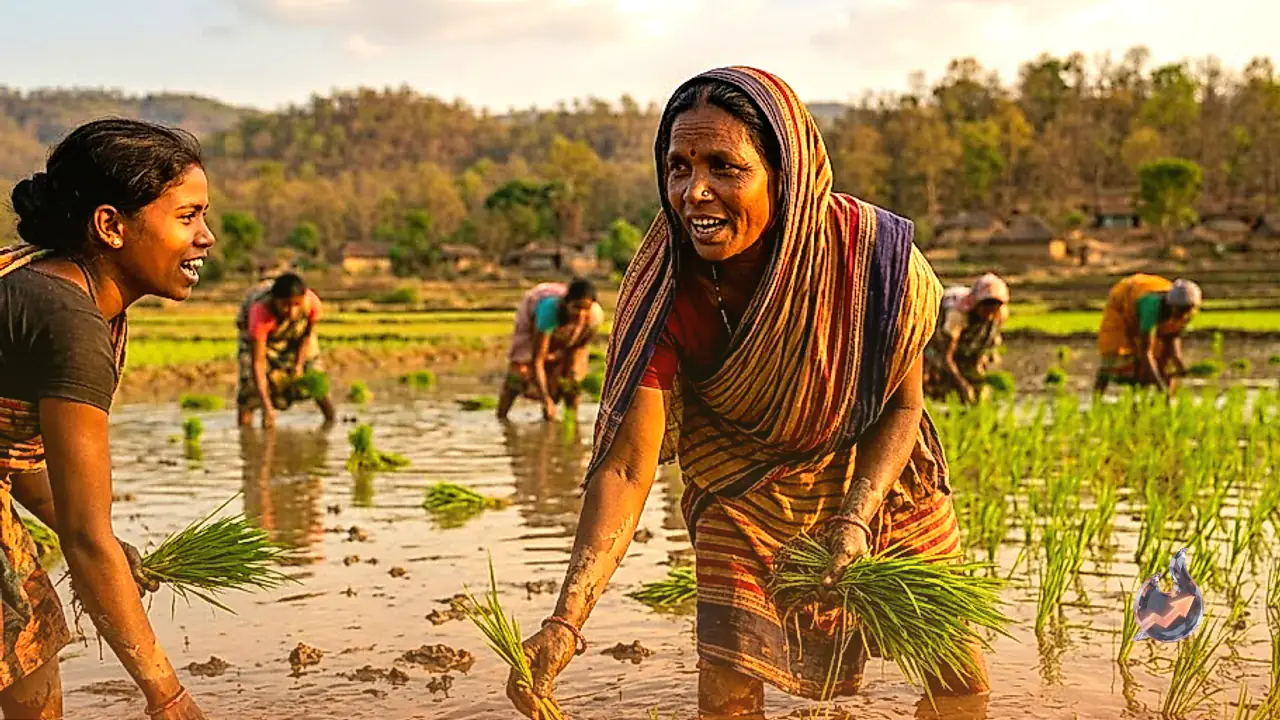

India is fundamentally an agrarian nation where farming extends far beyond a mere means of livelihood, weaving itself deeply into the fabric of culture and tradition. Across different regions of the country, agricultural practices are intertwined with distinct folk customs. In the Palamu district of Jharkhand, a centuries-old tradition of women singing folk songs while planting paddy remains vibrantly alive today. As these women step into waterlogged fields to transplant paddy seedlings, the melodies echoing across the farmland not only ease the heavy burden of manual labor but also paint a vivid picture of folk culture, deep-rooted faith, and rural social life.
Throughout this agricultural ritual, women form groups to work collaboratively while keeping up a continuous stream of folk songs. The lyrical content of these tunes varies widely. At times, the songs feature prayers addressed to the divine for a bountiful harvest, while on other occasions, they express heartfelt wishes for family happiness and prosperity. Furthermore, many of these melodies capture the nuances of romantic love between spouses, the sweetness of familial bonds, social messages, and the myriad vibrant colors of rural existence. According to local villagers, crops planted with pure devotion, positive energy, and song bring lasting well-being and abundance into the household.
Working in the fields of Purabdih village within the Chainpur block of Palamu district, women engaged in paddy transplantation shared that this rich tradition was handed down to them from their mothers, grandmothers, and great-grandmothers. Even in the modern era, younger generations of women continue to uphold these traditional tunes, preserving their shared cultural heritage. One of the workers, Dukhni Kunwar, explained that singing together helps mask the physical fatigue of long hours of continuous labor, filling the entire agricultural workspace with an infectious sense of enthusiasm and energy.
The rhythmic process of paddy planting traditionally commences with an invocation to the deities. Workers first pay homage to Mother Earth and invoke the gods, praying for adequate rainfall, an abundant crop yield, and the overall prosperity of the village. Following this opening prayer, a diverse repertoire of songs centered around devotion, lighthearted entertainment, romance, and everyday village life is performed depending on the occasion. Locals note that this customary practice has endured across multiple generations and continues to be observed with immense reverence and collective joy in rural areas.
The women also detailed the logistics of their labor, noting that a group of roughly eight women can successfully complete the paddy transplantation for one bigha of land in about two hours. In return for this collective effort, they earn around three thousand rupees in wages. Despite the growing adoption of modern farming equipment and machinery, the traditional folk songs echoing during paddy season in Palamu remain an enduring signature of rural identity. This tradition functions as much more than just a step in crop cultivation; it serves as a living medium for preserving shared labor, community ties, and rich cultural heritage.