















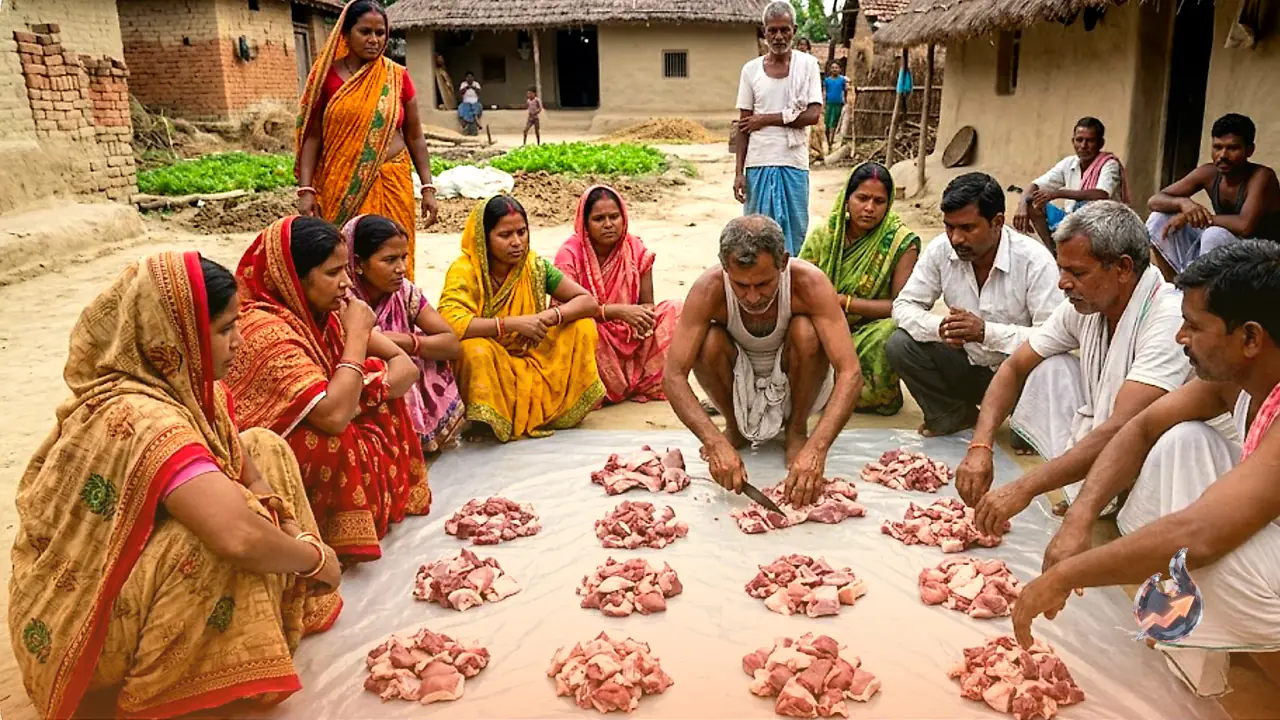

Madhubani: In the rural pockets of Mithalanchal, particularly in Madhubani district of Bihar, a unique method of purchasing mutton is prevalent, setting it apart from other regions. Instead of buying one or two kilograms of mutton from the market, most families here opt to collectively purchase an entire goat (chhaagar). After the goat is prepared, the meat is divided equally among the participating families without weighing individual portions. This local practice is known as 'Bati Lagana' or 'Kuri Lagana'.
Shared Feast, Shared Joy
When a family in these rural areas of Mithila feels like having mutton, they often communicate with four or five neighboring families. Together, they pool money to buy a whole goat. During the preparation, the meat is meticulously divided into equal shares for each family involved. This is why, on a day when mutton is cooked in one household, its aroma wafts through several nearby homes, creating a festive, communal dining atmosphere.
Assurance of Purity and Freshness
Local residents believe that mutton bought by the kilogram from the market carries a risk of adulteration or being stale. Conversely, when an entire goat is prepared fresh, people have complete confidence in the quality and freshness of the meat. This is the primary reason why the tradition of buying mutton by 'Bati' continues to thrive in these rural areas, reflecting a strong emphasis on quality assurance.
Freshness, Simplicity, and Economic Savings
Complaints are often heard about mutton purchased from markets taking a long time to cook and requiring various home remedies to tenderize. However, fresh mutton obtained through the 'Bati' system cooks easily in a regular pot, eliminating the need for a pressure cooker or special techniques. This ease of preparation is considered its most significant advantage. The tradition also offers an economic benefit. Buying a goat collectively reduces the per-family expenditure considerably, while ensuring everyone gets to enjoy fresh and pure mutton. This is why, even in the modern era, this distinctive tradition remains vibrant in many villages of Mithila.