














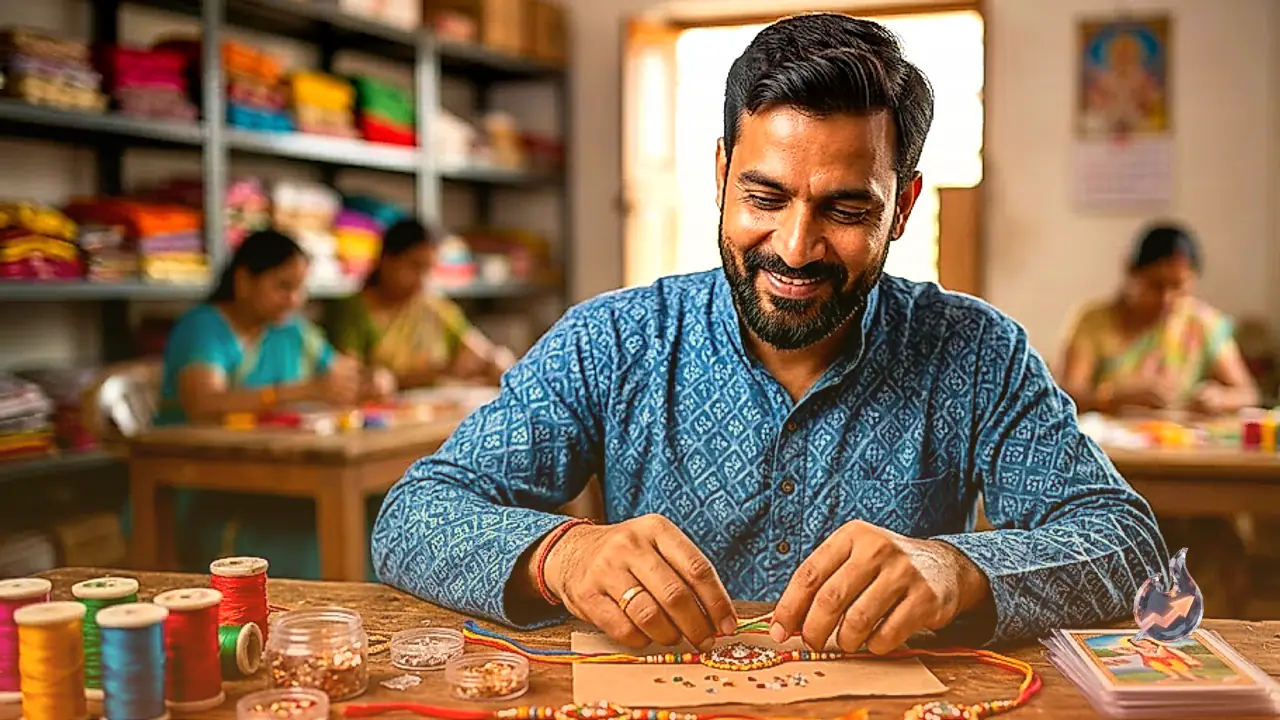

In RK Colony of Bhilwara city, Rajasthan, the festival of Rakshabandhan is marked by a deep tradition of social harmony that transcends religious boundaries. Chand Mohammad and his family have been handcrafting traditional mica rakhis for 50 to 60 years, preserving a cultural legacy passed down through three generations. Long before the festival arrives, the family begins painstaking preparations, laboring for months to ensure every rakhi is ready in time for sisters across the region. Their dedicated craft continues right up until the day of Rakshabandhan, serving as a beacon of mutual respect and unity.
A Three-Generation Heritage of Crafting Mica Rakhis
Reflecting on his family heritage, Chand Mohammad notes that their engagement with crafting mica rakhis, known locally as bhodal, spans roughly three generations. The intricate technique was handed down to him by his parents, who pursued the same traditional craft throughout their lives. For five to six decades, Chand Mohammad and his wife have diligently preserved this ancestral skill, keeping alive an art form that represents decades of artisanal passion amidst a rapidly changing world.
The process of creating these traditional rakhis demands significant effort, precision, and physical labor. It begins with sourcing raw mica and vibrant silk threads. Artisans break down the mineral mica into smaller pieces and beat them continuously until they become wafer-thin, achieving a transparent finish that closely resembles glass. Once the mica achieves this glass-like clarity, it is carefully cut into decorative rakhi shapes and bound together using fine silk threads. This meticulous handiwork transforms simple raw materials into enduring symbols of affection.
Door-to-Door Delivery Across More Than a Dozen Villages
Instead of setting up commercial stalls in urban markets, Chand Mohammad personally carries his handmade creations directly to rural households. He travels extensively across more than a dozen villages within Bhilwara district, visiting Hindu families and presenting the rakhis directly to sisters at their doorsteps. Along with each traditional mica rakhi, he presents an illustration of Shravan Kumar, an iconic figure symbolizing filial devotion and care.
This long-standing outreach is guided by a commitment to community relationships rather than commercial gain. When visiting rural homes, Chand Mohammad accepts whatever monetary compensation families voluntarily offer. For financially vulnerable households unable to provide money, he gladly accepts wheat or other food grains in place of cash. This inclusive practice ensures that every household can participate in the tradition without financial strain or discrimination.
Weaving Messages of Mutual Respect Beyond Religious Boundaries
For Chand Mohammad, crafting rakhis is a spiritual and emotional commitment. He emphasizes that a rakhi is not merely a piece of thread, but a sacred bond connecting human hearts and shared values. While crafting these pieces, he maintains an intentional focus on love, harmony, and brotherhood, feelings that motivate his yearly journey into surrounding Hindu communities.
By placing human relationships and goodwill above religious distinctions, Chand Mohammad's family presents an inspiring story of Hindu-Muslim unity in Bhilwara. Their three-generation tradition demonstrates how shared heritage, craftsmanship, and mutual respect can bridge cultural divides and foster lasting community solidarity.