




















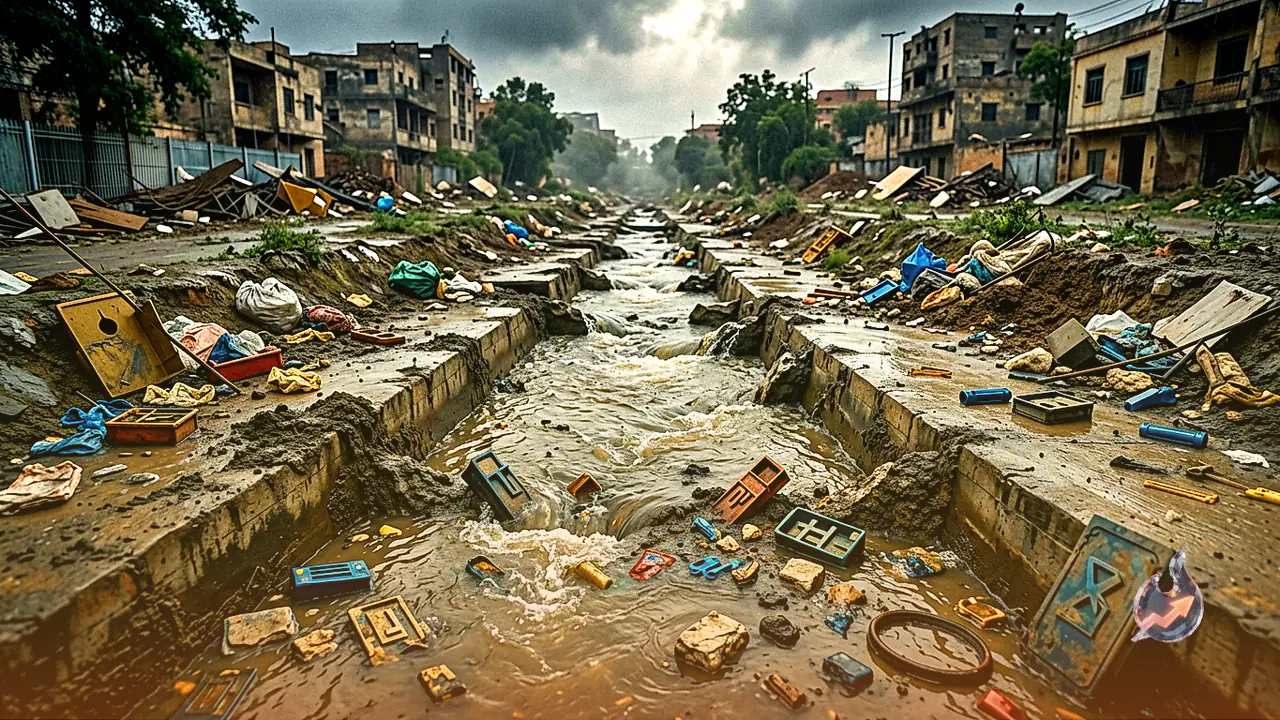

In a significant administrative push to tackle the perennial menace of severe waterlogging and flooding across the national capital, local authorities have officially identified eight critical drains that have long plagued the city's drainage infrastructure. These specific channels have been categorized as exceptionally difficult to clean and maintain due to chronic issues such as rampant illegal encroachments, untreated sewage discharge, municipal solid waste dumping, and dairy animal waste disposal. Such persistent obstructions severely cripple water discharge efficiency during heavy downpours, triggering widespread inundation across numerous urban sectors. The identification of these eight troublesome drains has been formally documented within the service plan report issued by the Irrigation and Flood Control Department. Furthermore, the recently approved Delhi Master Plan 2047 meticulously incorporates these ground realities alongside structured engineering solutions and policy measures designed to eradicate these systemic blockages permanently.
The 8 Critical Drains Posing Major Challenges to Delhi
According to official administrative assessments, the upkeep and regular maintenance of these vulnerable drains are severely hampered by jurisdictional overlaps and operational friction among multiple civic agencies, including the Municipal Corporation of Delhi, the Irrigation and Flood Control Department, the Delhi Development Authority, and the Delhi Water Board. A closer look at each of these eight problematic water channels reveals the distinct structural and societal hurdles surrounding them.
- Escape Drain Number 1: This specific drain suffers from major hydraulic obstructions caused by two large freshwater supply pipelines running directly through its interior channel. Additionally, heavy silt deposits originating from water treatment facilities, coupled with a severe lack of adequate access pathways for heavy de-silting machinery, compound the maintenance crisis. To resolve these hurdles, authorities have proposed completely relocating both water pipelines outside the drainage bed. Once these utility lines are successfully shifted, comprehensive mechanical de-silting operations will be launched to restore optimal flow depth.
- Biharipur Drain: Situated in North-East Delhi, the Biharipur Drain is tightly flanked on both sides by dense residential housing and concrete structures, making it virtually impossible for heavy cleaning equipment to approach the channel. Compounding the situation, large quantities of municipal solid waste and organic cattle dung are regularly dumped directly into the waterway. To combat this bottleneck, planners have recommended constructing an auxiliary service road running parallel to the drain to facilitate uninterrupted machinery movement. Where deemed necessary, the removal of unorganized or illegal structures flanking the banks has also been advised, alongside a complete engineering re-modeling of the entire drainage channel.
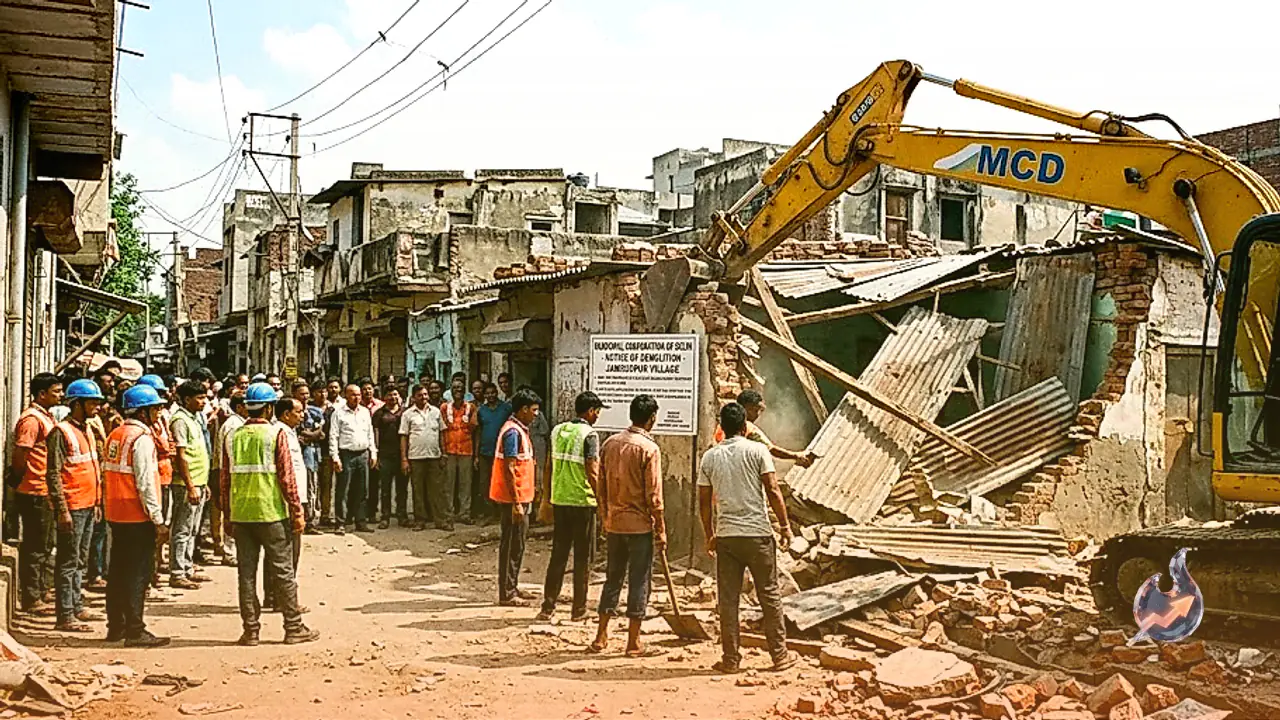
- Bund Drain: The Bund Drain presents a remarkably similar operational challenge, characterized by tightly clustered residential properties built right up to its edges, leaving zero working clearance for sanitation crews. The continuous dumping of domestic garbage and animal waste has degraded the channel's carrying capacity even further. Official reports indicate that bar screens have already been installed along this route, complemented by the construction of a bypass drain to divert excess volume. Plans are now underway to clear remaining physical obstructions, build a parallel access road for maintenance vehicles, and dismantle unauthorized encroachments wherever required.
- Kirari Suleman Nagar Drain: The Kirari Suleman Nagar Drain faces perhaps the most intricate sewage and waste management dilemma in the region. According to official findings, domestic wastewater, untreated sewage, and municipal garbage from approximately 106 unauthorized and unsewered residential colonies empty directly into this waterway. During the peak monsoon season, residual treated discharge from surrounding facilities also enters the channel, triggering massive silt accumulation and drastically reducing its hydraulic capacity. To mitigate these risks, the Delhi Development Authority has been advised to divert wastewater at two specific junctures into the main road stormwater drains so it can flow securely toward alternative channels. Moreover, three existing culverts built over the drain are slated for removal and replacement with appropriately sized hume pipes to expand water-carrying capacity and ease sewage movement.
- Pankha Road Drain: The Pankha Road Drain contends with a complex mix of solid waste dumping, structural encroachments, and low-hanging high-tension electrical transmission wires running directly overhead, creating safety hazards and operational roadblocks. Municipal officials have strongly recommended constructing robust concrete retaining walls along both banks of the channel. Simultaneously, the Delhi Water Board and local power distribution companies will collaborate to address and mitigate the electrical hazards posed by the overhead transmission lines.
- Relief Drain: The Relief Drain similarly suffers from a severe lack of maneuvering space for heavy mechanical cleaning gear. Beyond the everyday garbage thrown by local residents, street vendors and roadside hawkers routinely dispose of their commercial waste directly into the waterway. Amid these persistent challenges, the National Highways Authority of India has formulated a comprehensive scheme to entirely reconstruct the drainage system and establish a properly engineered outfall to ensure smooth downstream water release.
- Nasirpur Drain: Located in West Delhi, the Nasirpur Drain receives colossal volumes of solid municipal garbage discarded by nearby residents. A primary driver of this problematic behavior is the distinct absence of designated local garbage collection depots or dhalaos in the immediate vicinity. The master plan advises the Municipal Corporation of Delhi to construct proper localized waste collection hubs for surrounding homes and commercial markets. Furthermore, heavy-duty steel safety grills are slated for installation across the top of the drain to intercept refuse before it tumbles into the flowing water.
- Asola Drain: The Asola Drain in South Delhi grapples with nearly identical waste-disposal vulnerabilities, where neighborhood residents routinely use the open channel as an informal dumping ground due to inadequate civic waste collection infrastructure nearby. The master plan emphasizes the urgent necessity of building structured community garbage receptacles for local households and commercial vendors, alongside installing secure steel mesh screens over the waterway to prevent solid waste ingress.
Focus on Enhancing Drainage Capacities Prior to Monsoon Seasons
The overarching objective of all structural and administrative interventions recommended within the Master Plan 2047 is to fully restore the hydraulic discharge capacities of these vital waterways and streamline routine maintenance protocols. Officials maintain that resolving these entrenched vulnerabilities will substantially improve stormwater management during heavy cloudbursts, effectively mitigating urban flooding and waterlogging disasters. Particular emphasis is being placed on rigorous upkeep and cleaning regimens ahead of peak monsoon periods. Historical precedent underscores the urgency of these measures, given that numerous municipal drains frequently swell and overflow during heavy rains, leading to perilous accidents such as an incident where three school children fell into a swollen torrent and were narrowly rescued from drowning by quick-thinking local residents in events captured vividly on surveillance cameras.
In response to administrative lapses, accountability measures have also been tightened across civic bodies, including the suspension of junior engineers and municipal personnel following serious accidents linked to open and poorly maintained drains, ensuring that supervisory negligence is met with immediate disciplinary action.