























Air travel through India's busiest aviation hub is set for a massive transformation over the next decade. Delhi International Airport Limited (DIAL) has finalized a strategic roadmap titled Master Plan 2036, which aims to expand the annual passenger handling capacity of Indira Gandhi International (IGI) Airport from its current limit of 10.6 crore to 12.5 crore by the year 2032. This major expansion drive is designed to tackle recurring terminal congestion, improve operational efficiency, and seamlessly accommodate roughly 1.9 crore additional passengers in the coming years.
Stakeholder Consultations and Multi-Phase Rollout
The proposed expansion framework reflects projected air traffic growth over the next ten years. DIAL is currently presenting the blueprint to various airport stakeholders for feedback, after which it will be submitted to the Union Ministry of Civil Aviation for official government approval. Execution of the master plan will take place across multiple structured phases to minimize disruption to active flight operations. Under the primary timeline, the initial phase is scheduled for completion by April 2030, at which point the airport's overall capacity is expected to reach 11.6 crore passengers annually. The final target of 12.5 crore annual passengers is slated to be achieved by 2032. At present, the combined capacity of the three existing operational terminals stands at approximately 10.6 crore passengers per year. Breakdowns reveal that Terminal 1 (T1) holds a capacity of 4.2 crore, Terminal 2 (T2) handles 1.4 crore, and Terminal 3 (T3) manages 5 crore passengers annually.
Construction of Pier E at Terminal 3
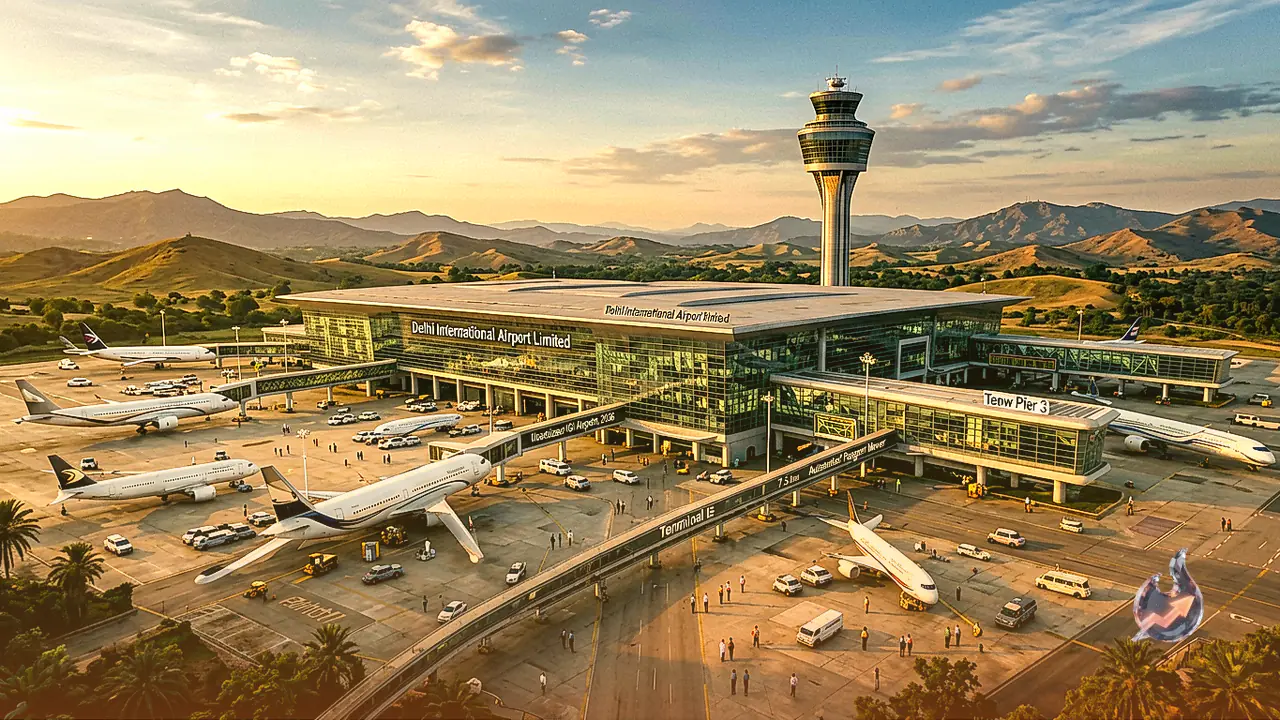
A central highlight of the modernization project is the construction of a brand-new facility named Pier E at Terminal 3. In airport architecture, a pier represents the key structural corridor or concourse that connects the main terminal building directly to aircraft aerobridges. Terminal 3 currently features four functional piers labeled A, B, C, and D. Piers A and B are dedicated primarily to international departures and arrivals, whereas Piers C and D handle domestic air traffic. Recent infrastructure modifications at Pier C have rendered it flexible enough to handle international flight operations when necessary. Under the newly prepared master plan, Pier E will be constructed at Terminal 3 with a target completion date of April 2030. Once operational, this new pier alone will augment Terminal 3's yearly capacity by nearly 1 crore passengers, building upon its existing baseline capacity of 5 crore passengers.
Automated Passenger Mover to Link All Terminals
To streamline inter-terminal transfers, airport authorities are planning to introduce a specialized transit facility known as the Automated Passenger Mover (APM) system. This automated driverless airtrain network will stretch across a distance of approximately 7.5 kilometers, creating a direct physical link between Terminal 1, Terminal 2, and Terminal 3. Once operational, the APM system will offer a seamless transit experience for travelers transferring between domestic and international flights across different terminals. Passengers will no longer need to rely on road-based shuttle buses or navigate external traffic delays while moving between T1, T2, and T3, significantly shortening connection times and easing terminal navigation.
Future Prospects for Terminal 4 and Traffic Growth Trends
Regarding long-term infrastructure additions, airport sources indicate that a final decision on constructing a completely new Terminal 4 (T4) has not yet been locked in. If passenger volume experiences an unexpected surge in the future requiring additional infrastructure, planners may evaluate converting the existing Terminal 2 into Terminal 4. Passenger throughput at Delhi Airport continues to rise steadily year after year. Official data highlights that nearly 60 lakh passengers traveled through the airport in July alone, representing a 3.7 percent increase compared to the corresponding period last year. Furthermore, during the 2026-27 period up to July, the total volume of passengers using Delhi IGI Airport reached 2.64 crore.