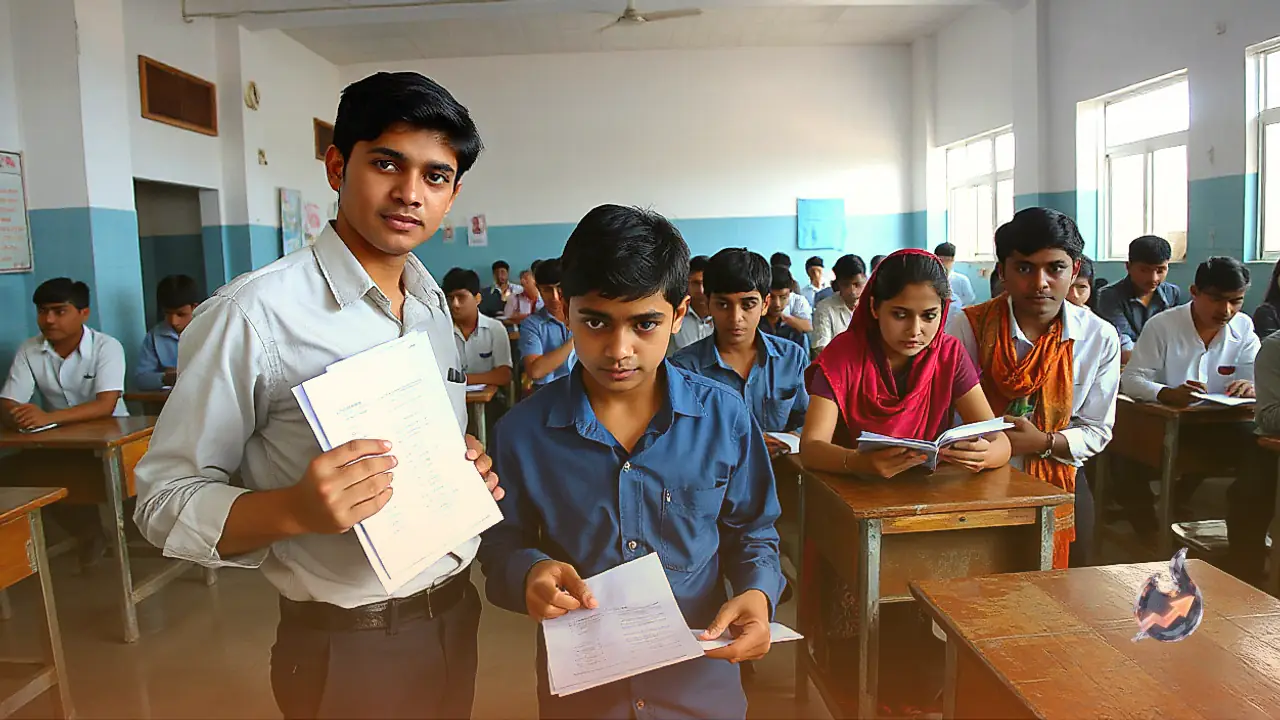























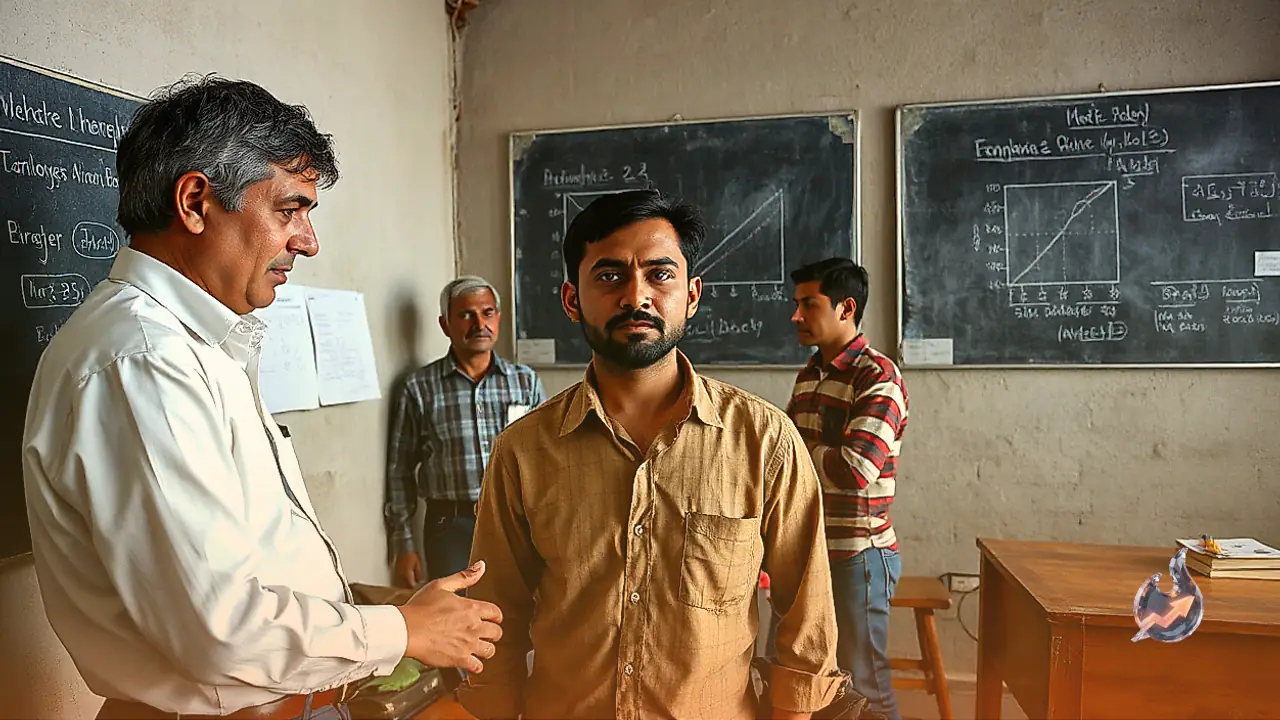

Mentioning mathematics often triggers intense anxiety among students and deep concern for their parents. A substantial number of young learners perceive math as an intimidating barrier, yet connecting foundational principles with everyday observations can make it one of the most accessible subjects on the curriculum. To dissolve this persistent hesitation and spark genuine enthusiasm, Amit Choudhary has spent the past 31 years actively mentoring students and formulating streamlined learning techniques that simplify problem solving across academic levels.
Combining Abstract, Applied, and Vedic Mathematics
Choudhary explains that demystifying math requires a balanced integration of abstract concepts, applied mathematics, and Vedic principles. Between Class 2 and Class 12, core mathematical theories reappear across textbooks under numerous disguises. In practice, a single fundamental principle might emerge in 25 to 30 distinct variations and instructional roles throughout a student's schooling, but learners frequently miss the underlying connective thread. To resolve this disconnect, Choudhary formulated a single line formula system alongside a single distance formula concept, allowing students to apply unified logic across seemingly disconnected chapters.
Everyday Analogies and the Tri-Color Identification Method
To illustrate how equations transform without changing their core identity, Choudhary draws an analogy from family dynamics. Just as one individual may simultaneously be an uncle to one relative, a maternal uncle to another, and an elder relation to someone else while remaining the exact same person, a foundational mathematical formula takes on different appearances depending on the grade level and problem set. Grasping this root logic empowers students to tackle complex numerical problems with confidence. Additionally, Choudhary designed a color pen combination technique tailored for younger students. This approach utilizes pens of three distinct colors to mark simple, moderate, and difficult concepts separately, giving children an immediate visual map of where their comprehension is strong and where they need focused practice.
Using Daily Household Items and Calendars to Teach Geometry
Emphasizing experiential education over rote repetition, Choudhary advocates drawing lessons directly from ordinary surroundings. A trouser belt offers a clear visual lesson in geometry: stretched flat on a surface, it represents a straight linear segment, but buckled around the waist, it forms a circular boundary. Similarly, a standard household calendar serves as an effective learning device. By tracking public holidays, festive breaks, and vacation schedules on the calendar grid, children practice date calculations while identifying recurring intervals and numerical sequences. Choudhary emphasizes that mathematics relies entirely on conceptual clarity rather than mechanical memorization, noting that practical illustrations, structured formulas, and engaging methodologies can help any student excel in the subject.