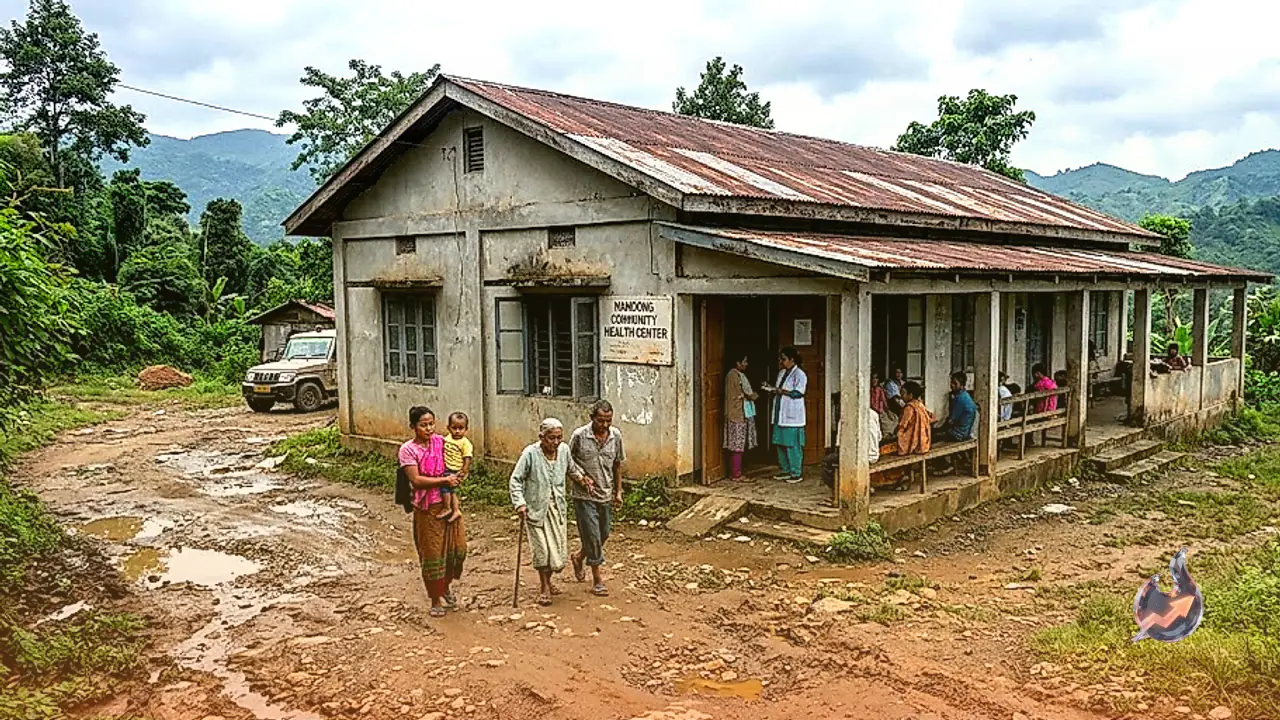















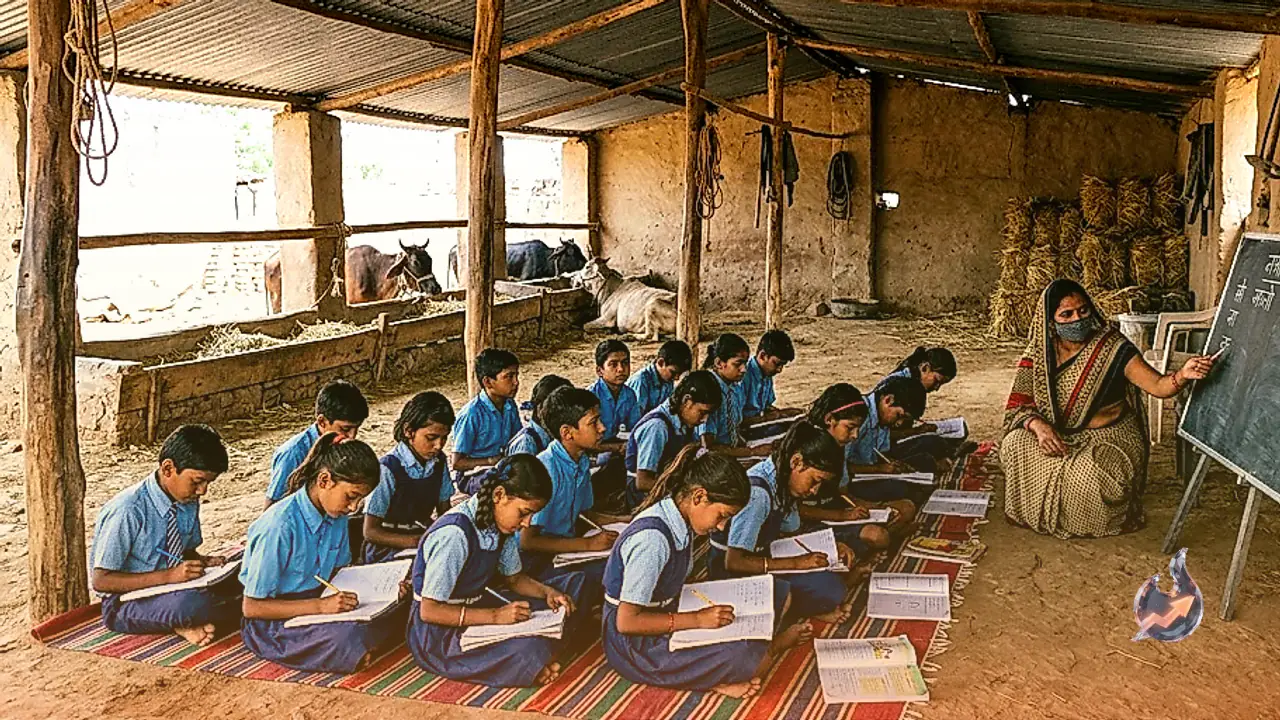

A distressing picture of rural educational infrastructure has emerged from Rampura village, located near Jaipur, where primary school children have been forced to attend classes inside a farmer's cattle shed for the past two and a half years. The original government school building in the village has turned severely dilapidated, prompting authorities to shut it down to avoid potential structural hazards. To ensure that the children's education was not abruptly halted, a local farmer stepped forward to offer his cattle stable as a temporary venue for daily classes.
Students Forced to Learn Amid Animal Feed
Upon visiting the temporary school setup in Rampura village, one is immediately struck by the unusual sight of young students sitting with their textbooks directly adjacent to piles of cattle feed. This arrangement is neither a temporary canvas tent set up following an emergency nor a newly constructed temporary hall provided by the local administration. Instead, it is a fully functioning cattle shed owned by a resident farmer, which has served as an makeshift educational space for nearly 30 months.
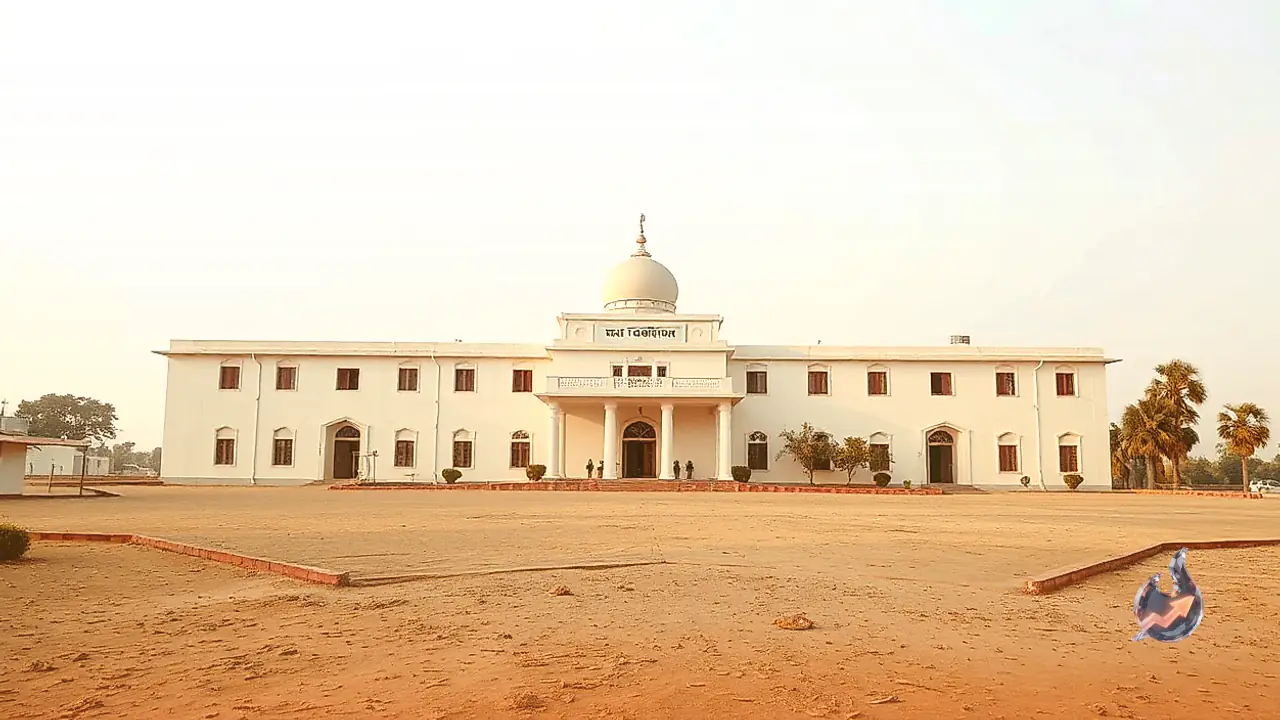
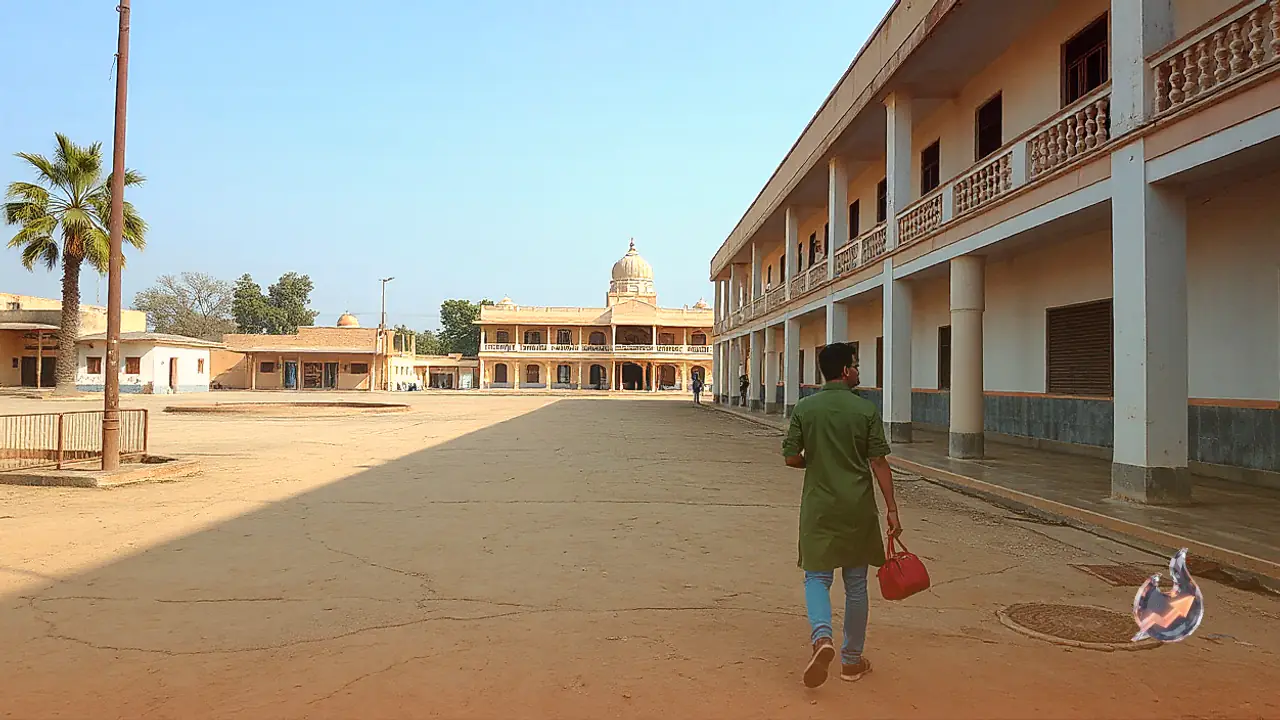
Every morning, students gather at this improvised learning center, carrying their notebooks and study materials into the stable environment. While livestock feed is stacked high on one side of the premises, pupils sit on the other side trying to focus on their lessons under the guidance of their teachers. Just a short distance away stands the original school building, locked and abandoned due to its crumbling walls and dangerous structural state that render it entirely unsafe for children.
A Farmer's Generous Gesture Without Financial Charge
The owner of the cattle shed explained that when the government school building deteriorated to the point of closure, the children faced an immediate crisis regarding where to continue their education. Recognizing that stopping their schooling would severely impact their academic growth, the farmer decided to hand over his shed to the school administration. He has maintained this arrangement for two and a half years without demanding or accepting any monetary compensation, rent, or financial assistance.
According to the farmer, his sole motivation was to ensure that the educational progress of the village youth remained uninterrupted despite infrastructural shortcomings. He firmly believes that under no circumstances should children be deprived of schooling. Driven by this commitment, he has allowed his private agricultural facility to be used for educational purposes for an extended duration, providing a crucial lifeline for the village's students.
Protest and Conflict During Official Site Inspection
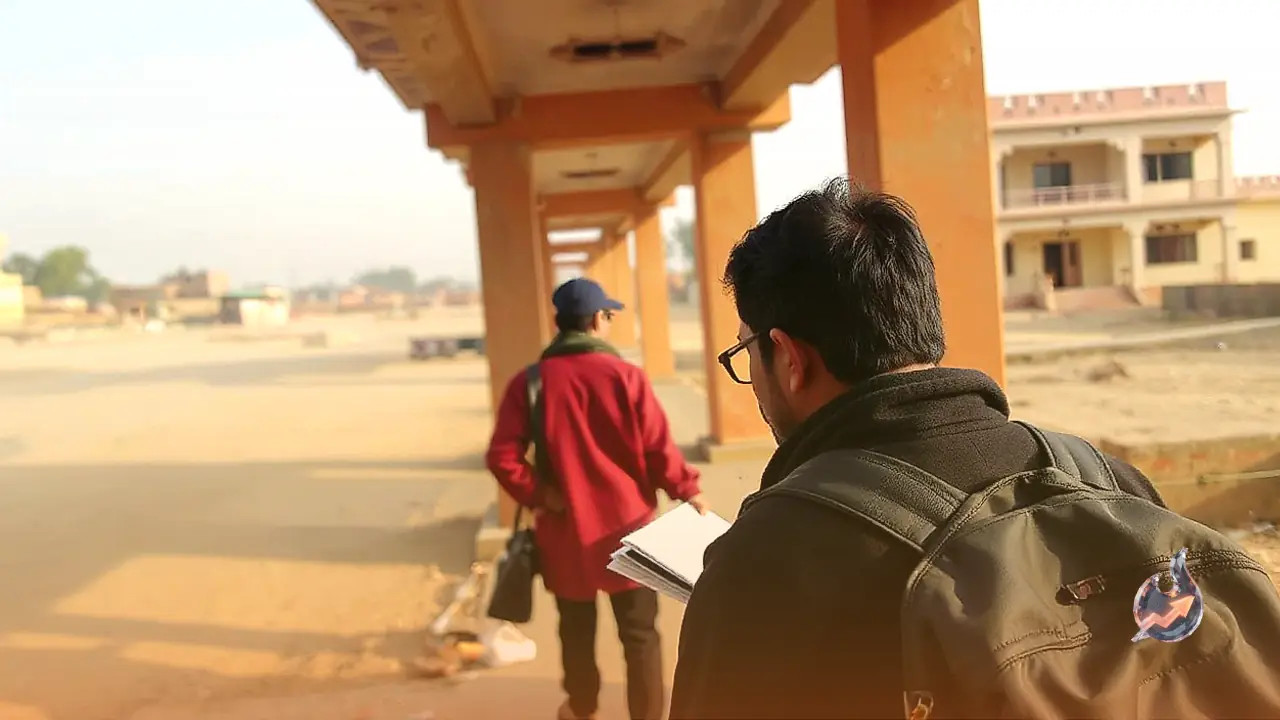
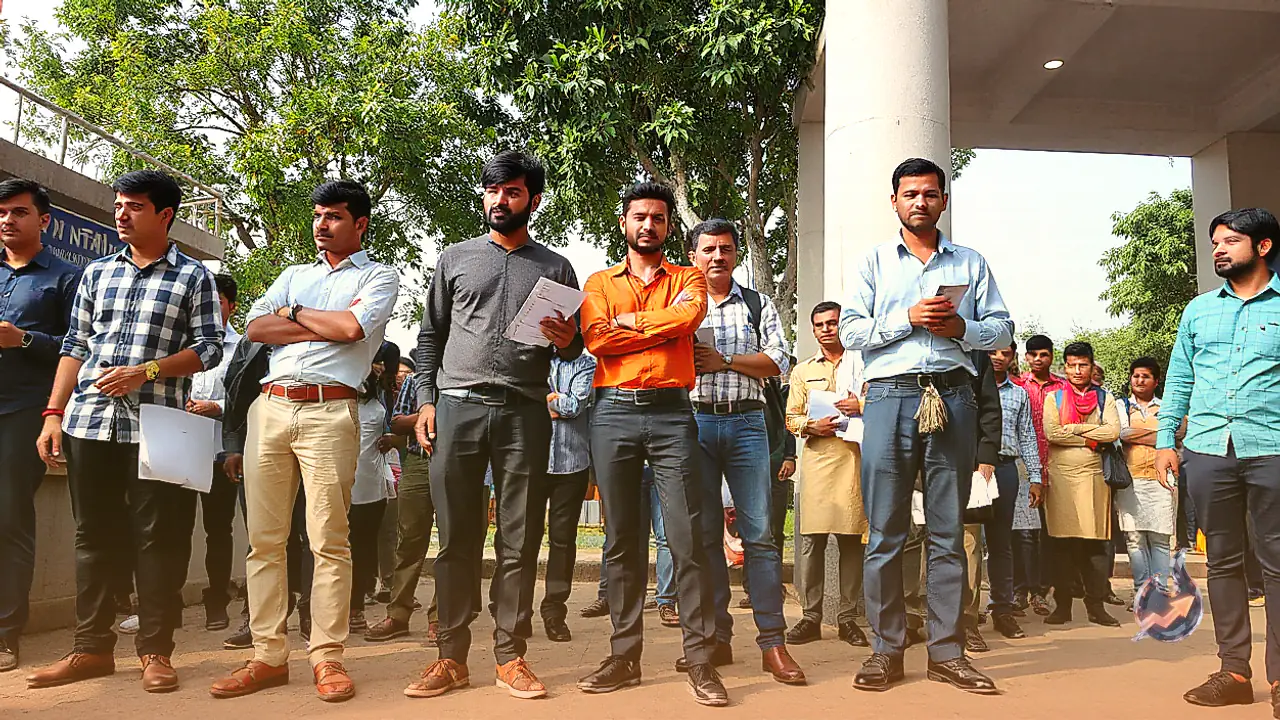
The ongoing plight of the school recently drew attention when a team from CJP arrived in Rampura village to evaluate the ground reality and inspect the learning environment. However, the team's visit triggered strong resentment among the local villagers, leading to heated arguments. The situation escalated quickly into physical altercations and assault between the villagers and the visiting inspection team.
Despite the confrontation and tension surrounding the visit, the underlying reality of the village school remains unchanged. Children continue to attend classes inside the cattle shed every day amidst animal fodder. The incident highlighted the frustration of the local community over prolonged administrative inaction, while the young students remain caught in the middle of a delayed infrastructure resolution.
Hope Rises Following Rs 18 Lakh Sanction for New Campus
After months of uncertainty, relief appears to be on the horizon for the residents and students of Rampura village. The government has officially sanctioned a fund of Rs 18 lakh for the construction of a brand-new, safe school building. With the administrative approval of these funds, villagers are optimistic that construction work will commence shortly, paving the way for a permanent solution.
Local residents express hope that the completion of the new facility will finally allow students to move out of the cattle shed and transition into a modern, hygienic classroom setting. The key question occupying the minds of Rampura's villagers has been how much longer their children would have to study among livestock. With the allocation of Rs 18 lakh, there is now renewed confidence that the wait will soon end and children will regain access to a proper educational facility.