





















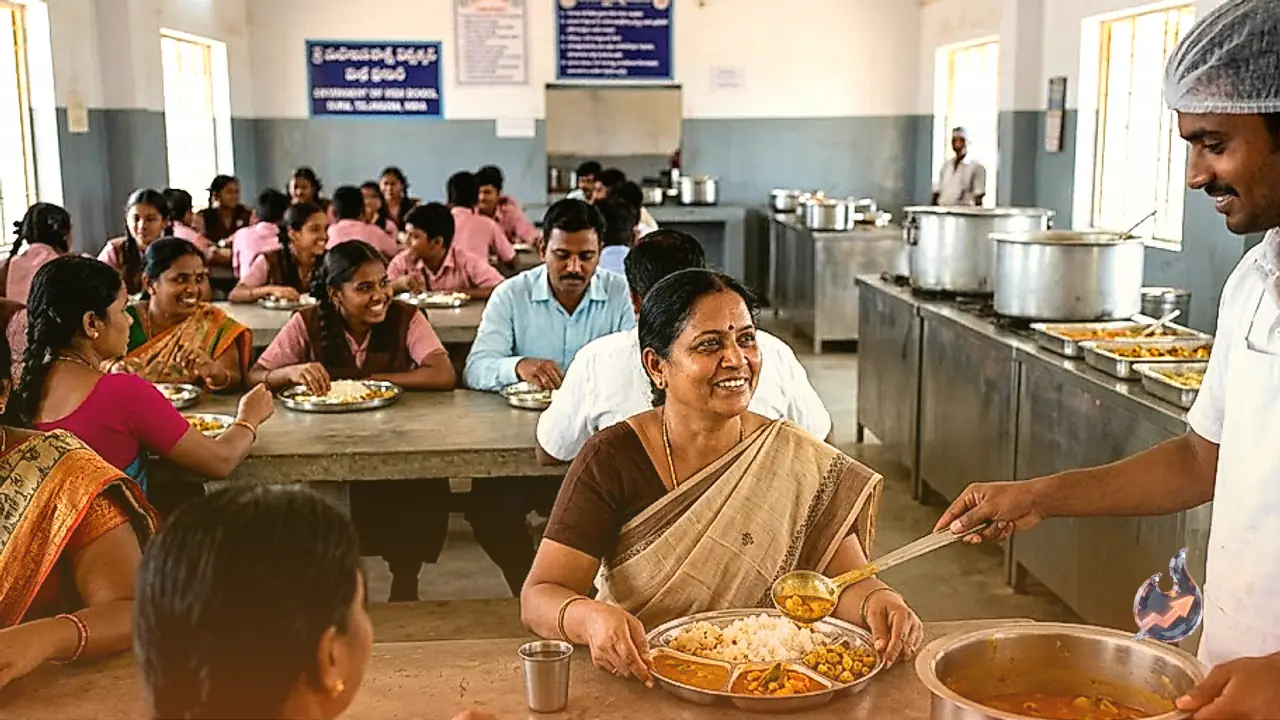

The Telangana government has introduced a major welfare initiative for staff working in state-run and local body-operated educational institutions. Under a new official directive, both teaching and non-teaching personnel will now receive free daily breakfast and midday meals alongside students. The primary objective behind this measure is to provide adequate nutritional support to the school staff, recognizing their continuous dedication toward shaping students' futures and managing daily campus administration.
Immediate Execution and Administrative Clearances
The formal order governing this mandate was officially issued on Thursday, July 30, 2026, with instructions for immediate implementation across all eligible schools. To streamline execution and ensure absolute transparency, copies of the order have been distributed to key education authorities. These include Regional Joint Directors, District Educational Officers (DEO), Mandal Educational Officers (MEO), and school Headmasters. All designated officials have been advised to arrange necessary logistics and ensure adequate ration supplies in their respective jurisdictions without delay.
Digital Tracking and Central Kitchen Logistics
To eliminate food wastage and ensure complete accountability, necessary upgrades are being integrated into the existing administrative system. The Additional Director of the Mid-Day Meal department has been instructed to update the official 'Telangana Breakfast and Mid-day Meal Portal.' Once these technological adjustments are operational, schools can log precise daily participation data for teachers and non-teaching employees, maintaining an audited digital record.
Concurrently, social organizations and agencies managing 'Central Kitchen' facilities, which cook and deliver fresh meals to schools daily, have been notified of the policy shift. These catering providers must now scale up meal preparation by factoring in staff headcount alongside students, preventing any potential food shortages during service.
Enhanced Food Quality Oversight and Community Reaction
A key operational benefit of this decision is the natural oversight it introduces. Since educators and administrative staff will eat the same meals alongside students, direct monitoring of food quality, taste, and hygiene will occur automatically. Various teacher associations, non-teaching staff unions, and school management authorities across the state have expressed strong appreciation for the measure. Representatives noted that beyond staff welfare, the shared dining experience will foster a family-like atmosphere and promote social harmony across campuses.