




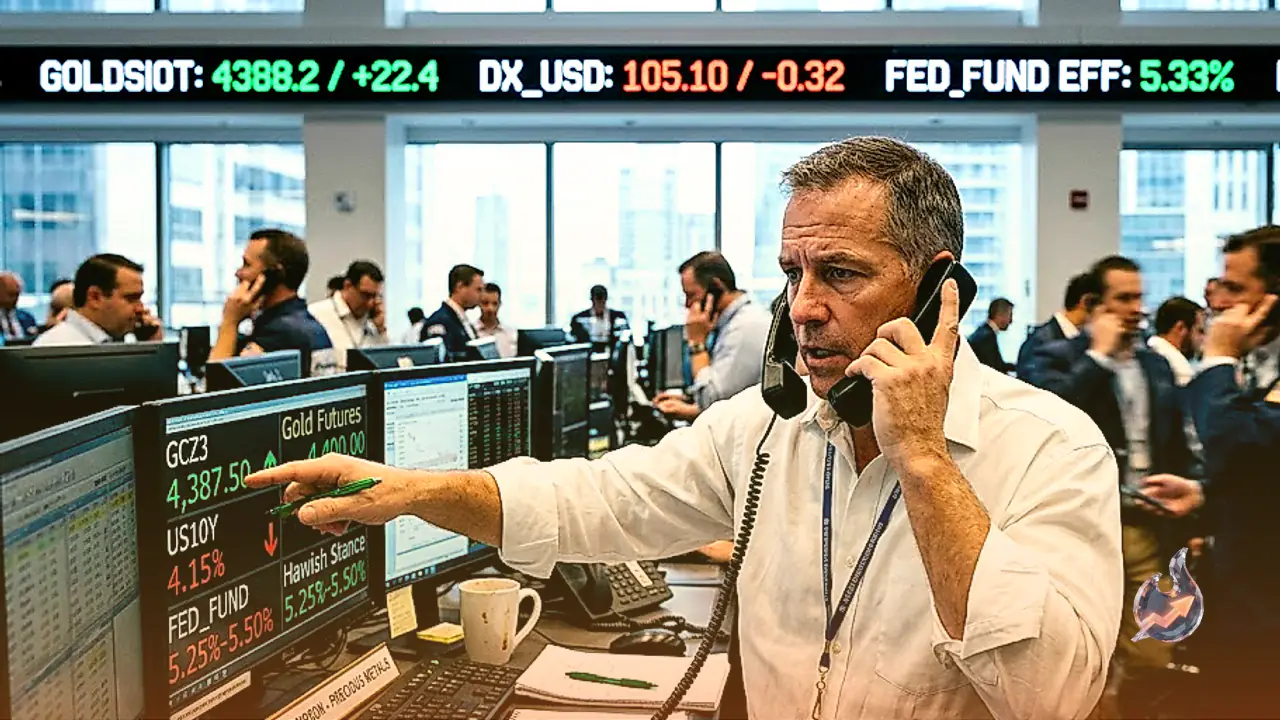


















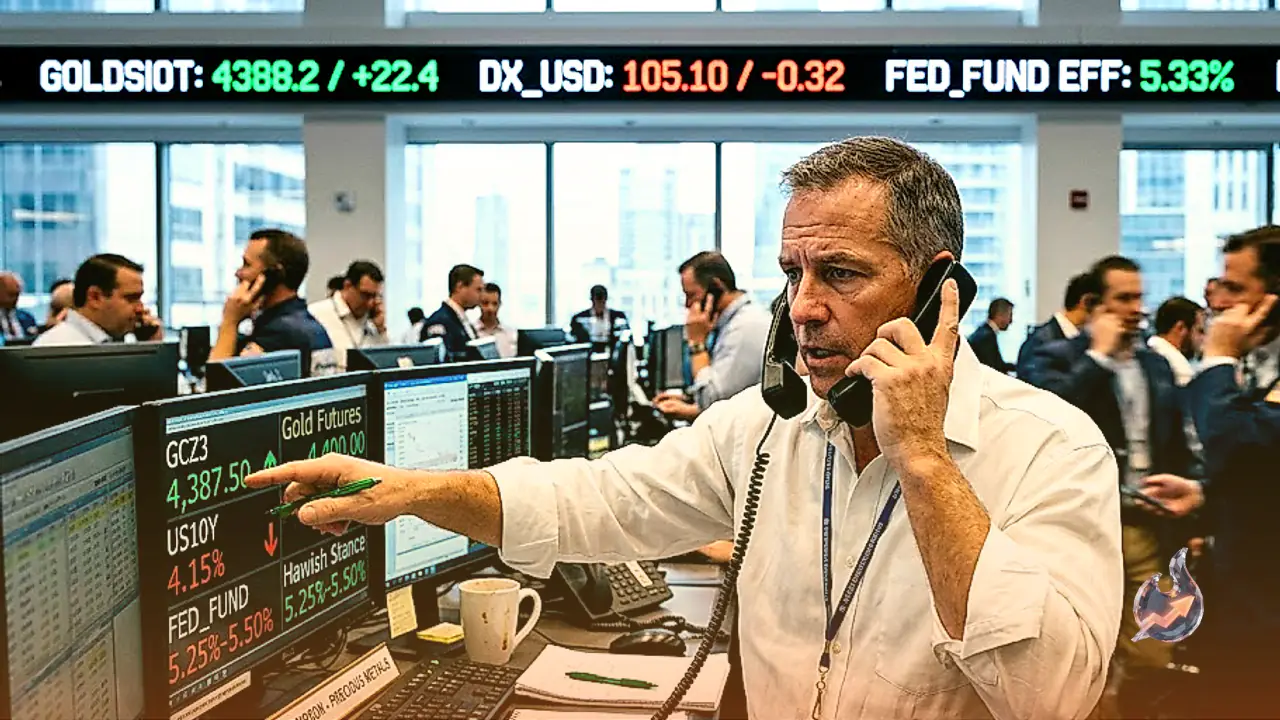

Gold prices advanced for the second consecutive trading session, pushing the precious metal back into positive territory for the week. A moderate pullback in US Treasury yields succeeded in balancing out the headwinds generated by the Federal Reserve's hawkish rate hike posture. In the bullion market, XAU/USD buyers are now closely tracking the pivotal $4,400 threshold during Friday's trade, seeking a sustained breakout above that mark before initiating fresh long exposure. Technical projections indicate that any continued advance will run into considerable resistance above $4,500. Conversely, if downward pressure takes over, session lows around the $4,335 mark stand ready to provide initial support, with a deeper safety net located in the key demand pocket between the August 6 low of $4,223 and the September 16 trough of $4,235.
Safe Haven Dynamics and Central Bank Demand
Throughout human civilization, gold has fulfilled a vital function as a reliable store of value and an universally recognized medium of exchange. Beyond its enduring appeal in jewelry fabrication, contemporary financial systems treat the yellow metal as a cornerstone safe-haven asset. During periods of heightened geopolitical tension or fears of deep economic recession, market participants routinely allocate capital into bullion to preserve wealth. Because gold carries no counterparty risk and does not depend on the solvency of any specific sovereign government or issuer, it serves as a foundational hedge against high inflation and depreciating fiat currencies.
Sovereign central banks represent the largest institutional custodians of gold reserves. In their pursuit of reinforcing domestic currency credibility and maintaining systemic solvency during stressful macroeconomic periods, monetary authorities actively diversify their reserve holdings into physical bullion. A substantial gold stockpile serves as a tangible pillar of economic trust and sovereign solvency. According to official data compiled by the World Gold Council, central banks accumulated a record 1,136 tonnes of gold during 2022, representing an aggregate market value of roughly $70 billion. This accumulation marked the highest annual volume of central bank gold acquisitions since historical record-keeping began. The expansion has been led predominantly by emerging market monetary institutions across China, India, and Turkey, which continue to aggressively enlarge their gold reserves.
Macro Interplay With the US Dollar and Risk Markets
Gold maintains an established inverse correlation with the US Dollar and US Treasury securities, both of which operate as premier reserve and safe-haven instruments in international finance. When the Dollar weakens, gold generally appreciates, providing investors and sovereign institutions with an effective avenue for portfolio diversification during volatile market cycles. Similarly, gold displays an inverse relationship with broad risk assets. Strong rallies across equity benchmarks typically pull momentum away from bullion, whereas widespread liquidations in risk-sensitive sectors tend to drive capital into precious metals.
Because gold is an asset that yields no regular interest, lower real interest rates diminish the opportunity cost of holding physical bullion, creating a supportive climate for higher prices. In contrast, periods of elevated borrowing costs often exert structural pressure on the metal. Nevertheless, day-to-day fluctuations remain heavily dictated by the movements of the US Dollar, given that global bullion contracts are denominated in the American currency as XAU/USD. A strengthening Dollar generally caps upside momentum in gold, while a decelerating Dollar index provides the catalyst for upward expansions. Easing yields across the US Treasury curve have effectively capped the Dollar's advance ahead of scheduled central bank speeches and economic releases, offering immediate breathing room to spot gold.
Cross-Asset Movements in Currencies and Crypto
Cross-asset dynamics across global financial desks reflect broader shifts in yield expectations. The AUD/USD currency pair maintained a constructive tone for the second straight session on Friday, trading comfortably above 0.7100 throughout the Asian market hours as muted Treasury yields limited Dollar demand. Furthermore, hawkish commentary delivered by Reserve Bank of Australia Governor Bullock provided additional tailwinds to the Australian Dollar by reinforcing expectations for further monetary tightening. Still, the Federal Reserve's steadfast hawkish framework alongside lingering geopolitical frictions has placed a ceiling on the pair by restricting deeper Dollar sell-offs.
Concurrently, USD/JPY rekindled its upward trajectory during Friday's European session, testing the 158.00 neighborhood and touching fresh two-week peaks. The Japanese Yen surrendered ground despite the Bank of Japan carrying out an anticipated policy rate increase to 1.25% accompanied by hawkish commentary from Governor Ueda. Downward pressure accelerated after two unexpected dissenting votes against the rate decision emerged from within the policy board. Over the past decade, Japan's ultra-low interest rate regime had funneled trillions of dollars into worldwide investments, cementing the Yen's standing as one of the cheapest global funding vehicles. As the Bank of Japan progresses with policy tightening, that long-standing funding model faces fundamental realignment.
Within the cryptocurrency ecosystem, Bitcoin (BTC) has mounted a notable technical rebound following its slide to a yearly trough of $57,800 in July. The asset registered back-to-back monthly gains across July and August, rising nearly 33% from the lows. Despite this sharp recovery, Bitcoin continues to trade approximately 40% beneath its historical all-time high. This spread leaves market participants debating whether the latest advance represents the foundational stage of a renewed bull cycle or merely an interim relief rally situated within a wider bear market phase.