























The Australian Dollar managed to hold onto positive momentum for a second consecutive session on Friday, keeping its footing above 0.7100 during Asian trading hours. A pullback in US Treasury bond yields provided much-needed breathing space for foreign exchange pairs trading against the greenback, leaving dollar buyers on the defensive. Adding to the currency's resilience were hawkish policy remarks from Reserve Bank of Australia Governor Bullock, which fueled renewed expectations for higher benchmark interest rates. Nevertheless, broader gains for the currency pair remained restricted as the US Federal Reserve's restrictive stance and ongoing geopolitical tensions helped cushion the US Dollar from steeper declines.
Range-Bound Price Action and Recent Rebound in the Aussie
Recent volatility highlights the delicate technical setup facing the Australian Dollar. Just two sessions ago, the currency experienced a sharp drop toward an intraday low of 0.7075. By yesterday's early Asian trading, when the pair hovered near 0.7090, signs of market stability remained elusive despite expectations that the steep selloff was overstretched. A consolidation within the 0.7070 to 0.7115 corridor was anticipated, yet market dynamics shifted abruptly as buyers drove a sharp rebound to 0.7128.
By the end of that session, the currency settled 0.35% higher at 0.7112. That recovery alleviated the most pressing downside risks in the immediate term. For Friday's session, price movement is anticipated to remain contained within a sideways channel between 0.7095 and 0.7130. While immediate technical strain has abated, market participants continue to keep a watchful eye on whether underlying pressure will eventually reassert itself.
Japanese Yen Slides Toward 158.00 Despite Policy Tightening Anticipation
In contrast to the stability observed in other currency pairs, the Japanese Yen faced renewed selling pressure as European trading got underway on Friday. The USD/JPY pair resumed its broader ascent, pushing toward fresh two-week highs in the vicinity of 158.00. This retreat occurred despite market expectations pointing toward the Bank of Japan lifting its policy rate to 1.25%, accompanied by hawkish commentary from Governor Ueda.
The Yen's slide was largely driven by two unexpected dissent votes against the rate decision within the central bank's board. Those dissenting voices injected fresh skepticism regarding the central bank's appetite for subsequent hikes. For more than ten years, Japan's policy of ultra-low interest rates helped finance trillions of dollars in worldwide investments, establishing the currency as one of the cheapest capital sources across the globe. As the monetary authority prepares to tighten credit conditions again this week, this long-standing dynamic is entering an uncharted phase, standing in contrast to an era where Japan remained an isolated outlier while global peers lifted rates.
Gold Pushes Higher as Bulls Eye the $4,400 Barrier
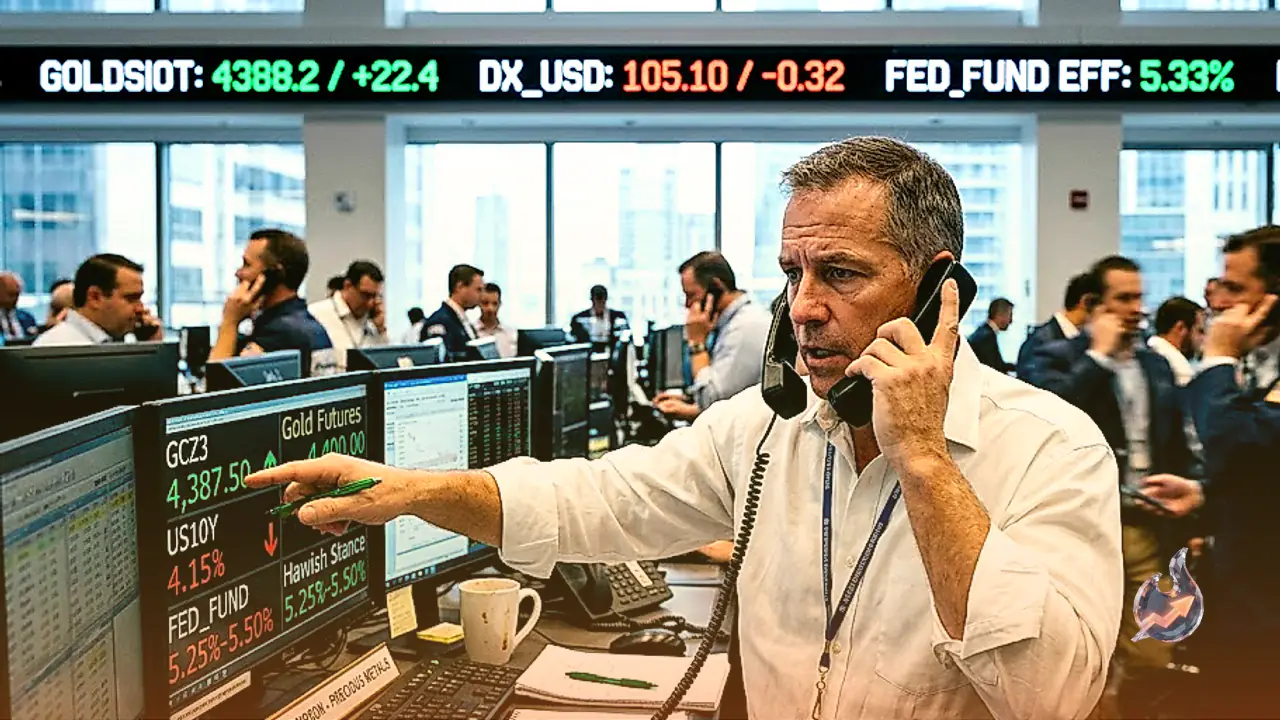
In the commodities space, gold advanced for a second straight day, printing fresh weekly peaks during the morning hours of the European trading session on Friday. Bullish traders, however, appear reluctant to commit large positions without confirmation of a sustained breakout above the pivotal $4,400 per ounce threshold.
The steady softening of US government bond yields has kept the dollar's broader uptrend in check, clearing a path for bullion's upward trajectory. Market participants are now awaiting scheduled appearances from Federal Reserve officials alongside incoming tier-two economic releases from the United States. Until the $4,400 hurdle is convincingly cleared, positioning in precious metals may remain measured.
Bitcoin Rebound Leaves Cycle Doubts Unresolved
Within the cryptocurrency market, Bitcoin has mounted a significant rebound following its descent to an annual low of $57,800 recorded in July. From that trough, the token has climbed nearly 33%, securing back-to-back monthly gains across July and August.
Even with this recovery underway, the digital asset remains roughly 40% below its record peak. This distance leaves traders confronting a central dilemma: whether the recent push marks the inception of an entirely new upward trend or merely represents an intermediate correction within a larger bearish cycle. The trajectory of global liquidity and interest rate decisions is expected to remain critical in answering that question.