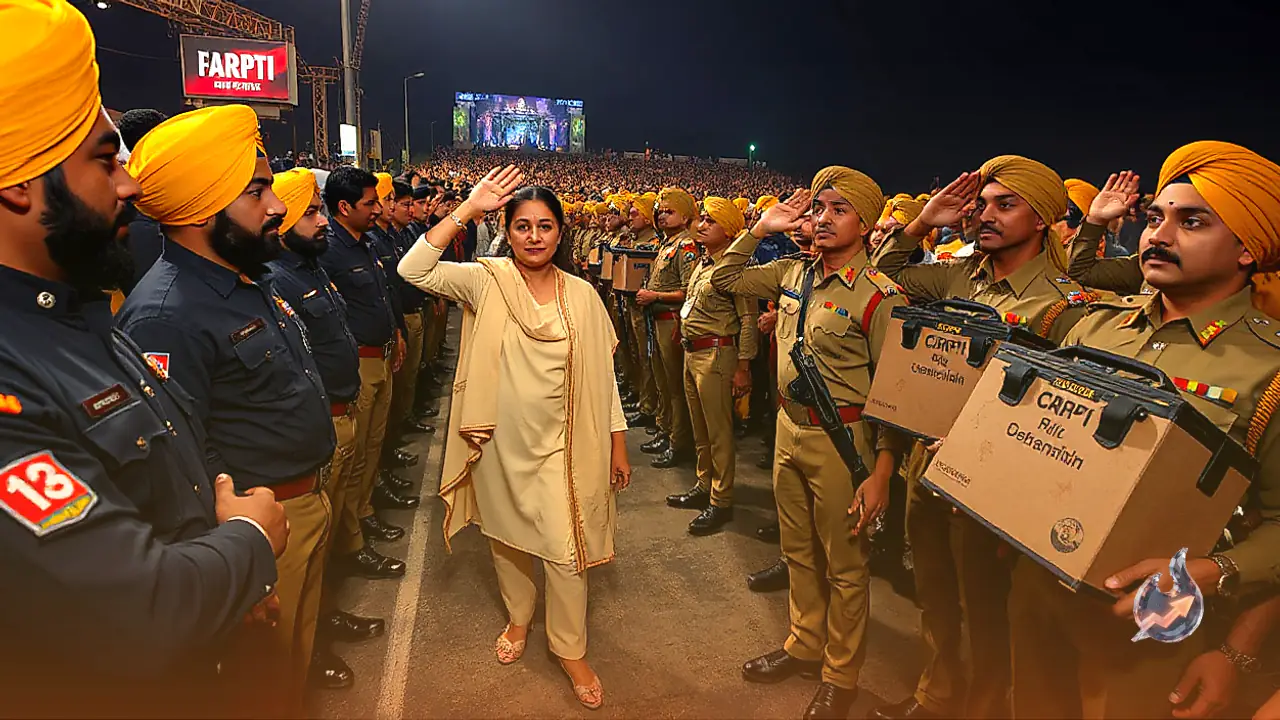















When cultural icons and political activism cross paths, public disagreements can easily turn into long-standing grievances, yet a recent encounter in the national capital demonstrated how mutual respect can outlast ideological friction. Abhijeet Dipke, founder of the Cockroach Janta Party who had previously voiced disappointment over Punjabi musician Diljit Dosanjh's remarks regarding a student agitation, attended the singer's live concert in Delhi. Following the performance, Dipke published an open letter addressing the artist, addressing past discord while emphasizing that an isolated disagreement cannot erode deep-seated admiration.
Live Performance in Delhi and a Public Message of Reconciliation
Abhijeet Dipke was among the audience members at Diljit Dosanjh's massive concert in Delhi on October 30. During the musical evening, he captured a selfie from the venue and subsequently posted it on his Instagram account alongside a reflective note dedicated to the musician. In this communication, Dipke brought up the tension from June, when student protests organized by his group led to public friction following the singer's comments. Invoking a warm Punjabi expression, Dipke urged the artist to let bygones be bygones as an elder brother would with a younger sibling.
Within the note, Dipke took time to clarify why he had originally felt compelled to challenge the performer. He explained that during their demonstrations in June, the musician's dismissive stance had caused genuine hurt. He stressed that his objection was never born of personal animosity, but rather stemmed from viewing Dosanjh as a figure who traditionally speaks up for righteous causes, a principle the singer himself has consistently articulated. Because expectations were set high, the perceived indifference at the time had struck a raw nerve.
From Chicago to New Delhi: A Fan's Ongoing Regard
To highlight the depth of his connection to the artist's career, the CJP founder shared a photograph taken at an earlier concert from this year, reaffirming that his appreciation for the singer's craft has not wavered. Dipke noted that he remains an avid listener of Dosanjh's discography and that his personal esteem would continue unchanged into the future.
Demonstrating this commitment, Dipke recounted traveling to Chicago this past May to attend Dosanjh's performance just prior to returning home to India. He explained that his journey was motivated not merely by musical enjoyment, but by genuine admiration for the artist's character. He highlighted Dosanjh's authenticity, his unapologetic connection to his heritage, and his ability to elevate Indian culture onto major global stages as qualities he has long held in high regard. Dipke observed that when someone is placed on such a high pedestal, any perceived misstep naturally stings more sharply. Nevertheless, he asserted that a single misunderstanding or point of divergence should never undermine the foundational respect and appreciation earned over many years.
Borrowing Lyrics to Close a Chapter of Tension
Concluding his message, Dipke formally referred to himself as the singer's younger brother and renewed his appeal to put the dispute completely to rest. He cited a well-known lyric from Dosanjh's popular track G.O.A.T., which touches upon greeting both adversaries and companions with warmth and grace. By invoking the principle that a gentleman speaks kindly even to those who oppose him, Dipke underscored that there should be no room for lasting bitterness among those who share cultural roots, bringing an amicable close to their public debate.
The Origins of the 'I Am an Artist' Controversy
The friction between the two figures trace back directly to June, when students led by the Cockroach Janta Party were staging sit-ins and rallies at Jantar Mantar in New Delhi. While the agitation was underway, an attendee on an Instagram Live broadcast asked Dosanjh to weigh in on the student demonstration. In response, the musician sought to distance himself from the unrest, remarking that he should be kept out of protests because he is an artist rather than a political figure.
During that live interaction, Dosanjh reflected that conditions in the world cannot always be entirely fair or perfect. To illustrate his perspective, he recited a verse from the Guru Granth Sahib reflecting on how worldly sorrow is pervasive, with peace found through spiritual grounding. Dosanjh also mentioned that his name is frequently dragged into contentious issues, asserting that he wishes well for all sides involved. He explained that he lacked complete details regarding the specifics of the student agitation, which is why he preferred not to elaborate any further on the matter at that time.
Subsequent Reversal and Public Support for Student Demands
The singer's initial reluctance had generated widespread disappointment among demonstrators and observers, particularly because he had previously been outspoken on several issues pertinent to Punjab. However, approximately one month later, following the 'Parliament March' on July 20, Dosanjh updated his public position by releasing a message in direct support of the student community.
In that follow-up statement, the performer condemned the violence that had taken place during the Jantar Mantar demonstrations and appealed directly to authorities to listen to the legitimate demands being raised by young people. He noted that the voice of the people is the voice of God. At the same time, Dosanjh candidly addressed the toll that prior activism had taken on his life, recalling how his vocal backing of the farmers' movement had resulted in accusations of being anti-national, intense public backlash, and significant legal hurdles. Those prior difficulties, he indicated, explained why he had developed a cautious approach when asked to comment on emerging political demonstrations.