



















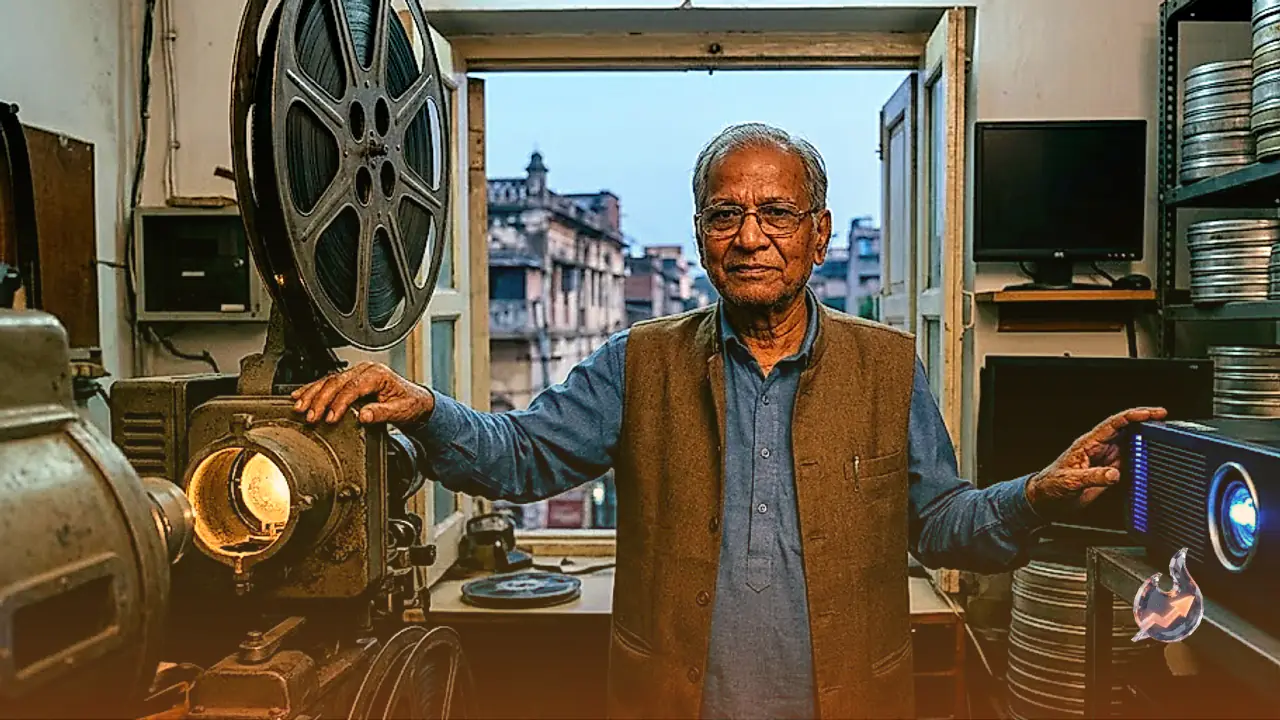

When moviegoers watch a film inside a modern theater today, the seamless projection on screen often masks the intricate history of how cinema was brought to life decades ago. A single click on a computer mouse is all it takes now to launch a high-definition movie without interruption. However, projection rooms in earlier decades operated under vastly different conditions, relying heavily on mechanical precision, manual dexterity, and constant operator vigilance. In Patna, veteran projector operator Sunil Kumar Singh has witnessed this technological evolution firsthand over a career spanning 45 years. Having begun his training in 1982, his journey highlights how movie screening transitioned from labor-intensive mechanical systems to modern automated setups.
Blackouts and Audience Reactions in the Pre-Backup Era
In the earlier days of cinema halls, movie projection depended entirely on the primary power grid. During that era, high-capacity inverters and modern emergency backup generators were not available in movie theaters. Whenever a power outage occurred, the projection lamp instantly shut down, plunging the auditorium into darkness and bringing the film to an immediate halt. Unplanned interruptions frequently prompted restless crowds to whistle, shout, and create chaotic disruptions inside the hall. Once electricity was restored, the operator restarted the machinery, resuming the film from the exact frame where it had stopped. Today, robust power infrastructure has virtually eliminated such sudden show stoppages.
Heavy Metal Spools, 20-Minute Reels, and Carbon Arc Lamps
Unlike modern digital distribution, traditional cinema projection was entirely mechanical. Feature films arrived at theaters wound around large metal wheels or spools containing physical film reels. A single reel typically held only 15 to 20 minutes of runtime. Consequently, operators had to maintain strict alertness throughout the screening. As an active reel neared its end, the operator had to prepare the secondary reel and load it onto the adjacent projection unit without delay. Any miscalculation in timing would result in a blank screen and a broken narrative flow for the audience.
Illumination for these projectors was generated through carbon arc lamps. This mechanism produced an intense electrical arc between two carbon rods, generating bright white light that passed through the moving film reel to project the image onto the screen. Because the intense heat caused the carbon rods to burn down gradually during operation, operators had to constantly monitor them, manually adjusting the gap between the rods and replacing consumed carbon sticks to maintain steady screen brightness.
Projection Loft Layout and Operator Skill
Projection rooms were traditionally constructed at the highest elevation of the cinema building. Light beams traveled from the projector machinery through small projection ports or windows carved into the wall, focusing directly onto the main screen below. The room housed multiple projection units, specialized lamps, and mechanical feeding gear. Managing a screening required operators to handle reel switchovers, adjust focal alignment, regulate speed, and maintain lamp brightness simultaneously. Even minor operational lapses by the technician were immediately visible to patrons on the big screen.
Digital Transition, UFO Laser Technology, and Climate Control
Technological advancement has drastically simplified projection procedures in contemporary cinema. At Veena Cinema in Patna, films are currently screened using a UFO Laser Projector. Operating this modern setup requires minimal manual handling, involving basic system power-up and a digital command via a computer interface.
However, modern digital equipment introduces new maintenance requirements, particularly heat regulation. Projection lofts today accommodate sensitive electronics including computers, laser projectors, power inverters, and multiple Dolby Sound processors. To prevent hardware overheating or system crashes during screenings, climate control is essential. At Veena Cinema, two air conditioning units operate inside a compact projection control room to maintain optimal operating temperatures for all digital devices.
A Career Spanning Four Decades Across Patna's Cinema Halls
Sunil Kumar Singh's professional journey in projection technology began in 1982 when he learned the trade at Anand Talkies. In 1983, he joined Chanakya Cinema as an operator, gaining extensive experience with mechanical reel systems. Over the following years, he also worked at Uma Cinema before taking up his current position at Veena Cinema in 2013. Across his 45-year tenure, Singh has tracked the transformation of theatrical exhibition from physical film reels and carbon rods to automated laser projection.