
























The euro’s losing run has survived the Fed’s decision to raise rates alongside the ECB, leaving EUR/USD pinned under a stronger US Dollar. Live close-bell data for September 16, 2026 placed the pair at 1.15, down 0.59% from the previous close of 1.15. Beginning with the ECB increase on September 10, the pair has posted a loss in each session. The central bank added 25 bps in line with expectations, while its updated projections put the expected path back to 2% inflation in 2029 and kept further tightening on the table.
Rate decisions leave the euro with little relief
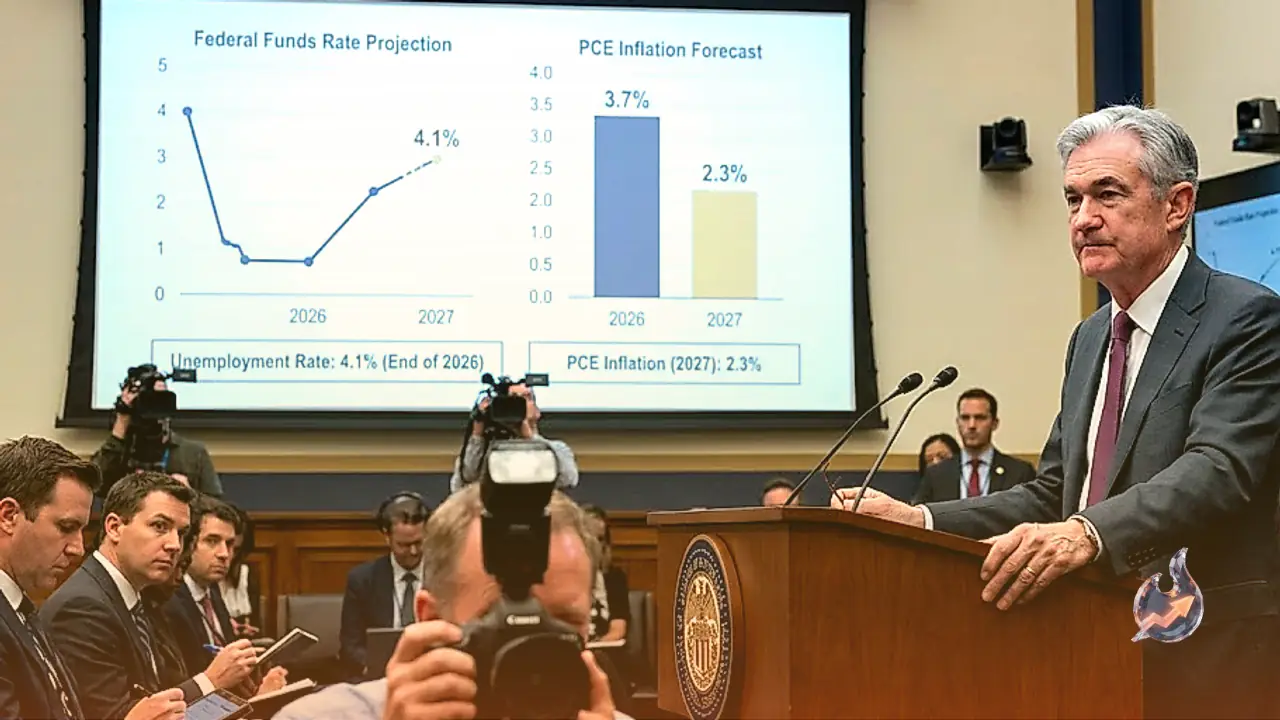
The first break lower came after the ECB’s September 10 decision, which did not generate durable support for the euro. The Federal Reserve then added 25 bps, and officials used the announcement to voice concern about inflation. Markets interpreted that tone as room for another increase before year-end, so parallel hikes did not erase the dollar’s edge.
On the chart, 1.1500 is the first resistance. The 50-day EMA sits near 1.1550, and EUR/USD moved through that average on Wednesday; 1.1600 is the next ceiling. Below, Wednesday’s low is just above 1.1450. A move beneath it opens 1.1400 first and then the early-August base near 1.1350. While price remains under 1.1500, the chart bias is bearish, with 1.1400 the first objective and 1.1350 the second.
Momentum is stretched: the daily Stoch RSI has slid for two weeks and now reads 15. A rebound toward 1.1500 would not alter the picture by itself. The bearish case ends only after a daily close above 1.1600.
Live indicators point to weak momentum
Live technical calculations reinforce the soft picture. RSI(14) is 33. MACD reads -0.00 against a 0.00 signal, and its histogram is -0.00, a bearish configuration. All three exponential averages, EMA20, EMA50 and EMA200, sit at 1.16; SMA50 is 1.15 and SMA200 is 1.16. The pair is in a long-term downtrend, with EMA50 below EMA200 in a death cross.
Bollinger(20,2) spans 1.15 to 1.17 with a 1.16 midpoint, and price is below the lower band. ADX(14) is 24, indicating a weak or range-bound condition. The stochastic fast line is 2 and the signal line is 10. ATR(14) is 0.01, which is being used as the stop-loss buffer for daily volatility.
Over a 20-day horizon, the live setup places support near 1.15 and resistance near 1.17. Each listed pivot level, from R1 and R2 to S1 and S2, is 1.15. Across 52 weeks, the quoted range runs from 1.13 to 1.20; current volume equals 1.00x its 20-day average. Together, the readings show soft momentum, limited trend strength and a price near the lower portion of its annual range.
The euro’s place in global currency trading
Twenty European Union members use the euro as their common currency, and together they form the Eurozone. Only the US Dollar trades more heavily, placing the euro second worldwide. During 2022, its share of global FX transactions was 31%, and average daily turnover exceeded $2.2 trillion.
No other pair turns over as much as EUR/USD, which handles an estimated 30% of all transactions. The next-largest shares are 4% for EUR/JPY, 3% for EUR/GBP and 2% for EUR/AUD. Because the market is so liquid, a shift in rate expectations can quickly redirect substantial flows between the two currencies. That is why traders watch relative policy outlooks, not just the headline rate.
How ECB policy reaches the currency
From its headquarters in Frankfurt, Germany, the ECB performs the Eurozone’s central-bank functions. Its responsibilities include fixing benchmark rates and directing monetary policy. Price stability is the institution’s central objective, whether that requires restraining inflation or encouraging growth. It mainly acts by moving benchmark interest rates up or down. Higher relative rates, or expectations of an increase, generally lift the euro, while a lower-rate outlook usually hurts it.
Eight scheduled meetings each year give the Governing Council the forum for policy decisions. The group consists of the heads of the Eurozone’s national banks plus six permanent members, including ECB President Christine Lagarde. Their guidance matters because relatively attractive rates can draw money from global investors into the region.
Inflation and growth data remain the main triggers
For euro traders, the Harmonized Index of Consumer Prices, abbreviated HICP, is a key gauge. An upside inflation surprise, especially one beyond the ECB’s 2% target, forces the bank to raise rates to restore control. The final August reading for the Eurozone is scheduled for Thursday at 09:00 GMT, and the core forecast is 2.4%.
Other releases also reveal the economy’s condition and can move the currency. GDP, Manufacturing and Services PMIs, employment figures and consumer-sentiment surveys all influence the direction of the single currency. A strong economy attracts more foreign investment and may encourage the ECB to raise rates, directly strengthening the euro. Weak data is more likely to push it lower. A stronger economy can also support the euro through confidence, while weak figures can trigger the opposite reaction.
Germany, France, Italy and Spain deserve special attention because, together, they generate 75% of the Eurozone’s economic output. A significant reading from one of them can therefore affect the wider currency outlook.
Trade Balance is another closely watched release. The indicator compares export earnings with import spending across a specified period. Strong overseas demand for a country’s goods requires buyers to obtain its currency, adding demand and supporting its value. A positive net balance therefore tends to strengthen the currency, whereas a deficit tends to weaken it.
Dollar strength spreads beyond EUR/USD
The dollar’s jump was visible beyond EUR/USD. AUD/USD slipped below 0.7100 early in Thursday’s Asian session after the Fed’s 25 bps action. USD/JPY also climbed to fresh weekly highs near 156.00 early on Thursday.
Kevin Warsh, chair of the Fed, used the following press conference to strike a notably hawkish tone. That language increased wagers on further increases before year-end. Gold gave back all intraday gains and finished negative; XAU/USD briefly moved above $4,360 and is now moving faster toward the $4,250 area.
Japan’s exceptionally low rates supplied financing for trillions of dollars in global investment for more than a decade. That made the Japanese Yen one of the world’s cheapest funding currencies. A further policy tightening by the Bank of Japan is expected this week, which could open a new phase for that advantage. Most major economies have already raised rates, leaving Japan as the outlier. The cross-asset reaction underlines how one central-bank announcement can reprice several markets at once.
The next test is a clear break of key levels
Thursday’s 09:00 GMT inflation release is the next major event that could change the pair’s direction. Below 1.1500, the established path runs through 1.1400 toward the early-August base near 1.1350. A rebound to 1.1500 would not remove the bearish bias, but a daily close above 1.1600 would end it. With the Fed’s projections pushing the return to 2% inflation out to 2029, traders will be watching whether new data changes expectations for the next rate decision. Until that happens, the existing support and resistance levels remain the practical reference points.