























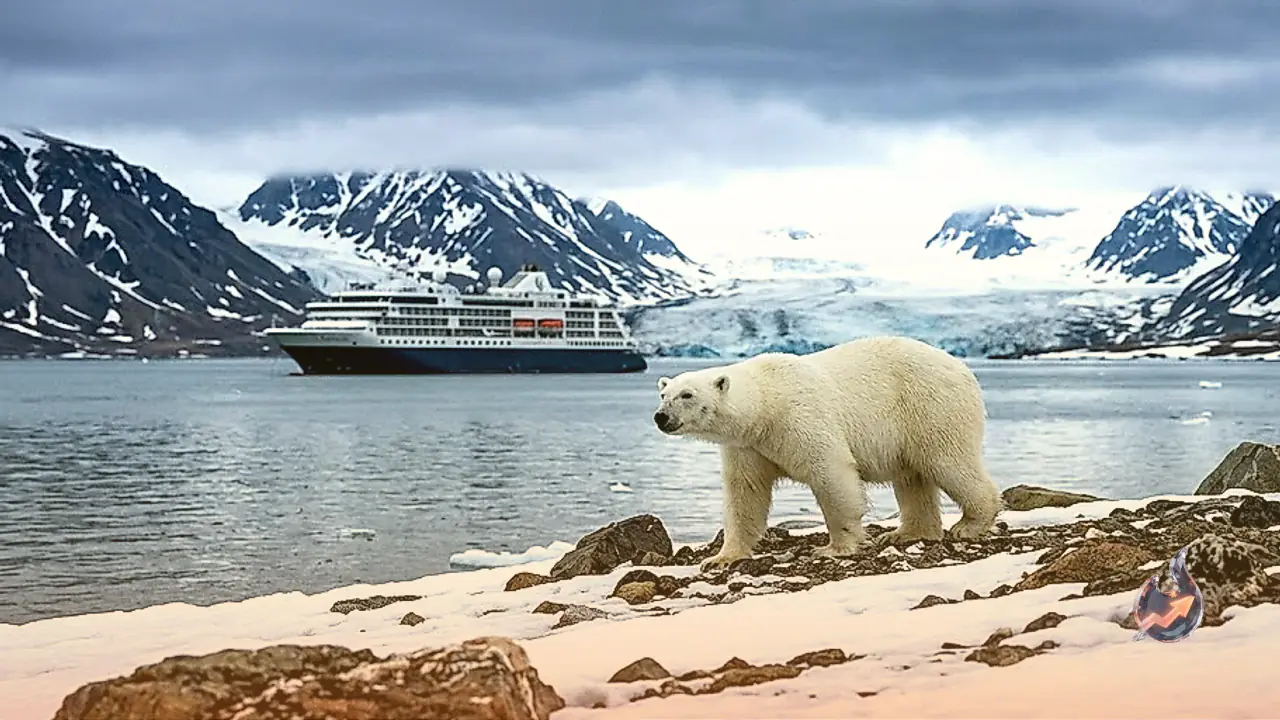

A vessel passenger sailing through the remote Svalbard archipelago in Norway has been fined 50,000 kroner (£3,890) after using the ship's loud foghorn to startle and wake up a sleeping polar bear. Territorial authorities confirmed the penalty on Thursday, enforcing strict regional conservation statutes that prohibit any unnecessary disturbance, pursuit, or attraction of protected Arctic wildlife within their natural habitat.
Unnecessary Wildlife Disturbance Sparks Heavy Financial Penalty
The incident occurred earlier this month within a scenic fjord located in northwestern Svalbard, approximately 1,000 km (620 miles) away from the North Pole. As the vessel navigated the icy waters, occupants on board spotted a polar bear lying peacefully on the shore. An unnamed individual on the vessel then decided to sound the ship's horn, releasing a loud blast that abruptly awoke the animal and forced it to abandon its resting place and move to another location.
Territorial Governor Lars Fause confirmed that the individual responsible for the disruption was fined 50,000 kroner (£3,890). The penalized individual has formally agreed to settle the amount. Regional officials highlighted that loud acoustic disruptions can cause acute distress to wild predators, potentially leading to hostile reactions or unnecessary energy expenditure in hostile Arctic conditions.
Strict Legal Protections under the Svalbard Environment Act
Svalbard maintains some of the stringent conservation regulations in the polar region. Polar bears were officially designated as a protected species across the archipelago in 1972. Under environmental ordinances specific to the territory, it is strictly forbidden to needlessly disturb, attract, or pursue polar bears under any circumstances.
The overarching Svalbard Environment Act mandates that all tourist traffic, vessel navigation, and outdoor activities across the archipelago must be conducted in a manner that avoids unnecessary disturbance to native fauna. Alongside polar bears, the law extends protective status to several other Arctic species inhabiting the region, including seals, whales, reindeer, and arctic foxes. Officials noted that this enforcement action is not the first time individuals have faced severe monetary fines for disrupting wildlife in Svalbard.
Polar Bear Conservation and Arctic Ecosystem Fragility
Accurate monitoring of the local polar bear population is critical to regional management. According to the last comprehensive scientific estimate conducted in 2015, approximately 250 polar bears were counted across the Svalbard archipelago. Given the increasing volume of maritime tourism and expedition cruises in northern waters, enforcement agencies remain vigilant against human actions that compromise wildlife safety.
Authorities continue to emphasize that visitors to high Arctic territories must maintain safe, non-intrusive observation distances. Disturbing sleeping or feeding animals with vessel horns or motorized equipment remains a punishable offense subject to immediate legal prosecution and substantial financial penalties.