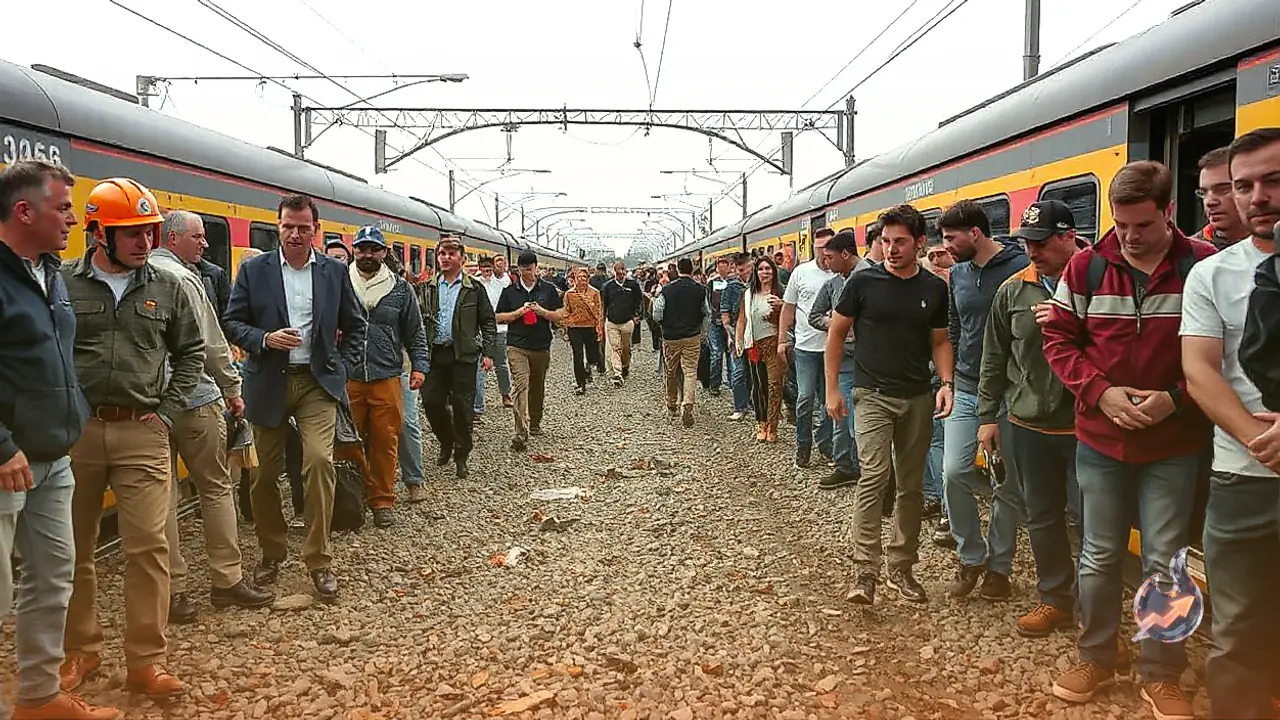




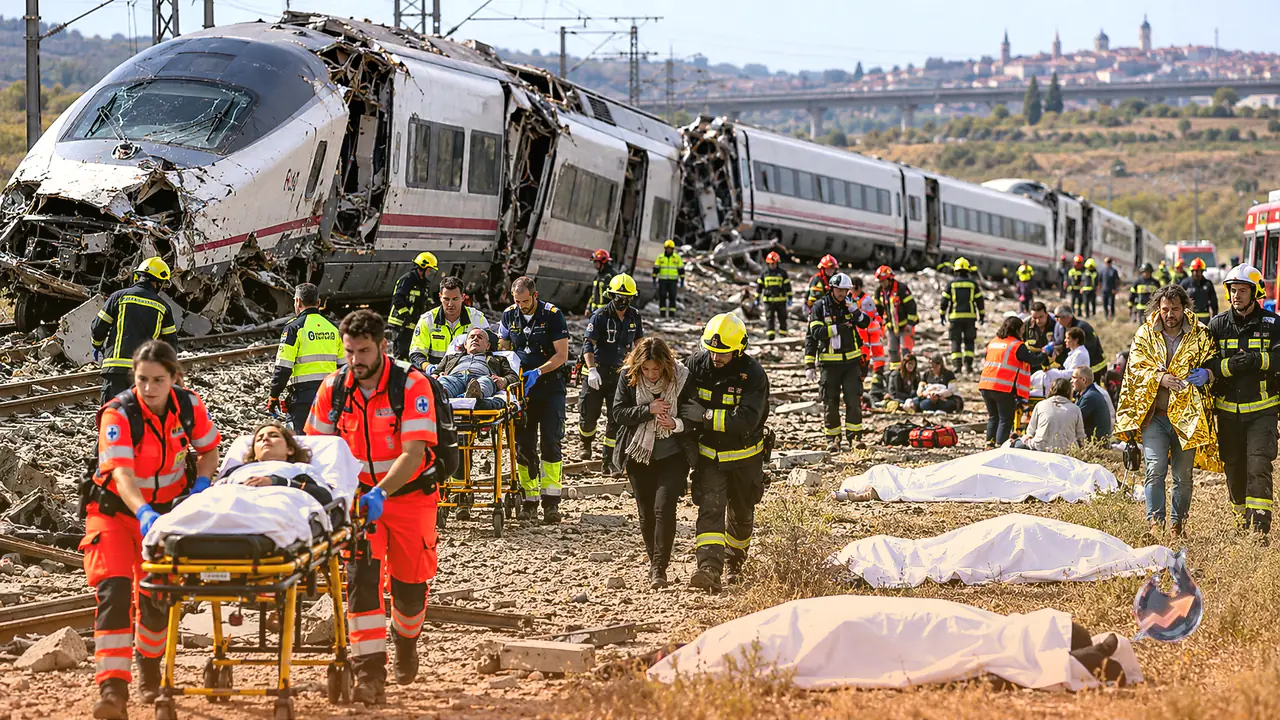
















A major rail disaster unfolded just south of the Spanish capital of Madrid on Wednesday morning when two high-speed passenger trains collided head-on, leaving at least 68 people confirmed dead and scores of others injured. Emergency services remain deployed at the site as rescue operations continue.
Collision Timeline and Location
The incident occurred shortly after 09:00 local time, corresponding to 08:00 GMT, between the municipalities of Mora and Orgaz. The crash site is located approximately 140km, or 100 miles, south of Madrid. Aerial footage broadcast from the scene captured the extensive wreckage of the carriages and the ongoing emergency response.
Rail operator Adif confirmed that the collision involved a Renfe train and another operated by the Iryo company, which runs services along the Madrid to Seville route. Broadcaster RTVE, citing the transport ministry, reported that a Renfe train rear-ended an Iryo train that had come to a halt on the tracks ahead.
Operational Background of the Trains
Renfe operates as Spain's national state-owned railway company, whereas Iryo functions as a private high-speed rail operator. Adif announced that all train traffic on the affected line has been halted at various stations along the route. Furthermore, Renfe confirmed that services connecting Madrid, Ciudad Real, and Andalusia remain suspended indefinitely.
A passenger travelling on one of the services told local media that they felt a severe impact roughly 40 minutes into the journey. Iryo stated publicly that its train was struck from behind by the Renfe service due to causes that remain unknown at this stage.
Transport Minister Details System Failure
Transport Minister Oscar Puente explained during a briefing that a computer failure had initially triggered a halt across six moving trains, which included the two vehicles that subsequently collided. In the event of a system failure, control operations shift to the central command centre. He noted that the control centre made the decision to allow the trains to resume movement without any speed restrictions.
Puente described that decision as having been made under inexplicable circumstances. It directly resulted in the Renfe train crashing into the stationary Iryo train positioned further up the line.
Authorities estimate that more than 500 people were on board both trains combined. Esther Padilla, spokesperson for the government of the Castilla-La Mancha region, informed TVE that the Iryo-managed train was carrying 146 passengers along with one baby, while the Renfe-operated service had 397 passengers on board.
Reports also emerged that a former government minister was among those initially listed as missing. Additionally, the Spanish Confederation of Business Organizations stated on X that Fátima Báñez, who leads the organization's foundation, was on board one of the implicated trains.
Casualties and Medical Emergency Response
The regional government of Castilla-La Mancha updated the confirmed death toll to 64 initially, with subsequent official updates placing the total fatalities at 68. Authorities warned that the death toll could increase further as rescue teams clear the debris. Eighty individuals are currently receiving medical treatment for injuries, with 50 casualties described as being in a serious condition and another 15 in a critical state.
Prime Minister Pedro Sánchez stated that he was shocked by the serious train accident in Toledo. Writing on X, Sánchez mentioned that he remains in constant contact with the Minister of Transport and the president of Castilla-La Mancha. He added that emergency services are working on the ground to assist those affected and ensure safety in coordination with all involved administrations. In light of the tragedy, Sánchez and other Spanish politicians cancelled all public engagements scheduled for Wednesday, including campaigning for upcoming parliamentary elections.
Spain's royal family also posted on X to express shock and concern over the accident, offering condolences to the relatives of the deceased. The European Union stated through a spokesperson that the bloc stands ready to provide assistance to Spain if required.
Hospitals situated near the crash zone have suspended planned surgeries to manage the sudden influx of injured patients. A blood transfusion centre in Madrid issued an urgent appeal for donations on X, warning of a potential sharp rise in medical care requirements. Facilities in Toledo, Ciudad Real, and Alcázar de San Juan have halted routine procedures to accommodate incoming casualties.
This incident marks the second high-speed rail tragedy to occur in Spain this year.