

















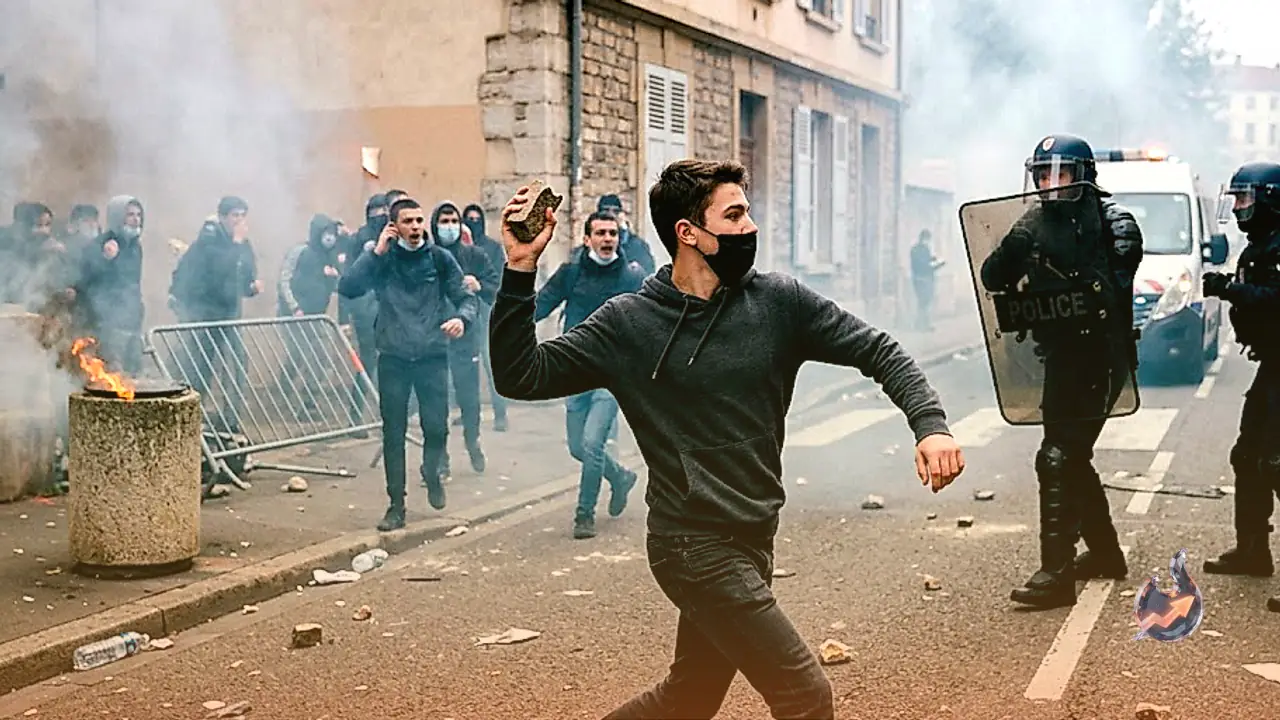

A wave of pupil unrest in French secondary schools has sparked major public disorder, drawing sharp government condemnation following widespread school blockades and clashes with law enforcement. High school students protesting against degraded learning environments and staffing shortages brought dozens of educational facilities to a standstill, culminating in the detention of 164 individuals on Monday. Reacting to the turmoil, Prime Minister Sébastien Lecornu warned that intensifying the confrontation would be entirely irresponsible, insisting that while educational hardships deserve attention, violence against public servants and educational institutions cannot be tolerated under any circumstances.
Disturbances Spread Across Multiple Regions
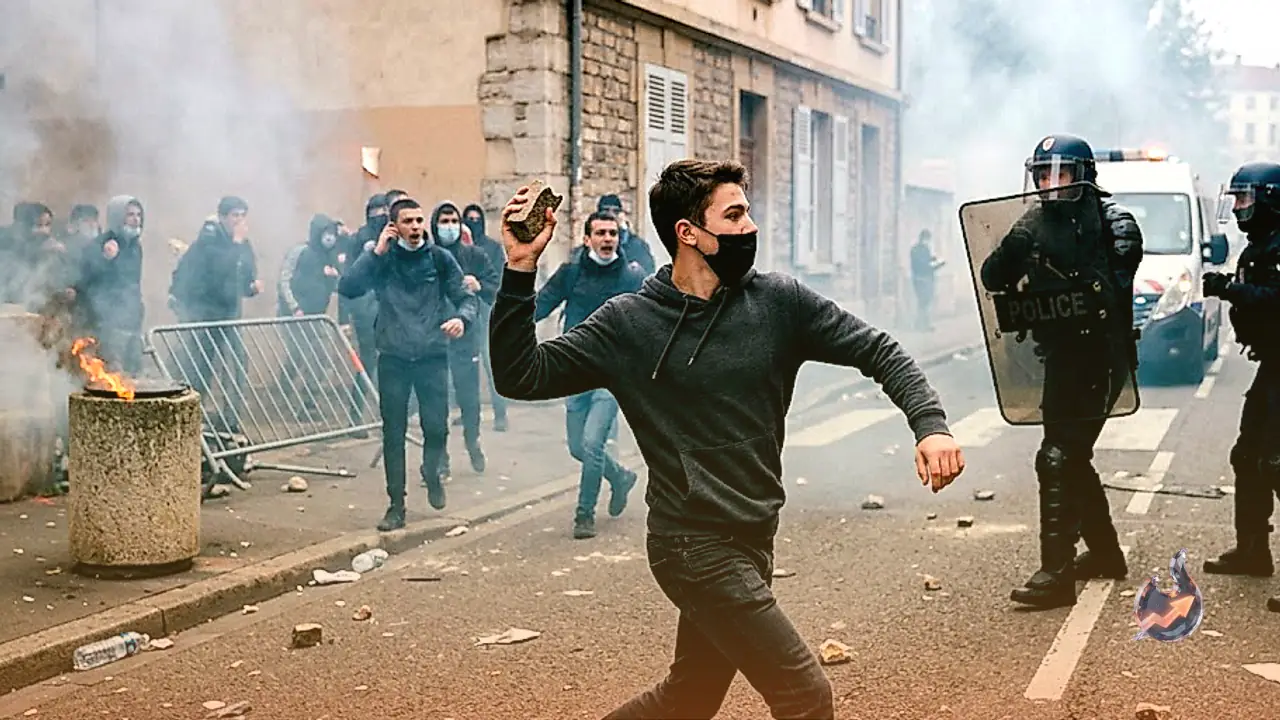
The wave of disruption began last week in the Île-de-France region surrounding Paris, where students at French lycées gathered at gates and entrance halls to block access to their campuses. The unrest was driven by long-standing complaints about overcrowded classrooms, persistent deficits in teaching personnel, and deteriorating campus infrastructure. However, demonstrations rapidly degenerated into confrontational episodes, featuring property destruction and fireworks directed toward responding police officers.
The turmoil has since expanded well beyond the capital basin. In southern France, four secondary schools were completely obstructed in the Alpes-Maritimes and Var administrative zones. Substantial student demonstrations and picket lines were also recorded in the Mediterranean port city of Marseille, across the northern Lille metropolitan territory, and around Sedan within the north-eastern Ardennes district. The nationwide footprint of the blockades has significantly disrupted educational schedules and forced municipal authorities to step up policing around educational properties.
Casualties and Use of Crowd-Control Munitions
Monday marked the most intense confrontation of the campaign so far. Interior Minister Laurent Nuñez revealed that 180 schools throughout the country were directly affected by the agitation. The clashes led to multiple injuries on the front lines, with 12 members of the internal security forces, 12 pupils, and three members of institutional school staff sustaining injuries. While confirming the apprehension of 164 people during the operations, the minister withheld detailed personal data concerning the detainees.
The confrontational tactics employed during crowd-dispersal operations have also come under official examination. During one altercation, an officer discharged a crowd-control round from a grenade launcher, which resulted in an injury to a teenage demonstrator. Formal inquiries have been initiated to establish the facts surrounding the discharge and determine whether operational rules of engagement were properly observed during the street actions.
Pupil Unions Cite Austerity and Parcoursup Strain
The student organisation Union Syndicale Lycéenne issued a robust defence of the mobilisations, maintaining that the walkouts and blockades represent a justified response to unacceptable institutional neglect. In a public message, the student union pointed to a critical lack of teachers and support personnel, crumbling premises, cramped timetables, and widespread anxiety generated by Parcoursup, the national online platform used by French pupils to seek first-year higher education admissions.
According to the union, these systemic shortcomings are neither accidental nor inevitable, but rather the cumulative outcome of 10 years of policy under Emmanuel Macron and chronic resource deprivation in the national educational framework. Rejecting calls to stand down, the union instructed high schoolers to mount fresh barricades on Tuesday to uphold their educational rights and push back against budgetary austerity measures.
Civil Service Walkouts and Rising Political Feuds
The youth mobilisation is unfolding alongside widespread industrial action across France's wider public workforce. Unions representing schoolteachers, healthcare personnel in public hospitals, and civil service employees scheduled co-ordinated walkouts for Tuesday to air grievances regarding lagging compensation and increasingly difficult working environments, threatening broader disruption across essential state services.
Simultaneously, the unrest has triggered fierce exchanges in the political arena. Prime Minister Sébastien Lecornu maintained that the difficulties encountered by secondary institutions must be addressed through dialogue, while reaffirming that perpetrators of violent acts must face accountability before the law. Lecornu also laid blame on the left-wing political formation France Unbowed (LFI), accusing the party of deliberately inciting youngsters to expand the scope of the disorder.
Jean-Luc Mélenchon, leader of France Unbowed, fired back at the executive branch, asserting that the Lecornu administration directly ordered an aggressive crackdown against adolescents who posed no physical danger to the public. Interior Minister Laurent Nuñez strongly countered that narrative, characterising the episodes not as standard civic protests, but as urban violence perpetrated by masked groups carrying tube-launched pyrotechnics and projectiles specifically to clash with security units, arguing that the events had shifted from policy demands into destructive confrontation.