























The ongoing armed conflict between Russia and Ukraine has now crossed more than 1700 days, yet there remains no visible sign of the hostilities coming to an end. Whenever diplomatic discussions or peace talks are initiated, an attack from either Vladimir Putin or Volodymyr Zelenskyy invariably occurs on the very same day. Neither Vladimir Putin nor Volodymyr Zelenskyy appears willing to back down in this grueling war, with both sides continuously pounding each other with intense missile and drone strikes. Amidst this relentless violence, a profound and alarming question has emerged across global security circles: has a concrete plan been formulated to directly target Russian President Vladimir Putin? These pressing concerns gained immense traction after 15 brand-new air defense towers were swiftly erected around Vladimir Putin's secluded Valdai Palace.
Intense Fortification of Valdai Palace
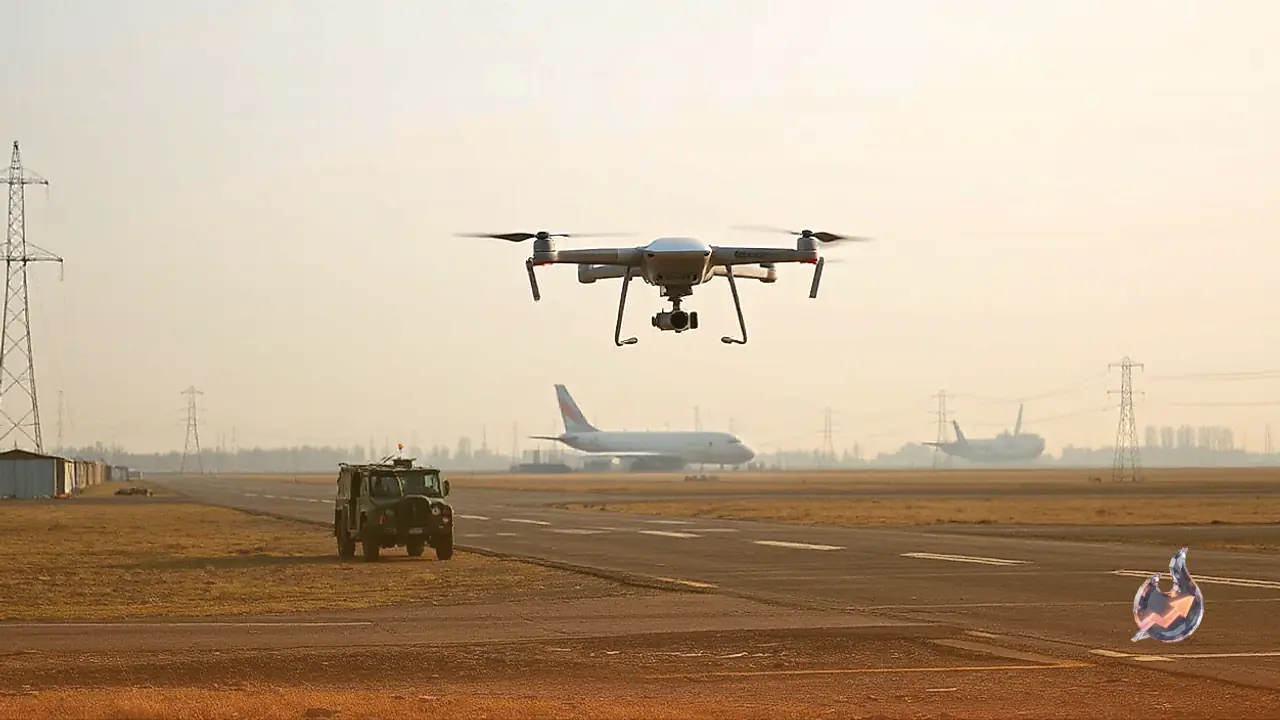
Historically, Russian President Vladimir Putin splits his time of residence primarily between the capital city of Moscow and his heavily guarded Valdai Palace. However, the situation erupted into global headlines when reports confirmed that 15 new air defense towers had been added directly to the Valdai estate. All of these newly installed defense towers have been deliberately positioned facing toward the southern direction, which is precisely the side facing Ukraine. With these latest additions, the total tally of defense towers guarding the Valdai Palace has now surged to a formidable 50. Each of these structures is being equipped with advanced Pantsir and Tor defense systems, which possess specialized expertise in intercepting and neutralizing incoming drone attacks.
Geographical Location and Strategic Positioning
Investigations originating from Radio Free Europe and Radio Liberty reveal that the security perimeter surrounding Russian President Vladimir Putin's Valdai Palace has been tightened to an unprecedented degree. The sprawling presidential estate is situated in northwestern Russia, nestled right along the scenic banks of Lake Valdai. The precise geographical positioning of these newly built towers has set off widespread speculation regarding the vulnerability of Vladimir Putin's personal security. A total of 15 defense towers have been arranged in a strict linear formation near the palace grounds, all oriented directly toward the Ukrainian front. Within a strict 50-kilometer radius surrounding the Valdai Palace, the total number of operational air defense towers has now exceeded 50. It is worth recalling that Vladimir Putin recently stated his willingness to engage in negotiations and seek viable solutions, while simultaneously accusing Ukraine of initiating the war.
Intelligence Warnings and Comparative Security Analysis
Intelligence circles strongly suspect that Russian security agencies have obtained solid and credible intelligence indicating that Ukraine could potentially attempt to strike Vladimir Putin's Valdai Palace directly. Russian intelligence agencies appear significantly more concerned about a potential targeted strike on Valdai than on Moscow itself. This assessment is heavily supported by the fact that the defense architecture shielding the Valdai estate has been placed under a far more impenetrable shield than Moscow. In Moscow, the security apparatus protecting Vladimir Putin's residence features roughly 98 air defense towers deployed to safeguard a population of approximately 20 million residents, equating to roughly one tower for every 200,000 people. In stark contrast, the Valdai estate houses 50 towers within an area inhabited by fewer than 100,000 people, resulting in a staggering density of one defense tower for every 2,000 residents.
Escalating Drone Threats and Russian Precautions
Although Ukrainian drones and missiles have historically landed in the vicinity of the Valdai Palace rather than directly striking the structures themselves, the operational landscape has shifted dramatically. Given how aggressively Ukraine has escalated its long-range aerial assaults and how far Ukrainian drones and missiles have penetrated, reaching as far as Siberia, Moscow is evidently refusing to take any chances whatsoever. Consequently, over the past six months, Vladimir Putin's Valdai Palace has been thoroughly draped in an overlapping web of defensive shielding to preempt any catastrophic aerial incursions.