




















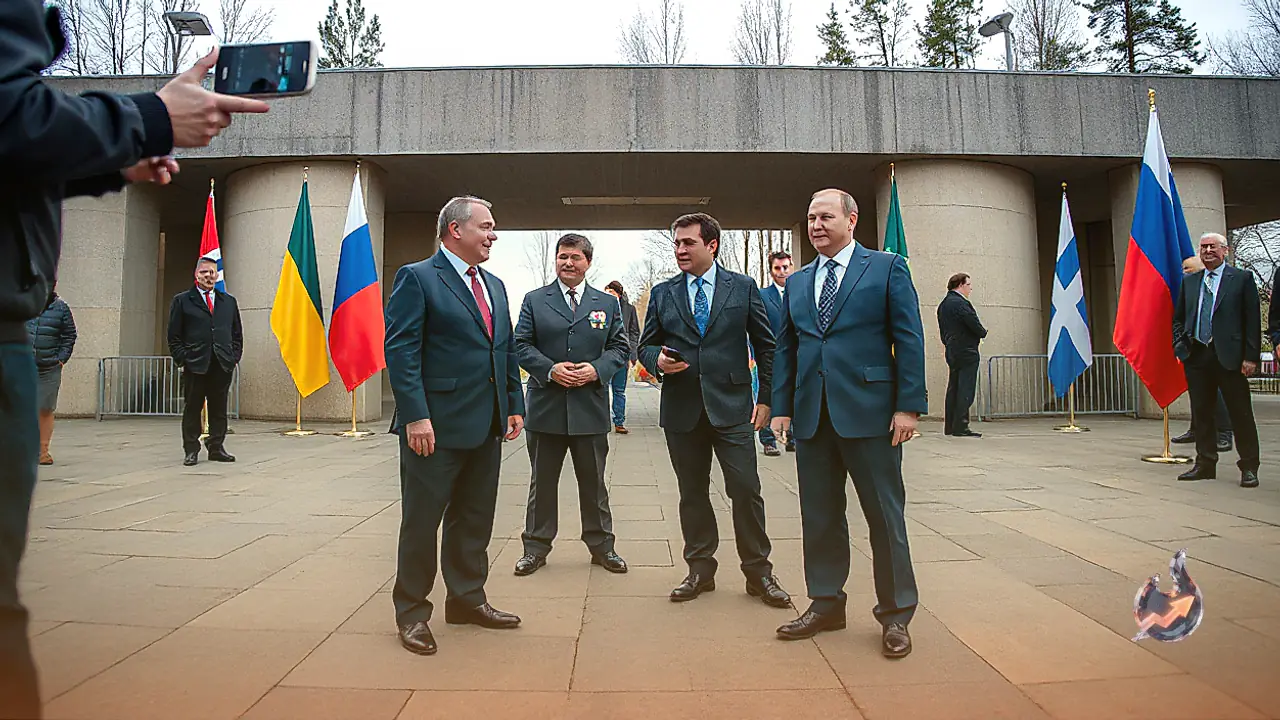

Finnish President Alexander Stubb and Norwegian Prime Minister Jonas Gahr Støre have conducted a joint telephone conversation with Russian President Vladimir Putin, marking a rare diplomatic contact between the Russian leader and European heads of government. According to their offices, the primary objective of the dialogue was to explore future negotiation pathways aimed at helping bring the ongoing conflict in Ukraine to an end. Both leaders were careful to emphasize that their diplomatic initiative was undertaken independently and not on behalf of Europe as a whole.
Reactions from Moscow and Regional Context
Following the conclusion of the call, Russian President Vladimir Putin stated that confrontational policies pursued by the European Union and NATO are only serving to prolong the armed conflict, which initially began when Russia launched its full-scale invasion in 2022. Tuesday's phone call was hosted from the Finnish capital of Helsinki. Alexander Stubb and Jonas Gahr Støre noted that because Finland and Norway share direct land borders with Russia, they felt compelled to initiate the discussion to address Russia's war of aggression against Ukraine, evaluate diplomatic efforts, and promote long-term peace and stability across the European continent.
The Norwegian prime minister highlighted that the ongoing war carries immense human and material costs, warning that the widespread suffering and destruction will impact generations to come. Alexander Stubb described Tuesday's telephone exchange as frank and substantive, explaining that the ultimate outcome of the war will have a direct and lasting impact on both national and broader European security frameworks. The diplomatic outreach arrives at a sensitive geopolitical juncture, as relations among the United States, Ukraine, and various European allies have experienced friction following a decision by US President Donald Trump to lift certain sanctions on Russia, thereby permitting oil exports to the United States.
Coordination with Ukraine and Upcoming Trilateral Talks
Shortly after concluding their conversation with Moscow, Ukrainian President Volodymyr Zelensky spoke directly with the two Nordic leaders. Last week, Zelensky had met with Stubb, Støre, and US special envoy Steve Witkoff in Oslo. The Ukrainian leader expressed profound gratitude for the active and steadfast support provided by his Finnish and Norwegian counterparts. Stubb and Støre confirmed that their outreach served as a direct continuation of discussions held in the Norwegian capital on 20 October, after which Witkoff traveled onward to St Petersburg to meet with Putin directly.
As a result of these preparatory diplomatic maneuvers, Ukraine, Russia, and the United States have agreed to resume structured three-way negotiations that had been suspended by Russia for several months. Following his debrief with the Nordic leaders, Zelensky indicated that a significant portion of their discussions with Putin focused on the upcoming trilateral talks scheduled to take place in Abu Dhabi in November. Furthermore, Zelensky discussed alternative engagement formats with European partners designed to bolster ongoing diplomatic backing, national defense systems, and collective security measures.
Mixed European Reactions and Kremlin Stance
Stubb and Støre have broken a prolonged diplomatic silence, becoming the first European leaders to directly contact Vladimir Putin since French President Emmanuel Macron held discussions with him in July 2025. This independent outreach, however, has not met with universal approval among European capitals. Denmark's Prime Minister Mette Frederiksen voiced deep skepticism regarding the dialogue between her Nordic neighbors and Moscow, telling Danish broadcaster DR that the initiative had not been coordinated with any of the other European nations.
While Moscow routinely accuses European nations of prolonging hostilities by supplying advanced weaponry to Ukraine, recent statements from the Kremlin have shown minor shifts in tone. Last weekend, Kremlin spokesman Dmitry Peskov remarked that having a designated European negotiator present at the peace negotiation table could prove to be a positive development.