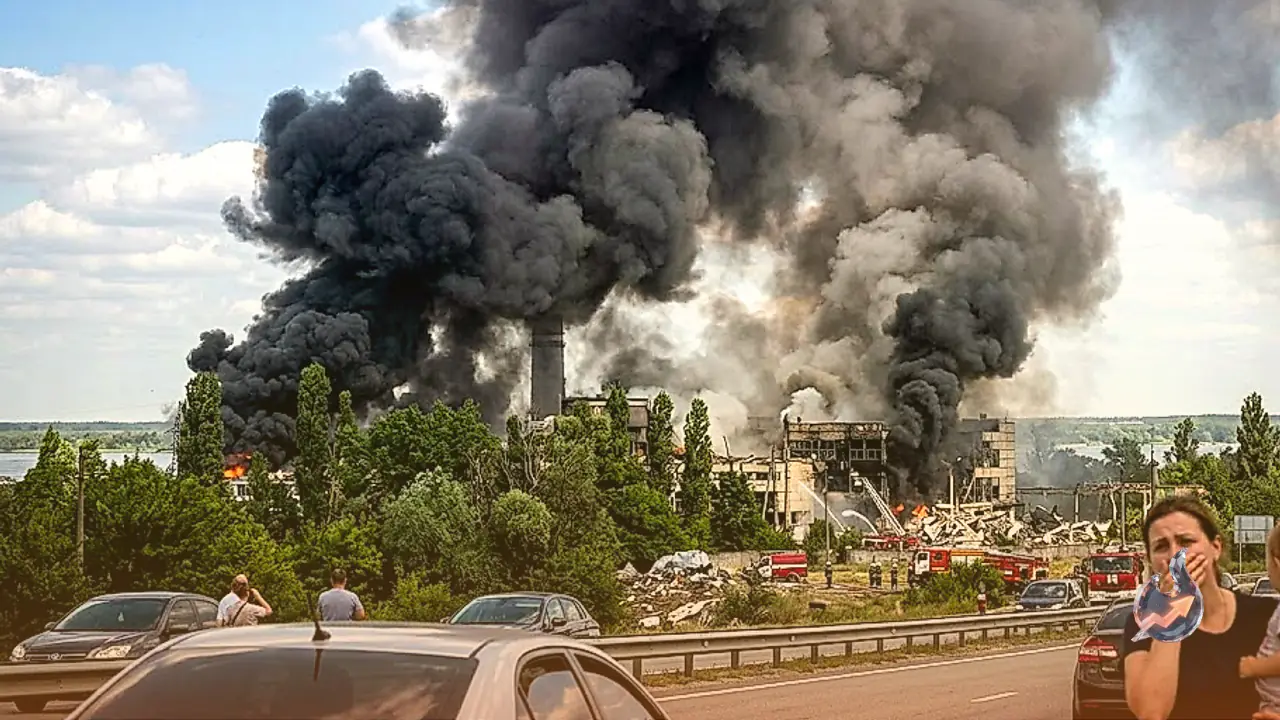























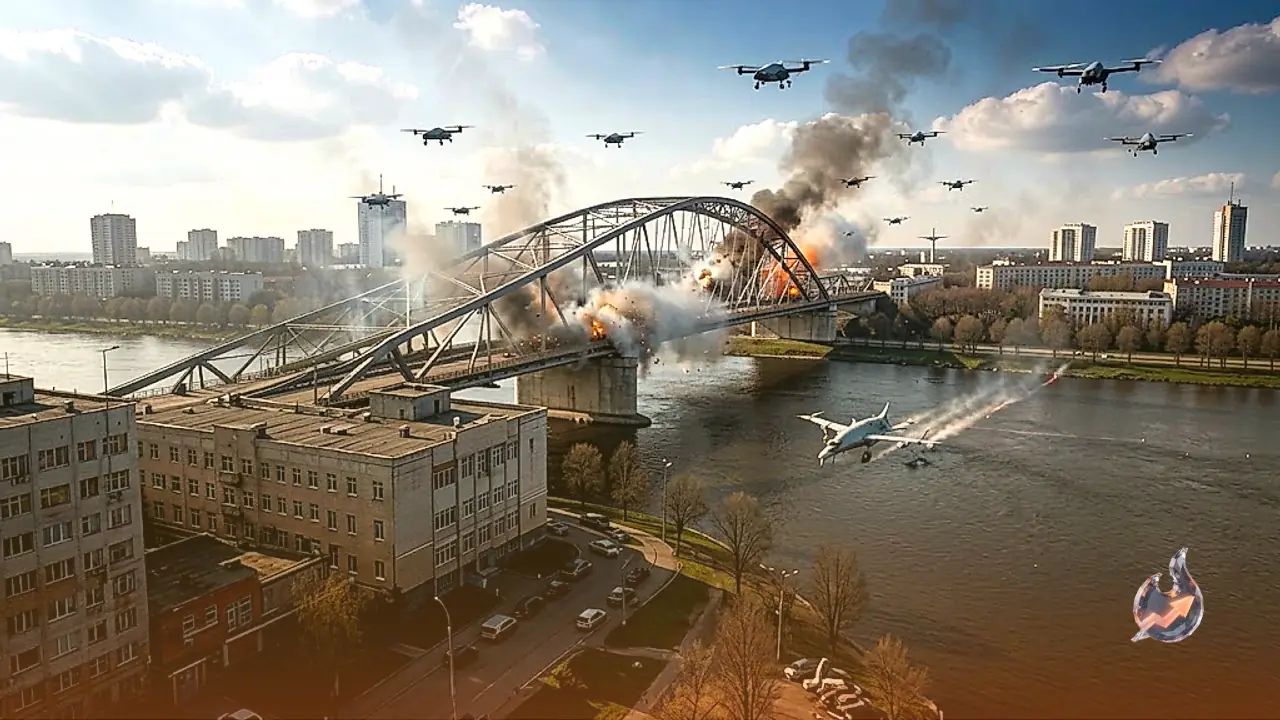

A brazen daylight aerial assault hit the heart of Kyiv on Thursday morning, when two Russian drones struck the pivotal Pivdennyi bridge while passenger transit was underway. The structure, also known as the Southern bridge, spans the Dnipro river and connects the eastern and western halves of the Ukrainian capital. The blast occurred directly adjacent to an operational metro train, sending plumes of dust through carriage air vents and forcing an immediate shutdown of the city's key rapid transit connection.
Strategic River Crossing Targeted for the First Time
The strike on the Pivdennyi bridge represents a notable tactical shift, marking the first time since the start of full scale hostilities that Kyiv's main river bridges have been hit. Municipal reports confirmed that one of the drones slammed into the base of a central stanchion supporting the structure. Despite the intensity of the explosion, municipal inspectors determined following preliminary assessments that the bridge avoided critical structural failure. While metro rail movements across the river were halted, surface vehicle traffic was subsequently cleared to resume over the crossing.
Narrow Escape for Commuters on Board Transit Train
Eyewitness accounts from inside the transit carriages detailed moments of sudden panic above the Dnipro river. Mariana Mykytenko, a correspondent with Ukraine's 5 Kanal TV who was travelling on the targeted train, recalled a passenger shouting the identifier Shahed, the Iranian designed drone platform deployed by Moscow. Seconds later, the shockwave forced thick dust through the ventilation system into passenger compartments. No riders in her carriage sustained physical injuries, and the train safely completed transit to Vydubychi station on the river's western right bank before terminating service indefinitely.
Morning Strike Damages School as Students Shelter
The bridge impact followed an earlier attack on Thursday around 09:00 local time (10:00 GMT), when a Russian drone crashed into the third floor of an educational facility in Kyiv. More than 100 children were present on the campus when the incident occurred, but swift warning protocols allowed all students and faculty to take refuge underground before detonation. A section of the outer wall and an internal staircase suffered partial collapse from the blast.
School principal Valentyna Chorna noted that the underground bunker's sturdy build prevented any casualties among students or staff, adding that instruction continued inside the shelter despite the strike. Addressing Moscow's denial of striking civilian facilities, Chorna stated that destroying the nation required attacking its children. Ukrainian President Volodymyr Zelensky demanded full accountability for Russian military actions across the capital.
Deployment of Jet-Powered Drone Platforms
Technical assessments indicate that Moscow has integrated upgraded jet-propelled aerial weapons into its bombardment inventory, with operations initiating on Wednesday. Serhiy Beskrestnov, a technical adviser to President Zelensky operating under the callsign Flash, detailed that this new iteration features a 40kg warhead specifically engineered to tear down iron bridge frameworks and high voltage electricity pylons.
The high velocity of these jet propelled munitions poses major operational hurdles for Ukraine's air defense units. Air force data reveals that at least 3,177 drones were launched toward Ukrainian targets during September alone. The escalated volume and increased speed are exploiting known ammunition and interceptor shortages across regional defense batteries.
Grid Blackouts Return Amid Coordinated Infrastructure Barrage
The strikes on transportation and schooling infrastructure coincide with a broader campaign against Kyiv's essential utility networks. Coordinated strikes on Wednesday targeted the capital's power grid for the first time since late winter, triggering widespread rolling blackouts. Although municipal teams had spent months constructing decentralized, smaller capacity generating stations to brace for winter demands, Prime Minister Serhii Koretskyi acknowledged that a combined strike of this magnitude had not hit the capital since the closing weeks of spring.
Scientific institutions have also sustained direct impacts throughout the week. The Institute of Nuclear Research in Kyiv suffered a drone strike on Wednesday night, following another attack earlier in the week on the National Academy of Sciences that resulted in one fatality.