























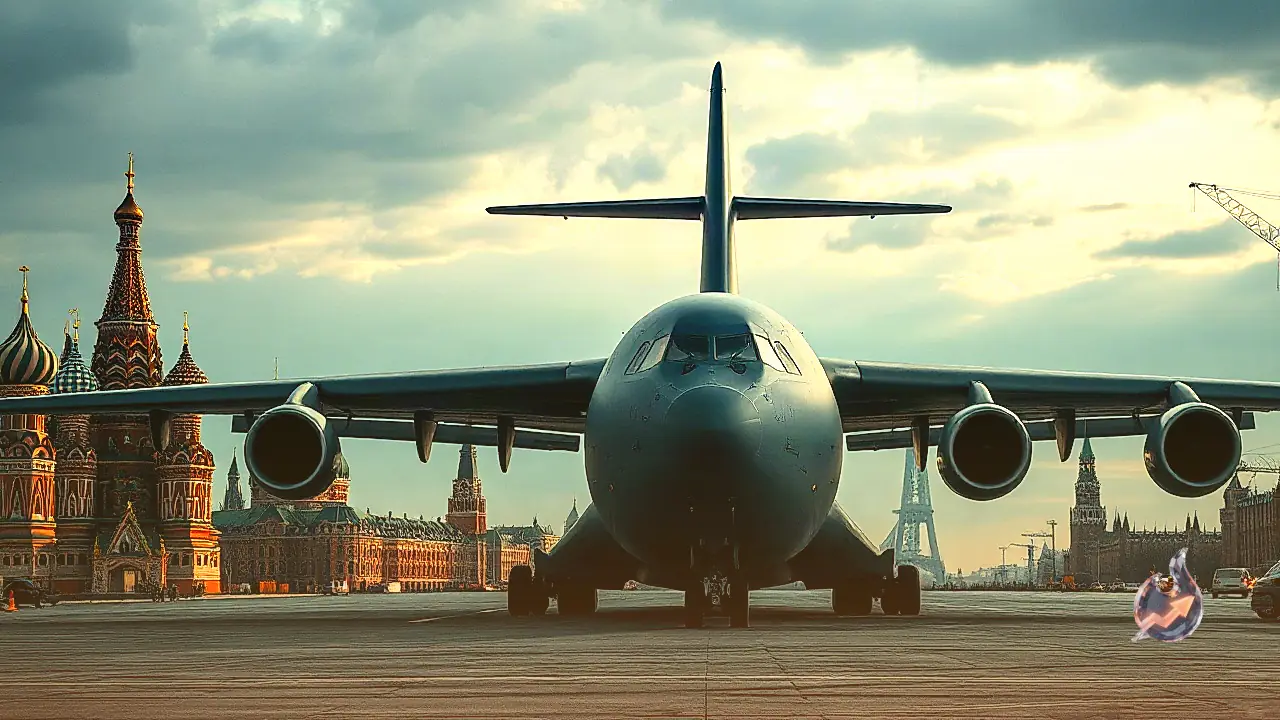

The Director of the United States Central Intelligence Agency, John Ratcliffe, completed an unannounced high-stakes visit to Moscow on Tuesday, representing his first known diplomatic and intelligence journey to the Russian Federation since taking charge of the security organization. During his stay in the Russian capital, Ratcliffe participated in a series of strategic meetings with officials. However, the precise purpose, specific agenda, and core discussions held during these high-level talks have not been formally disclosed by authorities. The covert arrival of the American intelligence leader in Moscow was confirmed through verified intelligence and government sources, though both the White House and the CIA declined to offer immediate public comments when asked about the objective of the mission.
Secret Transatlantic Routing of the Military Transport Aircraft
Before confirmation of Ratcliffe’s presence in Moscow emerged, intense international attention was drawn to the sudden movement of a heavy United States Air Force Boeing C-17A Globemaster III military transport aircraft into Russian airspace. Subsequent information indicates that the CIA chief traveled aboard this specialized military transport plane to reach the Russian capital. According to online flight monitoring system records, the Boeing C-17A Globemaster III initiated its journey from Joint Base Andrews (Andrews Air Force Base) located near Washington DC. The heavy strategic transport aircraft carried out multiple operational stops along its transatlantic trajectory before entering the European theater.
The aircraft initially touched down at Charleston International Airport and Air Force Base to complete operational preparations. From there, the military transport flight traversed the Atlantic Ocean and landed in Riga, the capital of Latvia. Information provided by European Union air traffic control sources confirmed that after departing Riga, the US military transport plane proceeded directly toward the airspace of the Russian Federation. Tracking systems registered the Boeing C-17A Globemaster III touching down at Vnukovo Airport in Moscow at approximately 10 AM Moscow time on Monday morning. The specialized military aircraft remained on the tarmac at Vnukovo Airport for only a brief duration, departing Moscow just a few hours after its initial landing to return along its flight path.
Official Silence from Kremlin, Pentagon, and Foreign Ministries
The sudden landing of a United States military transport plane in the capital triggered significant inquiry among diplomatic observers. When asked about the arrival of the C-17 aircraft during a media briefing on Tuesday, Kremlin spokesman Dmitry Peskov stated that the Russian leadership possessed no information regarding the specific flight. The Russian government did not issue any detailed official statement regarding the presence of the American military aircraft at Vnukovo Airport or the nature of the delegation it carried.
A similar wall of silence was maintained by authorities in Washington. Neither the United States Department of Defense, commonly known as the Pentagon, nor the Russian Ministry of Foreign Affairs issued immediate formal statements clarifying the mission's scope. The complete absence of public clarification from official security agencies has left open the question of whether the movement of the heavy military transport plane and Ratcliffe's high-level engagements were part of a unified diplomatic initiative or represented distinct operational objectives.
Diplomatic Stalemate Amid Four and a Half Years of Ukraine War
Ratcliffe's presence in Moscow carries immense strategic weight due to the severe strain in bilateral relations between the United States and Russia stemming from the conflict in Ukraine. The war in Ukraine has now entered its fourth and a half year, with military operations continuing across multiple fronts. United States-mediated diplomatic efforts aimed at establishing a ceasefire or negotiating an end to the hostilities remain frozen in a persistent stalemate, with neither side reaching consensus on foundational terms.
The security environment on the ground has escalated noticeably in recent weeks. United Nations documentation reveals that civilian casualties, comprising both recorded deaths and injuries across Ukraine, reached their highest monthly levels last month since the initial phase of the conflict in 2022. Simultaneously, Ukrainian forces have expanded and intensified their long-range strike capabilities, launching deep strikes against strategic targets located far inside Russian territory. This combination of rising human toll and expanded combat range creates a volatile atmosphere surrounding any discreet communication between Washington and Moscow.
Lapse of New START and the Collapse of Nuclear Arms Control
Adding further gravity to the geopolitical landscape is the unprecedented breakdown of strategic nuclear arms control mechanisms between the world's two largest nuclear powers. The bilateral security relationship suffered a structural blow following the expiration of the New START treaty in February. New START served as the final remaining major bilateral agreement regulating and limiting the deployed strategic nuclear arsenals of both the United States and the Russian Federation.
With the expiration of New START in February, no active formal treaty framework exists to monitor, verify, or cap the nuclear stockpiles of either country. The collapse of this historic arms control architecture has heightened global concern over strategic stability. Under these conditions of active warfare in Eastern Europe, stalled peace negotiations, and unchecked nuclear stockpiles, the unexpected arrival of an American C-17 military aircraft in Moscow and the presence of CIA Director John Ratcliffe mark a critical, albeit tightly guarded, moment in international relations.