























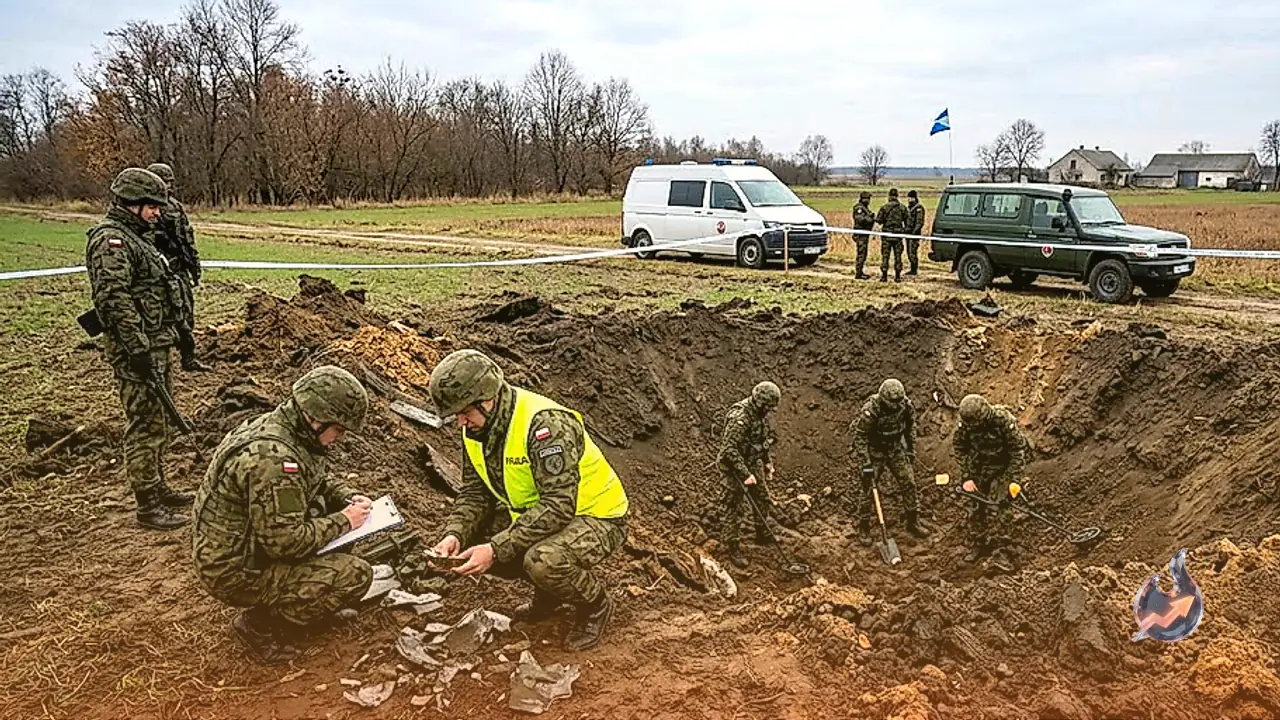

A high-alert security investigation is currently underway in eastern Poland following the crash of a suspected airborne object in a field near the village of Tarnawa Kolonia during the early hours of Thursday. The impact created a massive crater measuring 10 meters (33 feet) across. Located approximately 100 kilometers (62 miles) from the Ukrainian border, the site fell under immediate scrutiny as Polish Prime Minister Donald Tusk stated during a specially convened meeting in Lublin that initial evidence strongly suggests the object was a Russian missile launched during a heavy aerial assault on the Ukrainian city of Lviv.
Air Defense Scramble and Radar Disappearance
Poland's military tracking systems first detected the approaching unidentified object at approximately 03:40 Thursday (01:40 GMT). Recognizing the potential threat to national airspace, defense forces immediately scrambled an F-16 fighter jet to track and intercept the target. However, within minutes of detection, the object vanished completely from military radar monitors before impacting the terrain near Tarnawa Kolonia.
Providing further details regarding overnight operations, Defence Minister Wladyslaw Kosiniak-Kamysz confirmed that military monitoring units observed around 20 distinct objects in close proximity to Polish airspace overnight. Specialist teams are currently conducting detailed pyrotechnical and forensic analysis at the crash site to establish the precise identity and components of the fallen object.
Official Assessments by Donald Tusk and Andrii Sybiha
Addressing officials and reporters in Lublin, Prime Minister Donald Tusk noted that all available indications point toward a Russian Kh-101 ballistic missile. Despite the strong initial signs, Tusk emphasized that investigators require 100 percent certainty regarding the missile's exact model classification and the specific launching origin before making a final determination. He confirmed that no casualties or injuries were reported at the impact location, though the event is being treated as a major security incident.
Offering an additional perspective from Kyiv, Ukraine's acting Foreign Minister Andrii Sybiha asserted earlier on Thursday that a Russian Kh-101 cruise missile breached the Polish border as part of Russia's massive strike against Ukrainian targets, thereby violating NATO airspace. While Tusk referenced a ballistic projectile and Sybiha noted a cruise missile, both statements focused on the Kh-101 missile system family.
Diplomatic Context and Regional Security Implications
The incident coincided with significant diplomatic presence in Lublin. Just the previous evening, Prime Minister Donald Tusk had met with Ukrainian President Volodymyr Zelensky in Lublin while Zelensky was returning from high-level talks with US President Donald Trump.
With military experts analyzing debris recovered from the 10-meter crater, Polish authorities maintain close vigilance along the eastern border. Further pyrotechnic laboratory findings are expected to confirm the exact nature of the projectile and clarify the circumstances surrounding its trajectory across the frontier.