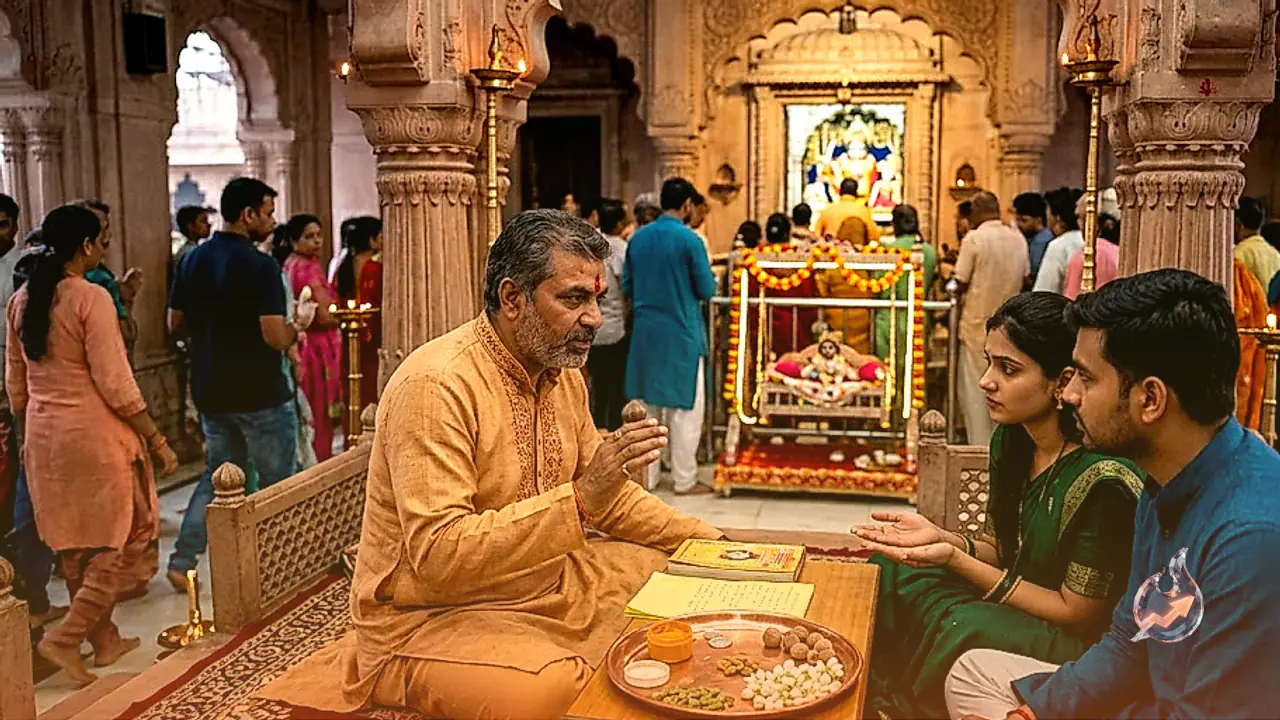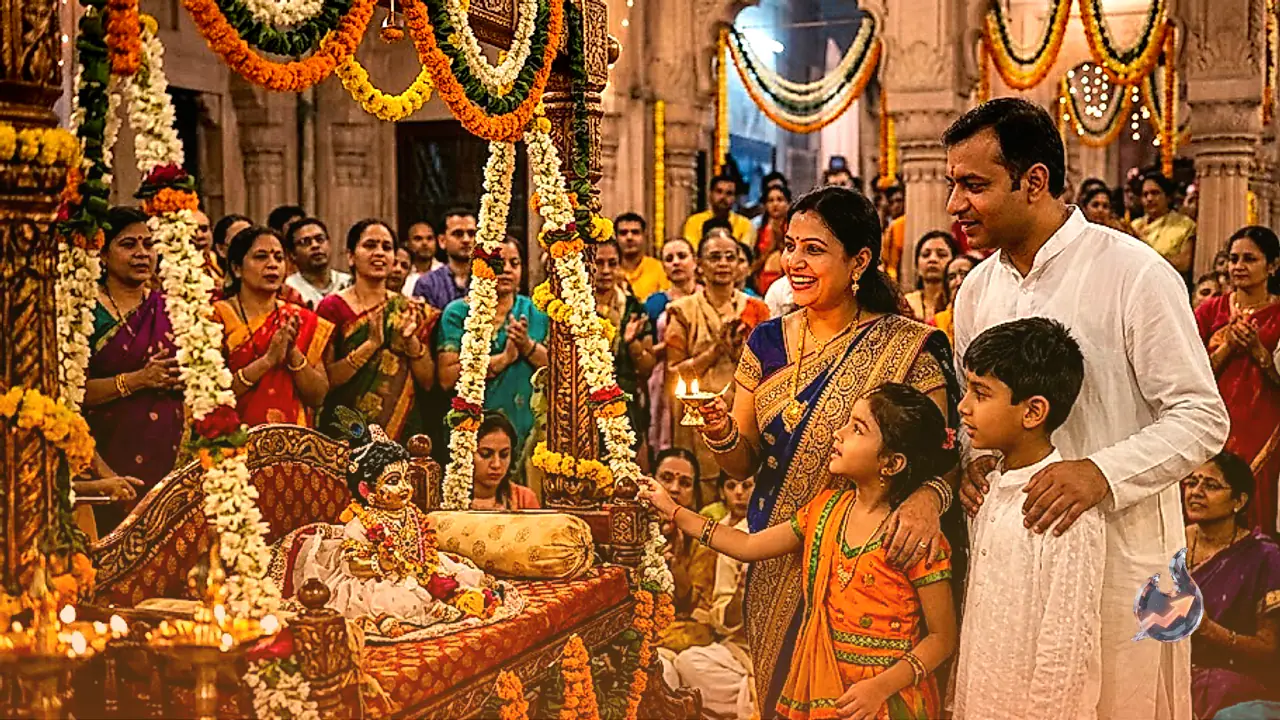


















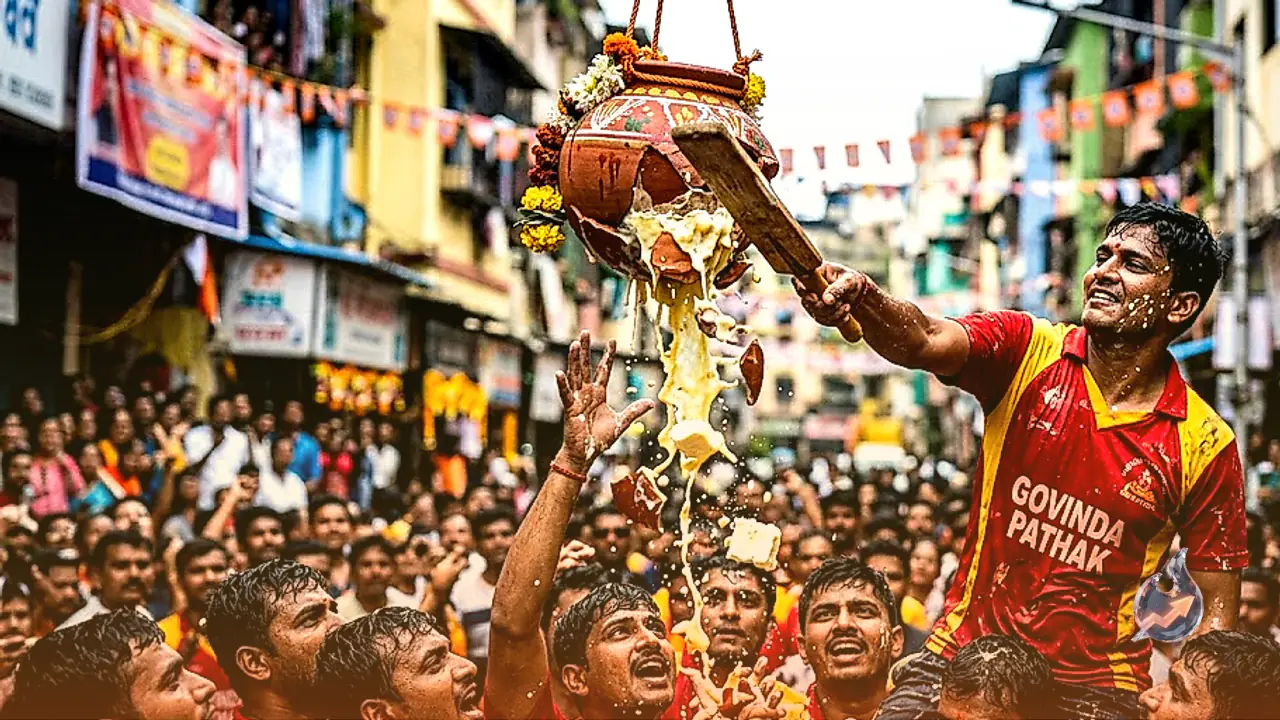

As Janmashtami draws closer, a familiar scene returns to lanes, crossroads and marketplaces, an earthen pot tied high above the ground with teams of young men climbing onto each other's shoulders to reach and smash it. Every year, the same question resurfaces: what is actually kept inside that pot? Many assume the name alone settles it, that it must simply be filled with curd, but the reality is a little more varied and interesting than that. The contents change from state to state, city to city and event to event, and the reason traces straight back to old stories from Krishna's childhood.
Krishna's butter theft is where the ritual of hanging the pot comes from
The entire tradition of Dahi Handi is rooted in tales of Lord Krishna's childhood mischief. According to folklore, the young Krishna and his friends would steal and eat butter from earthen pots kept in neighbouring homes. To keep the butter and curd out of his reach, households would hang the pots high up near the ceiling, yet Krishna and his friends always found some way to get to them. To commemorate that story, Dahi Handi events today still deliberately tie the pot up high, so that a team of Govindas can form a human pyramid to reach it, just as Krishna once did. Traditionally, the pot is filled with curd, butter, milk or mishri, and at several events, prasad is also added to the mix. The moment the pot breaks, all of this spills down onto the crowd gathered below, adding to the festive energy. Even though the format of these events has changed considerably in modern times, the old custom of filling the pot with curd and butter still holds at most celebrations.
Is cash also kept inside the pot?
In recent years, Dahi Handi has stopped being purely a religious event and turned into a full-fledged competition, especially in Maharashtra, where it is organised on a particularly large scale. Teams that manage to break the pot compete for hefty cash prizes, which leads many to assume that the money itself is stashed inside the pot. That is not necessarily true everywhere. At most major events, the cash prize is not placed inside the pot at all, it is handed over separately by the organisers to the winning team once the pot is broken. Some specific events do follow a tradition of placing prize money or gifts inside the pot itself, but this depends entirely on the local custom of that area and the rules set by the organisers. In some places, the winning team simply receives a trophy, while in others, cash prizes running into lakhs of rupees are announced. That is exactly why Dahi Handi is no longer seen only as an act of devotion, in many places it has also become a large, high-stakes competition.
What else goes into the pot besides curd and butter
At several events, the contents of the pot go beyond just curd and butter. Mishri, fruits, sweets and various kinds of prasad are also included, with the aim of keeping the event tied to its religious and traditional character. Even so, no two Dahi Handi pots necessarily carry the same items, the exact contents shift depending on local customs, what the organisers arrange and the overall format of the event. Nowadays, organisers do not stop at simply filling the pot, they also decorate it with colourful cloth, fresh flowers and other ornamental items to make it more visually striking. The crowd gathered below keeps cheering the Govinda team on, and the moment the pot shatters, the entire area erupts in chants and applause.
It is not just about breaking the pot, teamwork and safety matter just as much
The heart of Dahi Handi lies in its human pyramid. No single person can reach a pot tied at that height alone, so the entire team relies on one another for support. The members at the base form a strong foundation, while others climb up one after another to gradually reach the topmost level. Finally, the member at the very top breaks the pot. Balance, coordination and teamwork are considered absolutely critical through this entire process, since a single mistake can bring the whole pyramid crashing down. That is why, over time, organisers have started paying as much attention to safety arrangements as they do to enthusiasm and winning. Security arrangements, protective mats to cushion falls and other precautionary measures have now become common at these events, ensuring the festive spirit stays intact without compromising the safety of the Govinda teams involved.