




















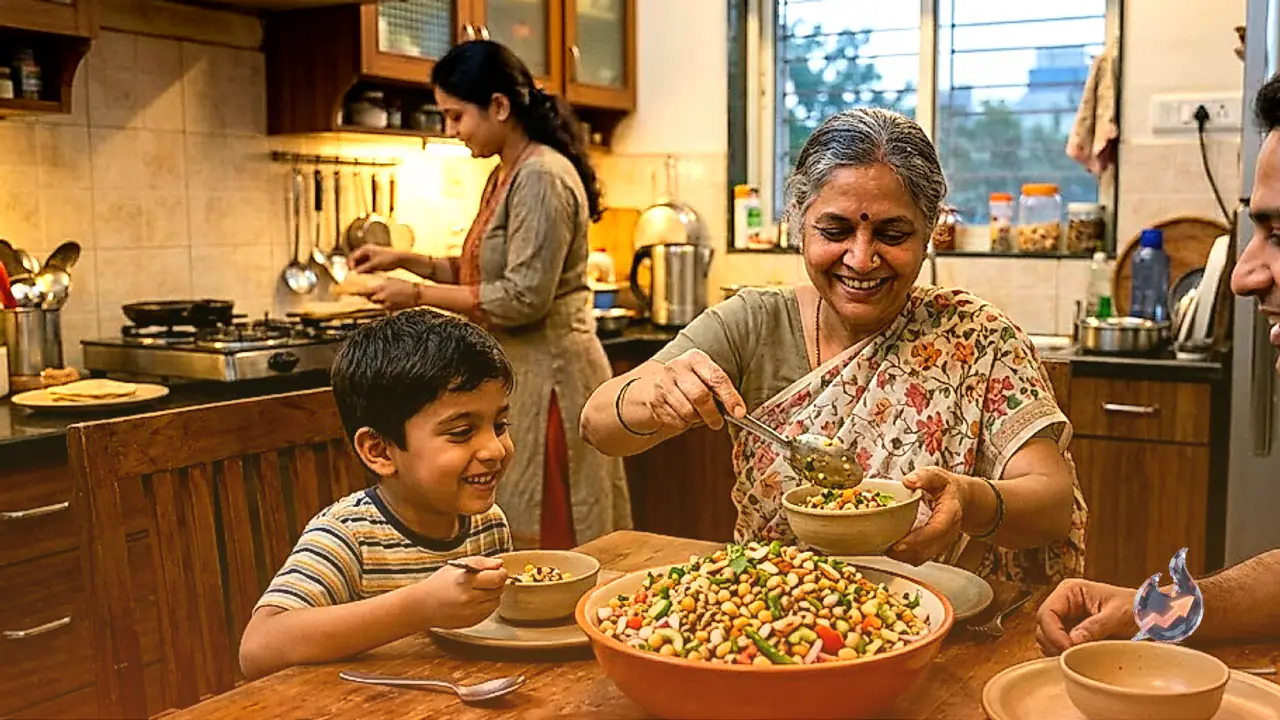

Late afternoon cravings frequently push people toward greasy processed snacks, but finding a balance between rich taste and clean nutrition is entirely achievable. Chana almond salad serves as an ideal wholesome alternative that satisfies appetite without overloading the digestive system. Suitable for young children, active adults, and elderly family members alike, this nutrient-rich bowl requires minimal kitchen effort, especially when the core elements are prepared in advance.
Essential Ingredients and Initial Prep Work
The nutritional foundation of this dish rests on hearty legumes and freshly chopped produce. The preparation begins by soaking whole chickpeas thoroughly in water and setting them aside until they sprout. Green gram, or moong, can also be sprouted alongside to significantly increase the overall nutritional profile of the meal. In addition, red peas require advance soaking followed by proper boiling until they turn soft and easily digestible.
The vegetable component consists of finely diced onions, carrots, cucumbers, Kakdi, and ripe tomatoes. Personal taste preferences can easily guide the addition of other crisp vegetables, elevating both the textural crunch and the natural micronutrient density of the salad. Because legumes require hours to sprout properly, soaking and germinating them the day before ensures that only vegetable slicing remains when mealtime arrives.
Mixing Process and Flavor Enhancements
Once all the components are sliced and ready, combine the sprouted chickpeas, sprouted moong, and boiled red peas in a spacious mixing bowl. Add the finely chopped onions, carrots, cucumbers, and tomatoes to the bowl. Gently toss the ingredients together before sprinkling salt according to taste along with tangy chaat masala to bring the flavors together.
A generous squeeze of fresh lemon juice adds a refreshing citrus sharpness that cuts through the earthy density of the grains. For extra layer and depth, one can fold in finely chopped green chillies, aromatic fresh coriander leaves, and ruby-red pomegranate arils for a burst of subtle sweetness. The blend of chickpeas, moong, and peas provides substantial amounts of plant-based protein and dietary fiber, keeping energy levels steady and hunger at bay. It fits effortlessly into school lunchboxes, evening snack plates, or light elder diets, though specific individual dietary restrictions should always dictate ingredient choices.
Proper Storage for Sprouted Grains
Pre-sprouting chickpeas and moong saves valuable cooking time during busy schedules. Ensuring absolute cleanliness, wrapping them securely in a clean cotton cloth, and maintaining proper cooling preserves their freshness for several days, allowing for near-instant meal assembly.
Nevertheless, sprouted grains possess high moisture levels, which can make them susceptible to rapid spoilage. It is critical to inspect them regularly and discard any batches showing slime, off-odors, or discoloration immediately. Once the desired sprout length is reached, transferring the grains directly into refrigerator storage remains the safest way to maintain their crunch and hygienic safety.