























The joyous occasion of Raksha Bandhan celebrates the special bond of love between brothers and sisters, accompanied by an array of traditional festive delicacies. While sweet treats dominate the celebrations, serving a savory, crunchy snack creates a delightful balance for family and visiting guests. If you wish to skip store-bought packaged options this year and make a fresh, long-lasting snack at home, flaky homemade mathri is the perfect culinary choice. Perfectly paired with a warm cup of tea, this crispy savory snack offers incredible taste and can easily be prepared days in advance of the festival.
Ingredients Required for Homemade Mathri
Crafting delicious and crispy mathri requires basic kitchen ingredients that combine to produce a wonderfully textured snack. The base is made by combining refined flour with semolina to achieve the right crunch. To season the dough, salt is added alongside aromatic carom seeds and half a teaspoon of coarsely ground black pepper. To give the mathri its signature flaky texture, four tablespoons of ghee or oil are incorporated as shortening, known traditionally as moyan. Water is added sparingly to bind the dough. For an extra dimension of flavor, you can also include crushed dried fenugreek leaves or cumin seeds into the dry mixture.
Kneading the Dough and Checking Shortening
To begin the preparation, take a large mixing bowl and combine the refined flour and semolina. Stir in the salt, carom seeds, and coarsely ground black pepper until all dry ingredients are evenly distributed. Next, pour in the four tablespoons of ghee or oil. Work the shortening into the flour mixture using your fingers and palms. To check if the shortening ratio is ideal, press a small portion of the mixture firmly in your hand. If it holds its shape together without crumbling, the moyan proportion is spot on.
Gradually add small amounts of water to knead the mixture into a firm dough. It is essential to ensure the dough remains stiff, unlike the soft dough used for puris or breads. Once kneaded thoroughly, cover the dough with a damp cloth or lid and let it rest for 15 to 20 minutes. This allows the semolina to absorb moisture and settle properly.
Shaping and Pricking the Mathris
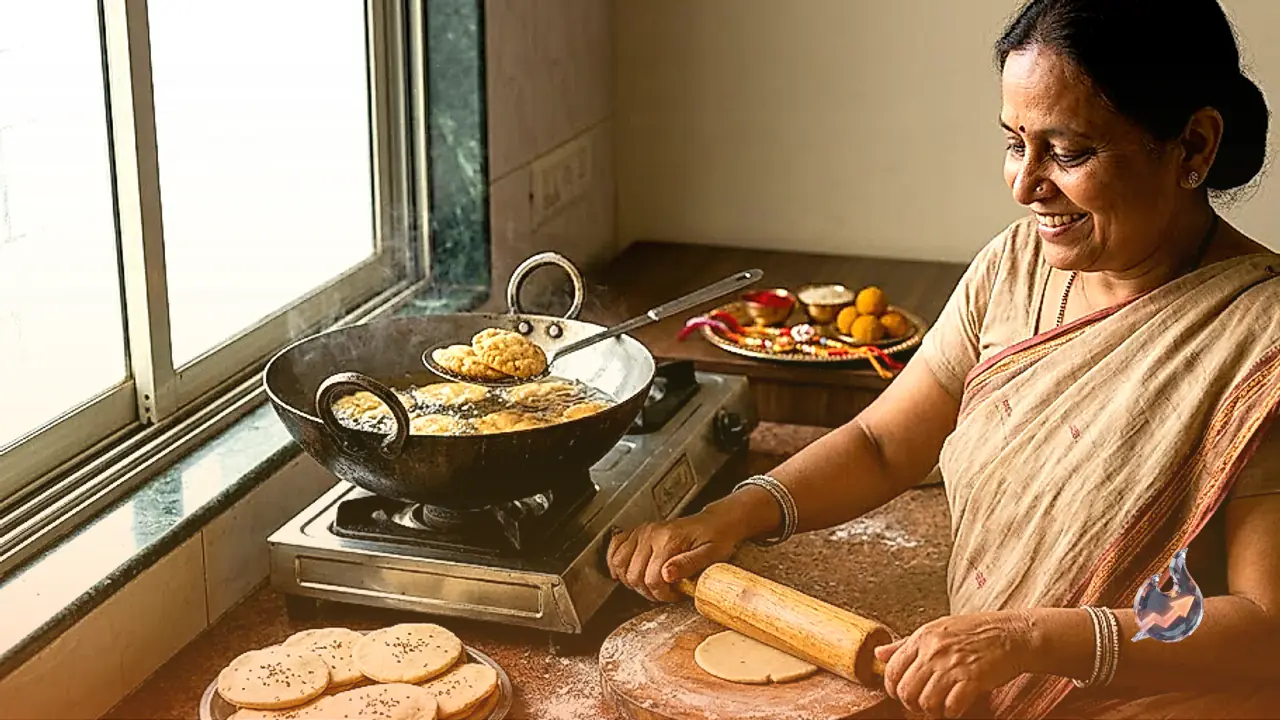
After the resting period, gently knead the dough once more. Divide it into small, uniform dough balls. Using a rolling pin, flatten each ball into a slightly thick disk. If you prefer neat, symmetrical circular mathris, you can cut them using a small round lid or a cookie cutter. Once shaped, use a fork to prick two to three holes on the surface of each mathri. This crucial step prevents the mathris from puffing up like puri while frying, allowing them to cook evenly right through to the center.
Frying and Storing Techniques
Heat oil in a heavy-bottomed pan over low to medium flame. Ensure the oil is not excessively hot before adding the mathris. Place the shaped mathris into the oil in batches and fry them slowly. Frying on high heat must be avoided, as it browns the outer layer rapidly while leaving the interior undercooked. Gently flip the mathris periodically so they cook uniformly on both sides.
In about 8 to 10 minutes of slow frying, the mathris will turn a beautiful light golden brown and become crisp. Carefully remove the fried mathris using a slotted spoon and place them on paper towels to drain any excess oil. Allow them to cool completely to room temperature before transferring them into an airtight storage container. Stored properly, these mathris will remain fresh and crunchy for several weeks.
Essential Tips for Flaky and Crispy Mathri
Achieving bakery-style flakiness at home relies on a few key culinary techniques. Always incorporate semolina alongside refined flour, as it provides a distinct, satisfying crunch. Maintaining the exact shortening proportion of four tablespoons is vital to achieve a melt-in-the-mouth texture. Always knead a firm, tight dough, as excess moisture leads to soft mathris. Most importantly, maintain low to medium flame while frying for 8 to 10 minutes to guarantee complete cooking. Finally, adding dried fenugreek leaves or cumin seeds offers a pleasant herbal aroma that elevates the overall flavor profile.