



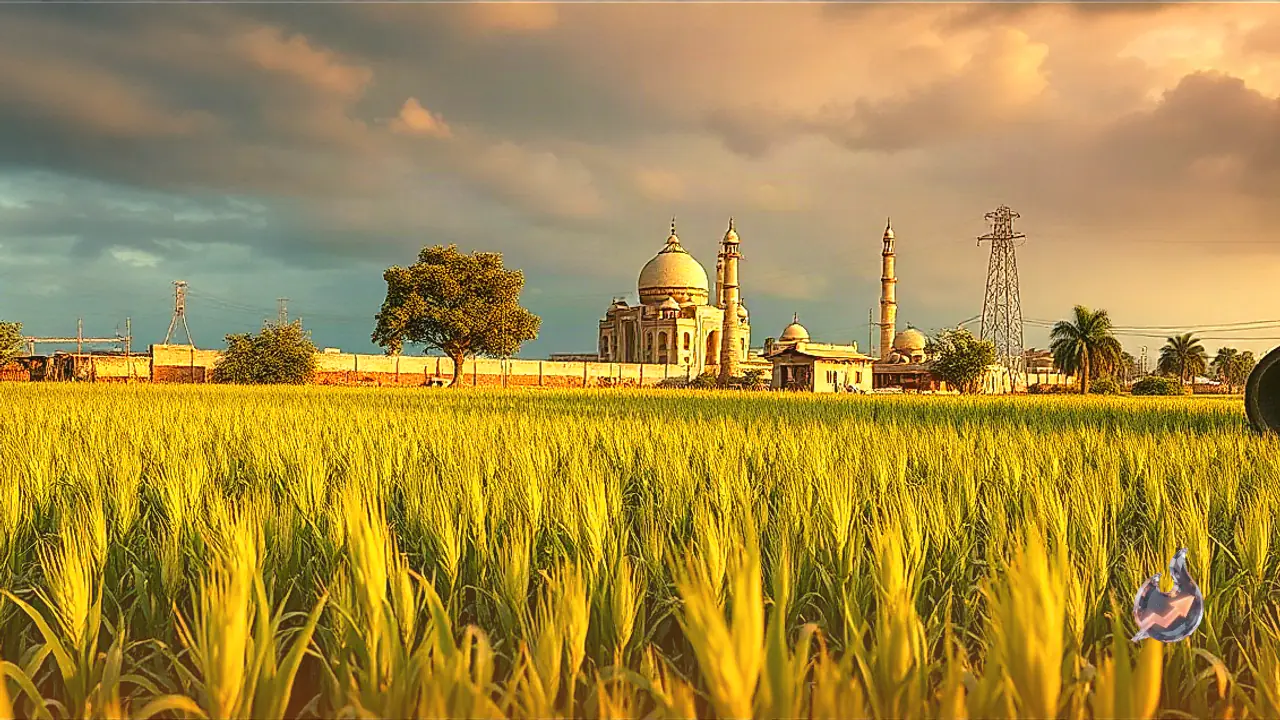















Sweet jaggery emerging from sprawling sugarcane fields has long stood as an iconic symbol of rural heritage and unadulterated rustic flavor. Even as modern retail shelves overflow with refined white sugar, processed confectioneries, and neatly packaged goods, the traditional craft of artisanal jaggery making continues to thrive across village landscapes. In the rural pockets of Sultanpur, Uttar Pradesh, farmers preserve this time-tested method of extracting and boiling sugarcane juice using traditional wood-fired furnaces. Jagat Narayan Pathak, a local farmer, broke down the intricate sequence of steps that transforms freshly harvested cane stalks into dense, golden blocks of desi gur.
The Onset of Winter and the Journey from Field to Crusher
With the arrival of chilly winter weather, agrarian communities across northern plains gear up for the annual sugarcane processing season. Farmers begin by cutting mature stalks directly from the fields, stripping away dry leaves before feeding them into mechanical crushers or traditional kolhus. The extraction unit squeezes out voluminous amounts of raw green sugarcane juice. Before any heating takes place, workers meticulously strain the liquid through fine meshes to filter out loose fiber, bagasse particles, and dirt. Pathak notes that the ultimate texture, color, and taste of the finished jaggery depend squarely on the purity of the initial juice. Freshly pressed, thoroughly cleaned juice produces clear, superior jaggery that fetches top value.
Simmering Heavy Vats and Continuous Clarification
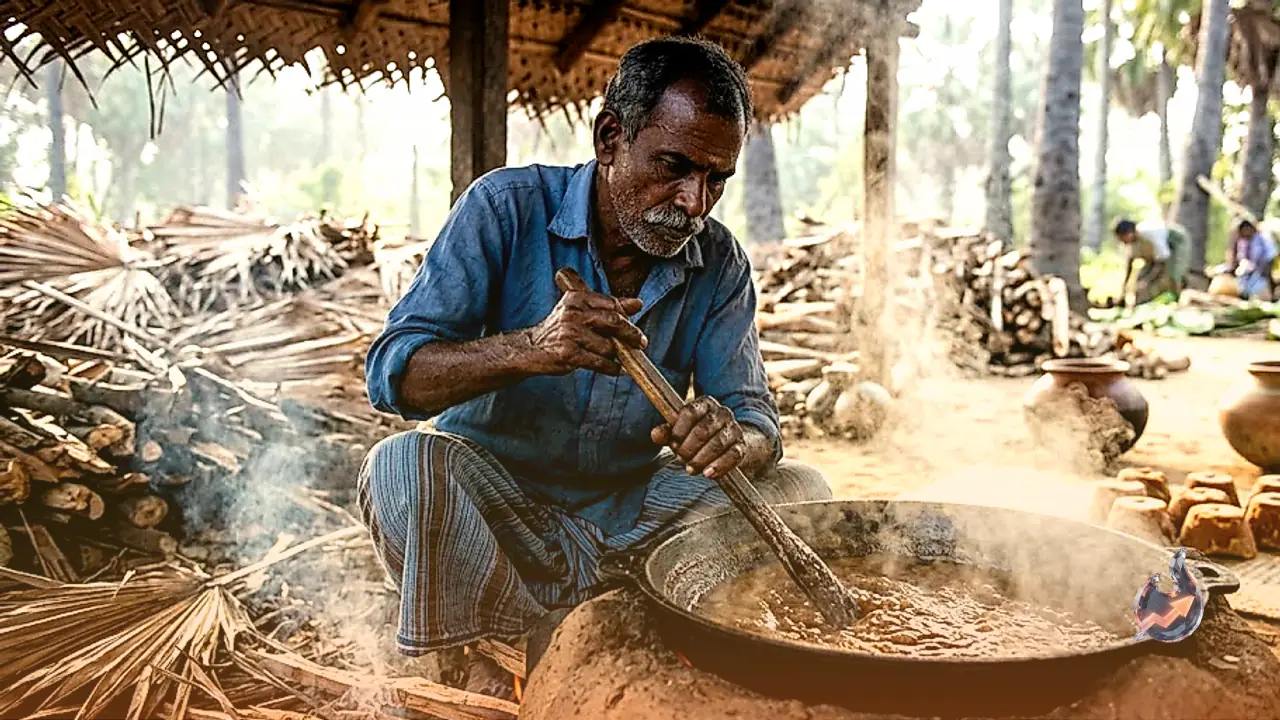
Once strained, the raw sugarcane juice is poured into massive, shallow iron vats mounted over blazing hearths. Fueled by dry sugarcane bagasse, intense flames bring the liquid to an active, rolling boil. As the temperature climbs, organic impurities and natural plant solids rise to the surface in the form of a thick foam. Stationed around the vat, workers use large, long-handled ladles to skim off this foamy scum periodically. Constant stirring remains critical throughout this phase to prevent the dense liquid from sticking to the hot metal base, which would otherwise scorch the batch and impart a bitter burnt flavor. Over hours of steady evaporation, water content escapes as dense steam, steadily reducing the liquid into a viscous, concentrated slurry.
Reaching the Critical Consistency and Shaping the Blocks
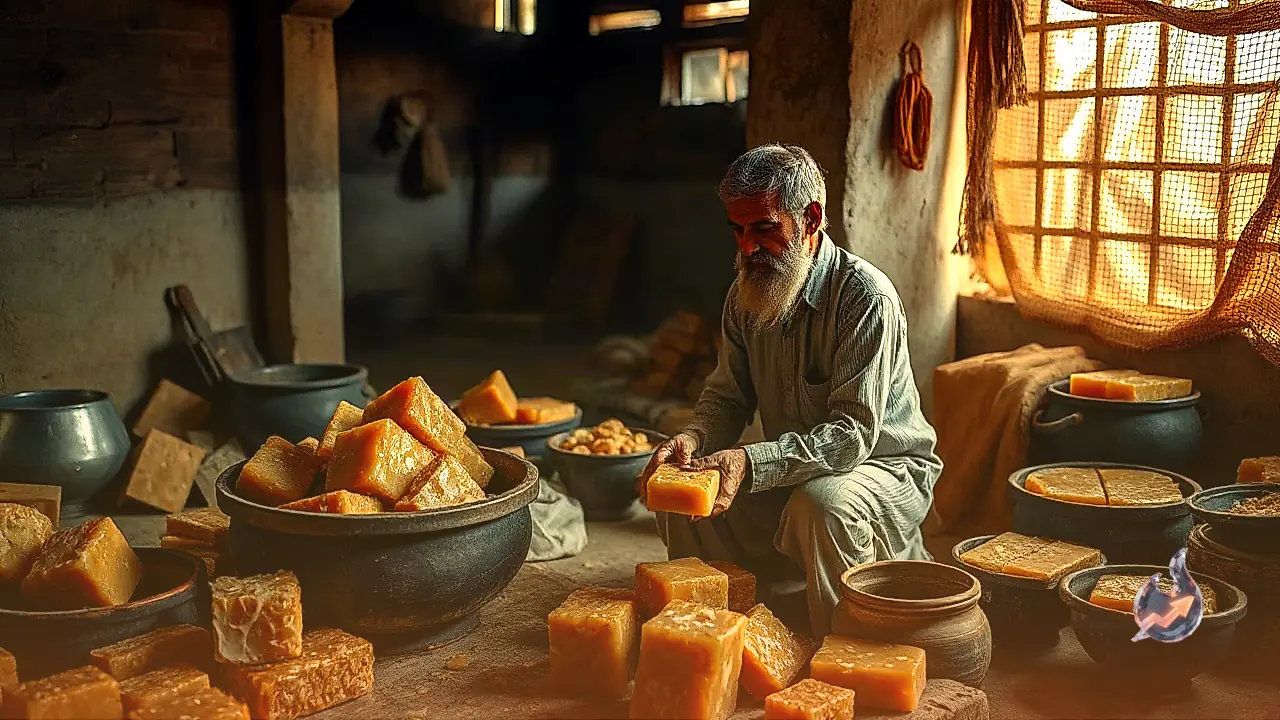
Following several hours of controlled boiling, the sugarcane juice thickens into a heavy, dark-amber concentrate. Experienced farmers rely on sight and touch to determine the exact moment the syrup reaches the solidification threshold and must be pulled from the fire. The steaming, semi-solid mass is then transferred into cooling troughs or designated clean flat wooden containers. Craftsmen continuously knead and turn the cooling mass with paddles to ensure uniform aeration, proper cooling, and a balanced texture. Once the warm paste reaches a workable consistency, it is shaped by hand or wooden molds into round bheli lumps or broken into smaller granular portions, depending on regional preferences.
Sustained Physical Labor and a Vital Source of Village Livelihoods
Every batch of artisanal jaggery represents immense physical endurance and generational craftsmanship. From cultivating and chopping the tough cane crop to running heavy machinery and tending wood fires amid thick smoke and heat, farm hands work tirelessly through long winter shifts. After the formed jaggery cools and solidifies completely, it is packed into sacks and transported to regional agricultural markets for sale. For numerous rural households across Sultanpur and beyond, this seasonal production cycle remains a foundational pillar of family earnings, bridging rural agricultural sweat with wholesome natural sweetness on urban and rural dining tables alike.