



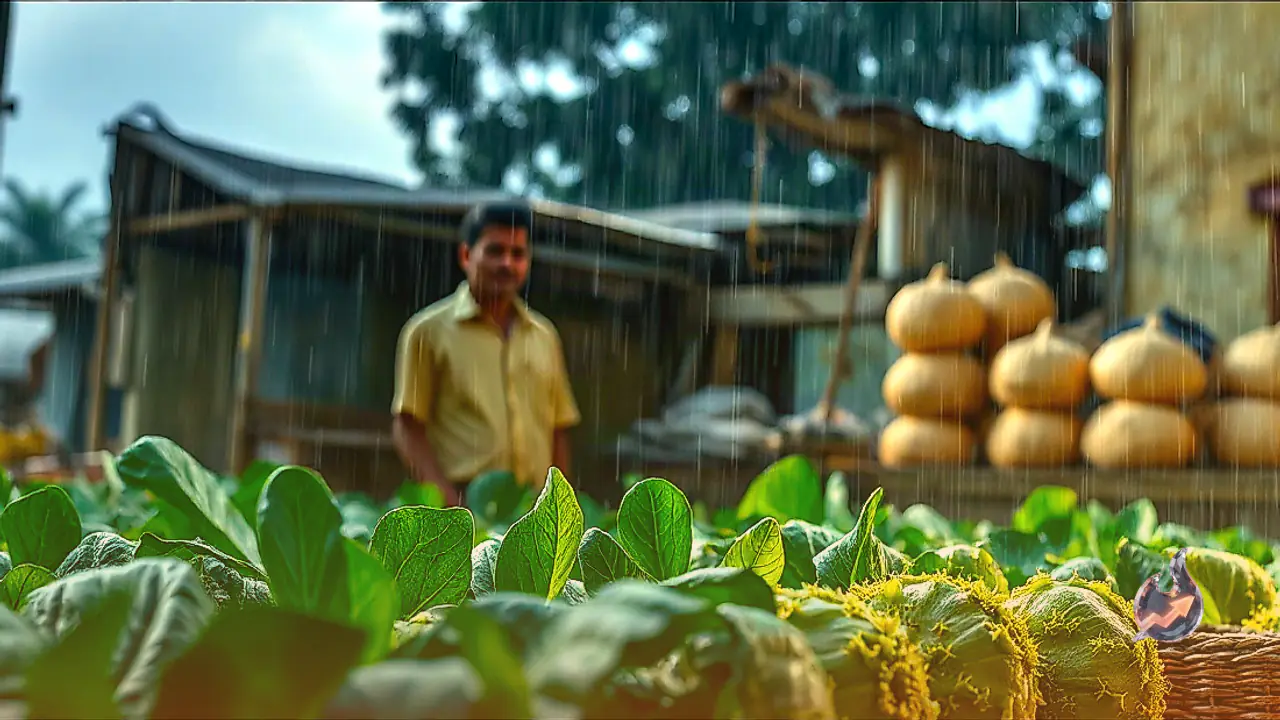



















With the onset of the monsoon rains, culinary habits across central India undergo a distinct seasonal shift. In Madhya Pradesh's Chhatarpur district and the surrounding Bundelkhand region, local households naturally pivot from standard market vegetables toward traditional wild and homegrown leafy greens. Locally known as bhaji, these seasonal greens are celebrated not only for their rich taste but also for their therapeutic and immunity-boosting properties. Many of these leafy varieties can be cultivated effortlessly in home gardens, flower pots, or rooftop containers, while several species propagate naturally in open fields once rainwater saturates the soil.
Chaurai Bhaji: Natural Shield Against Cold and Seasonal Fever
Among the most widely consumed monsoon greens, Chaurai bhaji holds a prominent position. As soon as the first rains arrive, Chaurai sprouts automatically across fields and gardens. It requires minimal effort to grow at home and remains a favorite dietary choice well into the winter months. Traditionally, Chaurai is prepared as a dry side dish cooked alongside potatoes. From a wellness perspective, Chaurai is recognized for its thermal warming properties. This innate warmth aids the body in fending off seasonal viral fevers, coughs, and common colds, making it an essential dietary staple during damp monsoon weather.
Chech Bhaji: A Chhatarpur Culinary Specialty Paired with Arhar Dal
In the Chhatarpur district, another regional green known locally as Chech bhaji commands strong seasonal popularity. Enjoyed continuously from the early monsoon through the winter season, Chech bhaji forms an integral part of traditional meals. Local culinary tradition favors cooking Chech bhaji together with arhar dal (pigeon pea lentils) to create a comforting, nutrient-dense dish. Growing Chech bhaji at home is exceptionally straightforward, as it thrives in small household containers or garden pots. During the rainy season, high soil moisture allows it to germinate naturally without intensive cultivation.
Kachoda and Naurpa Bhaji: Thermal Balance and Iron Supply
Demand for Kachoda bhaji also witnesses a dramatic rise across both rural and urban parts of Chhatarpur during the rainy period. Similar to other wild greens, Kachoda grows spontaneously with the arrival of monsoon showers. Because of its warming nature, it is widely valued for balancing body temperature and sustaining energy during cold, rainy days. Alongside Kachoda, Naurpa bhaji is another highly prized leafy green that is simple to plant at home during the monsoon.
Naurpa bhaji comes in two distinct varieties: green and red. The green variety is available throughout the entire year, whereas the vibrant red variety appears exclusively during the monsoon months. In the rural belts of Chhatarpur, consuming Naurpa bhaji becomes particularly popular during the auspicious month of Kartik. Rich in dietary iron, regular consumption of Naurpa bhaji is known to help alleviate anemia and improve overall blood health.
Kan-Kaua Bhaji and the Year-Round Green Leaf Culture of Chhatarpur
Another popular seasonal delicacy enjoyed during the rains is Kan-kaua bhaji. The residents of Chhatarpur harbor a deep-rooted cultural preference for wild and seasonal leafy greens over conventional cultivated vegetables. This dietary preference ensures that a wide array of leafy greens remains central to daily meals throughout the year. While certain varieties grow strictly in accordance with seasonal rainfall, their collective health benefits provide essential nourishment, vital minerals, and natural immunity to the local population year-round.