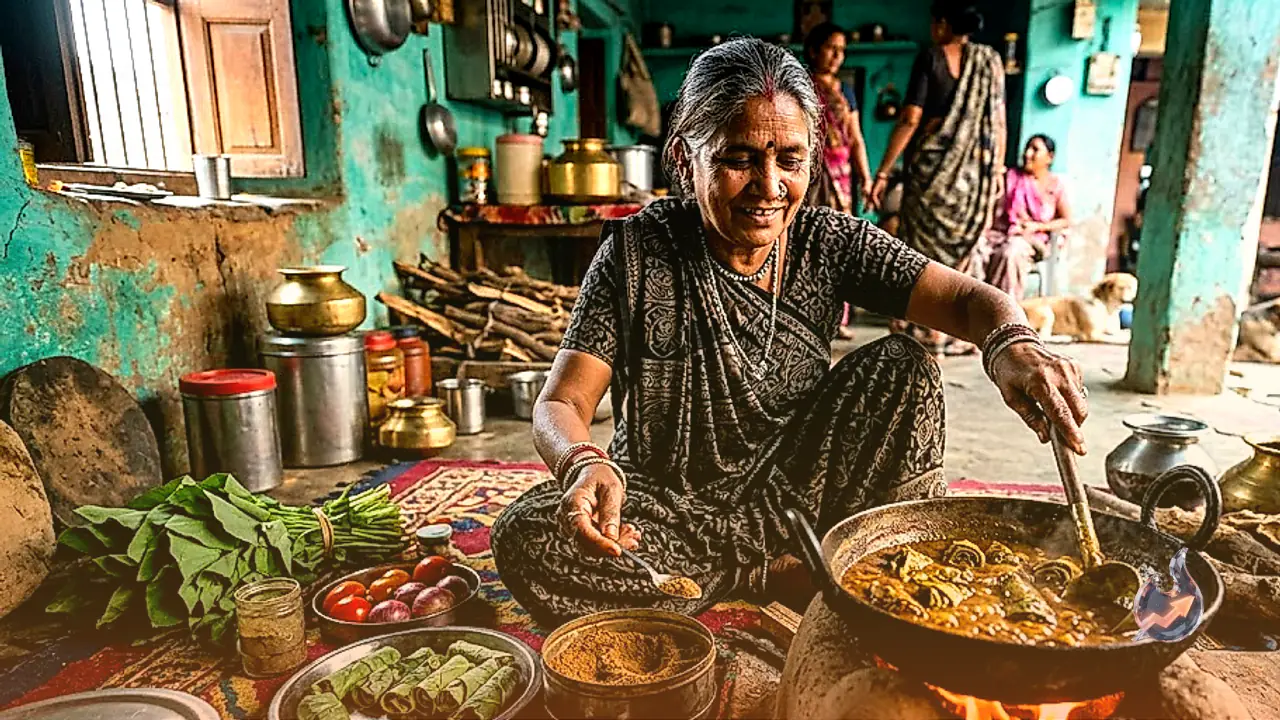























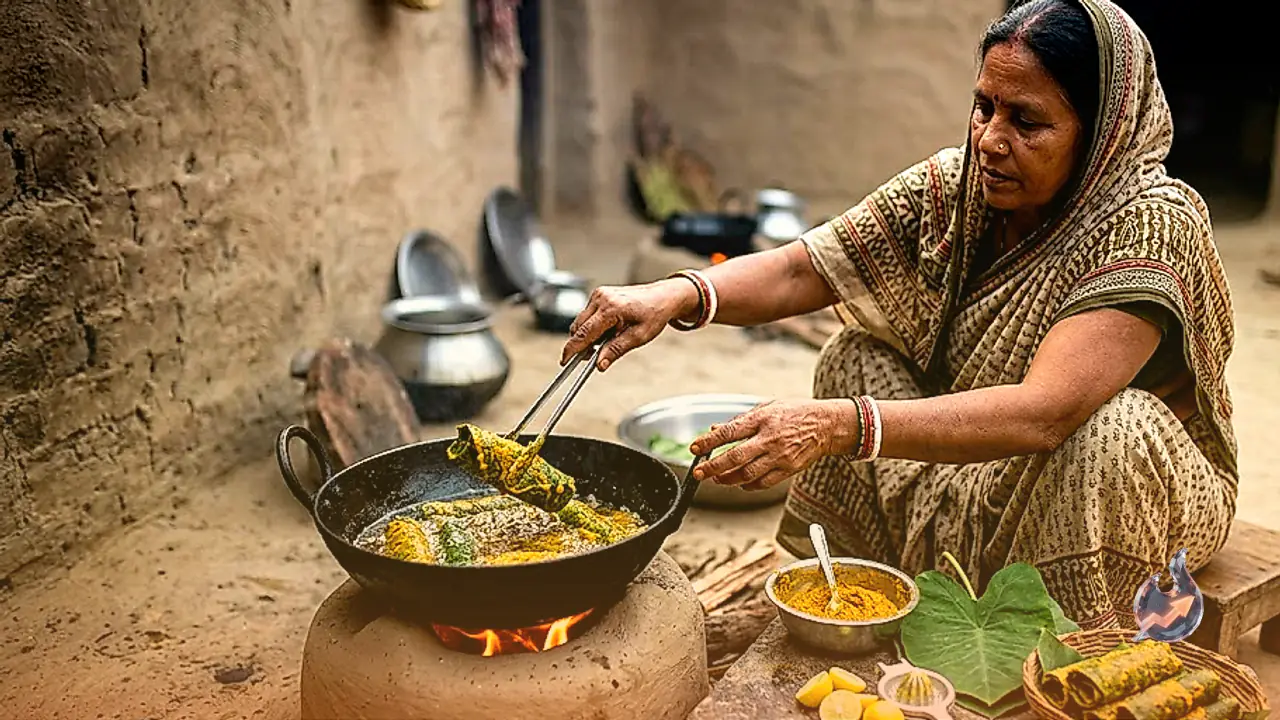

Across the culinary landscape of Mithilanchal, arikanchan curry holds a revered place as a seasonal comfort food deeply intertwined with local heritage. Madhubani and the wider Mithila region celebrate this leaf-based specialty not only in resident kitchens, but also among diaspora communities who routinely pack dried bundles of these leaves to cook in distant cities across India and abroad. For those who abstain from non-vegetarian food, this dish is widely regarded as the vegetarian counterpart to fish. This reputation stems directly from the culinary blueprint used to prepare it, which closely mirrors traditional fish curry. Just as fish is seasoned and fried before entering the pot, arikanchan leaves are coated in a spiced gram flour batter and fried crisp with a heavy touch of lemon.
Layering the Leaves and Crafting the Lodha
Preparing this regional classic according to village customs demands patience and meticulous handling of raw ingredients. The process begins by washing fresh arikanchan leaves thoroughly in water and placing them under sunlight for a brief period to dry out excess moisture. Meanwhile, a thick paste is whipped up using gram flour, turmeric powder, and salt. Cooks frequently customize this batter by introducing additional spices tailored to family preferences. Once ready, the broad leaves are spread flat, and an even layer of the gram flour mixture is smeared over each surface. The leaves are stacked together one by one, coated in spices, and tightly rolled into a dense cylindrical log. In the Maithili language, this structured roll of coated leaves is known as lodha.
Sun Drying Technique and Extended Storage
After shaping the roll, it is left under direct sunlight for an entire day to cure completely. This thorough sun-drying phase is essential because it eliminates inner dampness, allowing the lodha to stay fresh for roughly seven to ten days without spoiling. This natural preservation makes it exceptionally easy for travelers to transport the rolls across the country and overseas to prepare whenever desired. Once ready to cook, the dried roll is sliced into small circular discs. These coin-shaped pieces are then deep-fried in hot cooking oil until crisp and firm. While some enjoy these crunchy fried discs directly as an evening snack, they primarily serve as the core protein element for the rich sauce.
Building the Pungent Mustard Gravy
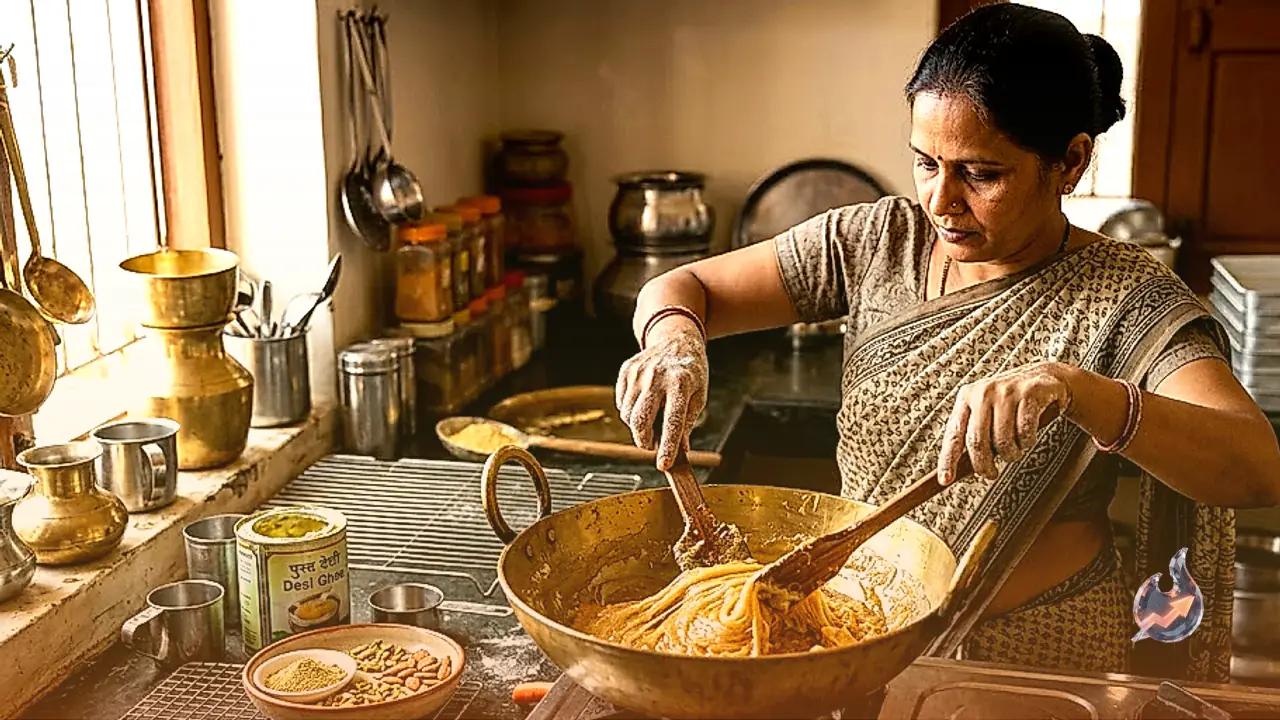
The foundation of the sauce calls for a robust blend of yellow mustard seeds, whole onions, fresh garlic cloves, and green chillies. These aromatics are ground together into a smooth paste. In a heavy-bottomed pan or kadhai, cooking oil is brought to a high temperature, after which cumin seeds, whole dried red chillies, and bay leaves are added to crackle and release their fragrant aroma. The ground mustard paste is then stirred in, accompanied by regular pantry spices including turmeric, red chilli powder, coriander powder, garam masala, and salt. The mixture is cooked thoroughly until the oil separates, exactly the way one prepares the masala for a traditional river fish curry. Water is then added according to desired consistency, and the broth is allowed to come to a vigorous simmer.
Taming Bitterness with Citrus and Final Serving
Once the simmering gravy attains the right texture and depth, the fried circular arikanchan pieces are dropped into the liquid to simmer gently and absorb the spiced juices. Throughout every single phase of this recipe, fresh lemon juice plays an indispensable role. Raw arikanchan leaves possess an inherent natural bitterness and throat-irritating compound, and the sharp acidity of lemon is strictly required to cut through that harsh bite. Lemon juice is added while rolling the leaves, introduced during the frying stage, and poured liberally into the finished curry right after it finishes cooking. This generous sour note neutralizes the sharpness, yielding a bright, tangy profile. The finished curry pairs exceptionally well with steamed plain rice. In urban areas where authentic arikanchan leaves are difficult to find, home cooks commonly replicate the exact same recipe using taro leaves, sometimes tweaking spice levels to suit personal tastes.