



















Traditional culinary culture in South India has long favored unprocessed, natural sweeteners over refined white sugar. Among the most celebrated regional delicacies is Karupatti, commonly known as palm jaggery. Boasting an appetizing caramel chocolate sheen and a distinct rustic flavor, this artisanal jaggery offers significant nutritional value alongside its taste. Rich in iron and essential minerals, Karupatti continues to be produced with uncompromised purity by artisan families who have preserved their traditional craft for nearly 40 years across generations.
Core Materials Required for Preparation
The manufacturing process relies entirely on organic elements without adding artificial preservatives, chemicals, or synthetic additives. The two essential items needed include
- Fresh Palm Sap: Naturally sweet sap extracted directly from palm trees, known locally as Padaneer.
- Natural Shaping Moulds: Dried coconut shells cut in halves or square wooden moulds used to set and shape the jaggery.
The Traditional Step-by-Step Cooking Process
Creating authentic Karupatti demands careful patience and precise timing, ensuring that heat distribution and texture remain optimal throughout.
Harvesting and Straining the Sap
The production routine begins early at dawn around 5 am. Harvesters climb tall palm trees to collect the fresh, unfermented sap that has gathered overnight in earthen pots. Once lowered from the trees, this fresh Padaneer is meticulously poured through fine sieves. This thorough filtration step separates any residual tree leaves, natural debris, or stray dust particles, yielding crystal-clear sap for boiling.
Extended Boiling on Firewood Hearths
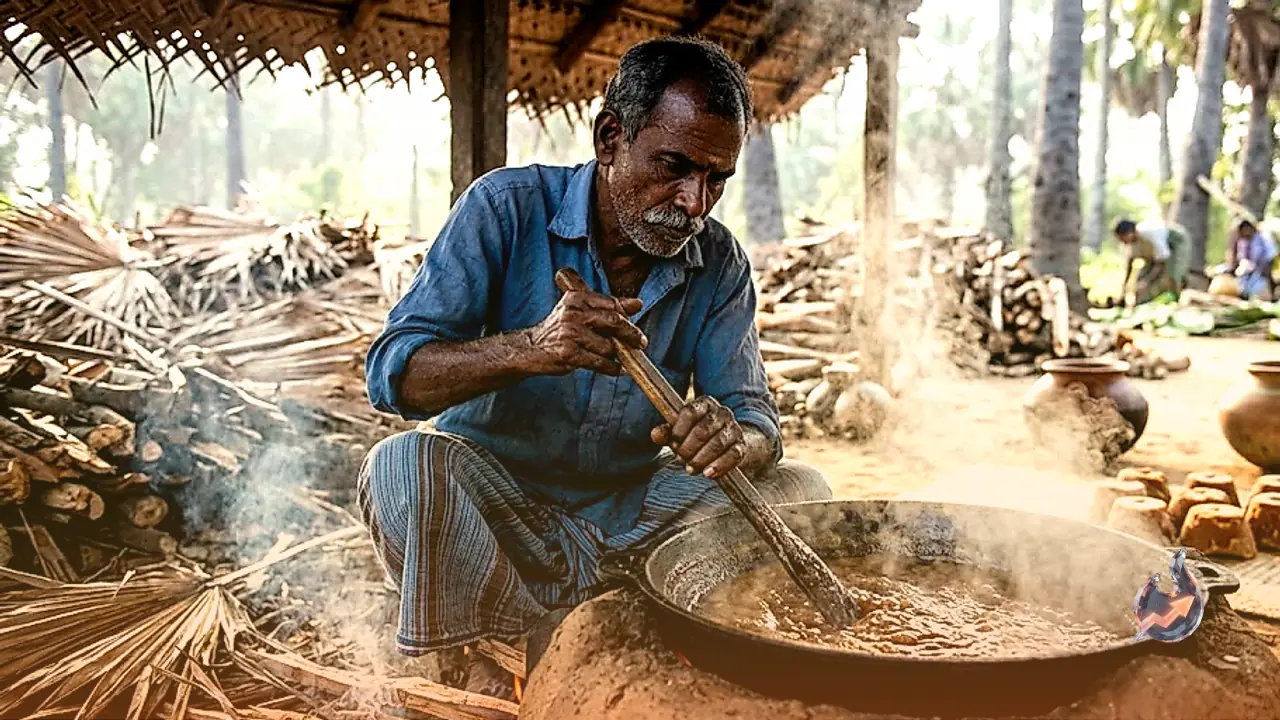
The purified sap is transferred into massive open pans mounted atop traditional earthen hearths. Fueled by dry palm fronds and firewood, the hearth provides intense heat. Workers use large ladles to stir the liquid continuously for 4 to 5 hours. As moisture evaporates over hours of vigorous boiling, the translucent liquid steadily thickens, transitioning into a rich, dark brown syrup. Once the mixture develops a thick, caramel-like consistency, the cauldron is promptly lifted from the flames.
Moulding into Coconut Shells and Solidification
While still hot and pliable, the viscous mixture is poured directly into cut dry coconut halves and rectangular wooden moulds to impart its signature regional shape. Left undisturbed in a shaded area, the molten syrup cools naturally. Within a few hours, the poured substance hardens into firm blocks, resulting in ready-to-eat natural Karupatti.
Culinary Uses and Nutritional Importance
In South Indian households, palm jaggery is revered for its versatility in functional beverages and heritage desserts. It serves as the primary sweetening agent in Sukku coffee brewed with dried ginger, wellness-focused herbal teas, and celebratory festive dishes. Nutrition-wise, Karupatti is widely recognized for promoting digestive comfort and boosting iron reserves to support healthy blood production.